
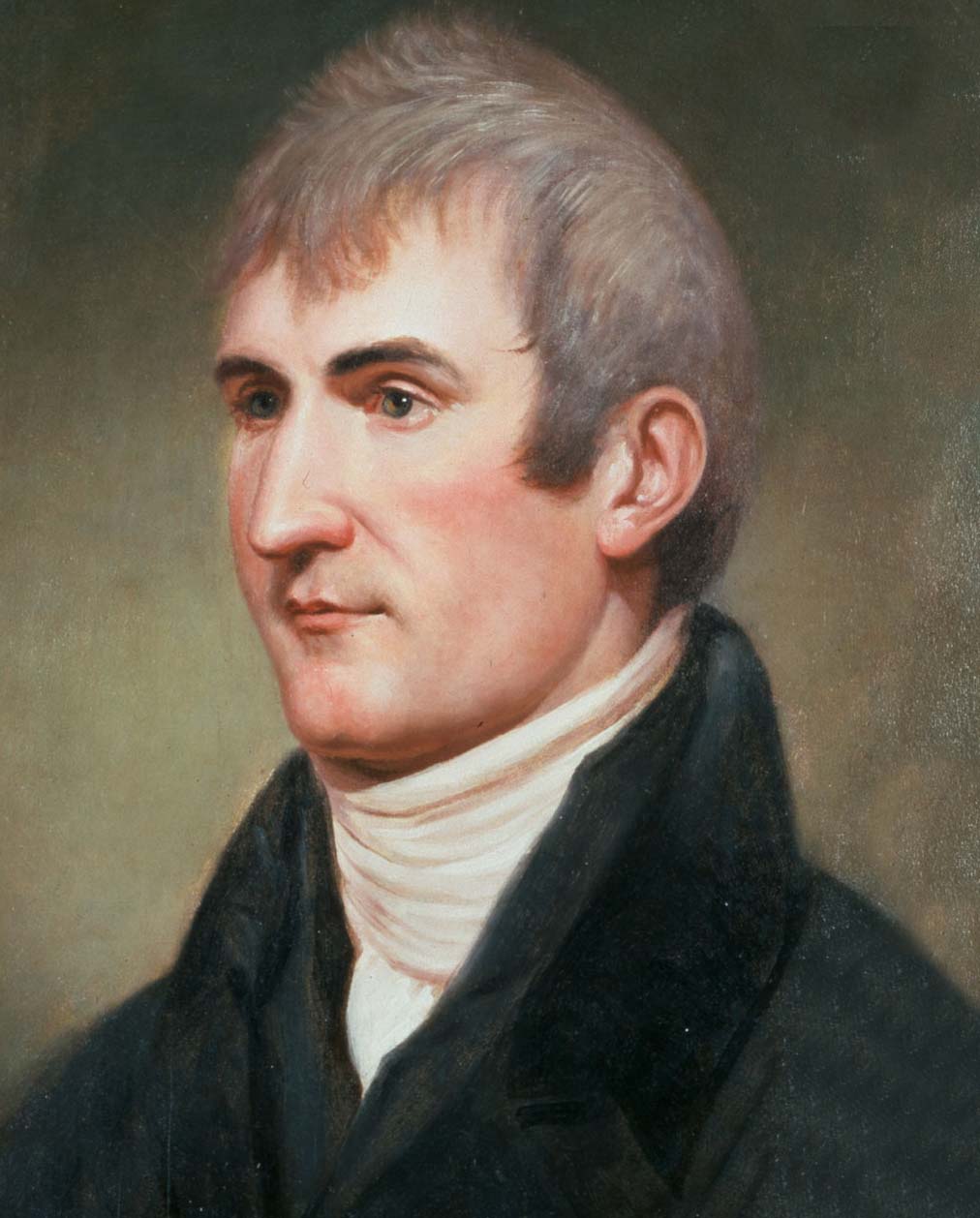

The entries of March 16, 1805 offer a striking case study in how three men in the same fort, on the same day, allocated their attention to wildly different concerns. William Clark, John Ordway, and Meriwether Lewis all register the visit of “Mr. Gurrow” (Garreau), a Frenchman long resident among the Arikara and Mandan, who demonstrated the Indigenous technique of glass-bead manufacture. Yet the three accounts diverge so sharply in length and emphasis that they read almost as products of separate days.
Compression and Expansion
Clark’s entry is, characteristically, a model of compression. He logs the weather (“a Cloudy day wind from the S. E”), an interpersonal incident involving Private Whitehouse and an offended Indian visitor, and then dispatches the bead demonstration in a single clause:
Mr. Garrow Shew’d us the way the ricaras made their large Beeds
That is the entirety of his interest in the subject. Ordway, meanwhile, does not mention Garreau or the beads at all in the surviving fragment for this date, attending instead to the practical labor of “hailing corn” and noting the easterly wind that threatened rain. The editorial annotations attached to Ordway’s journal concern themselves with Le Borgne and the disputed terms of Charbonneau’s engagement — matters of expedition logistics rather than ethnographic curiosity.
Lewis, by contrast, produces what amounts to a technical monograph. His entry — misdated “March 16th, 1804” in a slip of the pen — runs to several hundred words and reconstructs the bead-making process step by step, from the pounding and washing of colored glass to the shaping of clay pedestals and the use of “little wooden paddles” three to four inches long. Lewis is interested not only in the procedure but in its provenance: he reports that the Arikara and Mandan
are said to have derived [the art] from the Snake Indians who have been taken prisoners by the Ricaras. the art is kept a secret by the Indians among themselves and is yet known to but few of them.
Two Registers, Two Missions
The contrast illuminates the implicit division of labor between the captains. Clark, the expedition’s surveyor and cartographer, treats the day’s events as a log to be kept current; the bead demonstration earns one line because one line suffices to fix it in the record. Lewis, charged by Jefferson with reporting on the arts, manufactures, and natural productions of the western nations, recognizes in Garreau’s demonstration a rare opportunity. The technique was, by Lewis’s own account, closely guarded — “kept a secret by the Indians among themselves” — and his decision to transcribe it in exhaustive detail reflects the Enlightenment-era impulse to capture and preserve technical knowledge before it could be lost.
Lewis’s prose register shifts accordingly. Where Clark writes in clipped diaristic shorthand, Lewis adopts the measured cadence of an instructional manual: “You then provide an earthen pot of convenient size say of three gallons… the pot has a nitch in it’s edge through which to watch the beads when in blast.” The second-person address (“you do by roling the clay on the palm of the hand”) signals that Lewis envisions a reader who might one day replicate the process — a posture entirely absent from Clark’s or Ordway’s entries.
What the Brevities Reveal
Ordway’s silence on the bead demonstration, paired with his attention to corn-pounding and weather, is itself instructive. As a sergeant, his journal tracks the rhythms of camp labor and the disciplinary atmosphere of the fort. The editorial notes accompanying his entry direct attention toward Le Borgne (“One Eyed”) and the unresolved Charbonneau negotiation — the political weather of Fort Mandan as the expedition prepared to push upriver. Clark, too, gives space to a small breach of decorum: an Indian visitor “much displeased with whitehouse for Strikeing his hand when eating with a Spoon for behaveing badly,” a vignette of cross-cultural friction that Lewis ignores entirely.
Read together, the three entries demonstrate how the expedition’s documentary record depended on complementary sensibilities. Lewis preserved the technical and ethnographic; Clark preserved the social and meteorological frame; Ordway preserved the daily labor of the enlisted men. The Arikara bead, the slapped hand, and the easterly wind all belong to the same March day — but only by reading the narrators against one another does the day come into full view.


