Missouri River near St. Joseph area — John Ordway: July 10, 1804
to land near where we Saw the Sun last night & to reconortre but
Soon Discovered that our men were at the fire, they were a Sleep
eairly last night and did not know that we sent for them by the
pearogue. proceeded on passed a prarie on the upper side of
woolf Creek or River at 4 miles passed a Small called River
poke4 this Creek is about 15 yd8 wide, and called after a Span-
iard who killed himself at the mouth, at noon we dined on an
1 Named Monters by Clark, which Biddle changed to Mountain. Coues
identifies it as modern Charleston Creek, Doniphan County, Kans. Appar-
ently Ordway confused the name of this stream with that of the one immedi-
ately following it.
2 Modern Wolf Creek; it rises in Brown County, Kans., and flows across
Doniphan County.
3 More properly, the west side. It is important to note in this connection
that in ascending the Missouri the members of the expedition always speak
of the starboard and Larboard, or right and left, sides from their own point of
view, which is the direct opposite of the right and left sides from the viewpoint
of the river itself; also, having started out with the right side of the river (the
left from the viewpoint of the expedition) on the south, and the left on the
north, they continue to use the terms south side and north side in this sense,
without regard to the actual direction of the river’s course. South side there-
fore means the right side (the left-hand side from their viewpoint), and north
side means the left side (the right-hand side from their viewpoint) of the river.
4 Floyd wrote “pape Creek”; Clark wrote “Pappie,” which Biddle changed
to “Pape.” Floyd explains that the man for whom the creek was named killed
himself while drawing his gun out of the boat. Coues identities the stream as
modem Cedar Creek in Doniphan County.
1804] SERGEANT ORDWAY’S JOURNAL 95
Island called De Silamen1 and Delayed 3 hours, proceeded on
opposite this Island on the South Side is a beautiful Bottom pra-
rie wjiich will contain about 2000 apres of Land covered with wild
rye and wild potatoes. Great nombers of Goslins on the Banks
and on the Ponds near the River, Cap* M. Lewis killed 2 this
evening we came too & camped for the night on the north side
opposite a yellow clay clifts — the Bottoms on the North Side is
verry extensive & thick the hills or high Land is near the River
on South Side & one but thinly timberd back back of those hills
is open prarie.
July 11th Wednesday, 1804. we set out eairly Drewyer &
J° Fields went out to hunt, proceeded on passed a Creek which
comes in behind a willow Island on the North Side called by the
Indians Little Tarcio Creek,2 we proceeded on 6 miles camped
on the North Side of a willow Island opposite a Creek which
came in on the South Side of the Missouris Called the Grow
Mahhan.3 Several men went out hunting to day 2 came in
with five Deer (Drewyer killed 6 deer to day) and brought them
in. 2 men Stayed out all night, Cap* Clark found a grey horse
on the beach supposed to be left by hunters.
Entities mentioned in this entry
Auto-extracted from the entry text. Hover any entity for context.
Terrain360 · the place today
Missouri River near St. Joseph area in 360°
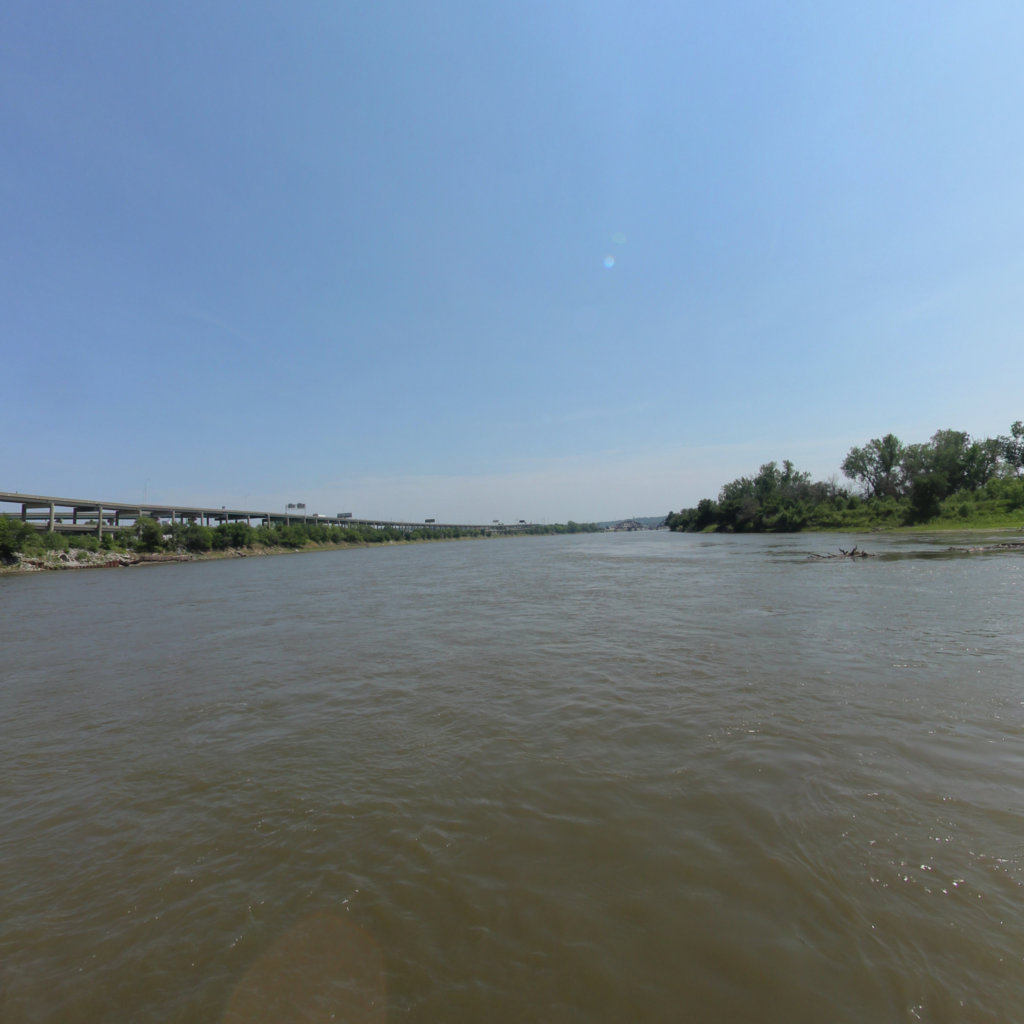
10 frames across 1.7 mi of the route around this location
Help improve this record
See something that needs correcting, or know a source we are missing? The archive gets better through its readers.


