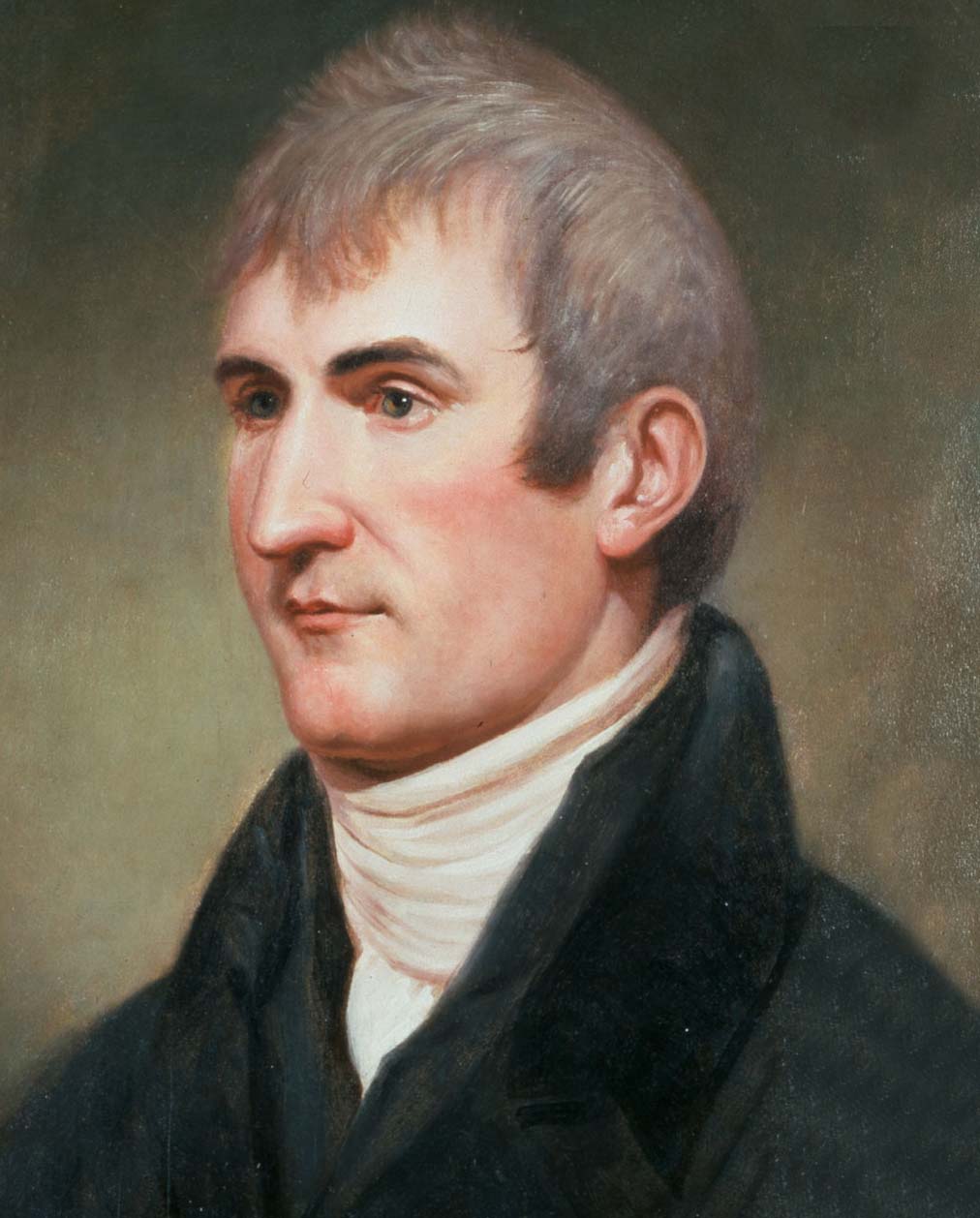


September 19, 1805 found the Corps of Discovery still entangled in the Bitterroot Mountains, weakened by hunger and reduced to eating colt and portable soup. Four narrators—Meriwether Lewis, William Clark, Patrick Gass, and John Ordway—left accounts of the day, and the variations among them illuminate not only what each man chose to record but how rank, literacy, and proximity to events shaped expedition prose.
The Prairie Sighting: Hope in Four Registers
The day’s emotional turning point came when the party crested a ridge and saw open country to the southwest. Lewis renders the moment in his most elevated style:
the ridge terminated and we to our inexpressable joy discovered a large tract of Prairie country lying to the S. W. and widening as it appeared to extend to the W.
Lewis frames the sighting as deliverance, noting that the country "greately revived the sperits of the party already reduced and much weakened for the want of food." Ordway, writing in the enlisted ranks, echoes the substance but compresses the language:
we discovred a very large plain a long distance a head, which we expect is on the Columbia River, which puts us in good Spirits again.
The parallel between Lewis’s "greately revived the sperits" and Ordway’s "puts us in good Spirits again" is close enough to suggest either shared conversation in camp or simply the universality of the relief. Gass, by contrast, omits the prairie sighting entirely, devoting his entry instead to the melting snow, the absence of game, and the killing of another colt. Clark, ranging ahead with the advance party, also makes no mention of the plain—he was on a different stretch of trail and preoccupied with butchering a horse he found in a glade for the men coming behind.
Frazier’s Horse: The Same Accident, Three Tellings
The day’s other set piece was the fall of Frazier’s packhorse down a steep slope into a creek. Three of the four narrators witnessed it, and their accounts diverge in revealing ways. Ordway gives a plain, sergeant’s report:
one of our horses fell backwards out of the trail and rolled down over the steep rocks ab* 200 feet with 2 boxes of Ammunition and plunged in to the creek… we got the horse up again and load it hurt the horse but did not kill him.
Lewis, treating the same event, expands it into a small narrative climax:
Fraziers horse fell from this road in the evening, and roled with his load near a hundred yards into the Creek. we all expected that the horse was killed but to our astonishment when the load was taken off him he arose to his feet & appeared to be but little injured, in 20 minutes he proceeded with his load. this was the most wonderfull escape I ever witnessed.
The two accounts differ even on quantitative points—Ordway’s "200 feet" against Lewis’s "near a hundred yards"—a useful reminder that field measurements in expedition journals are impressionistic. Lewis names the owner (Frazier), identifies the trail itself as the danger ("a narrow rockey path generally on the side of steep precipice"), and frames the survival as miraculous. Ordway names no one and reports outcomes. Gass and Clark, again ahead or otherwise positioned, do not record the incident at all.
What Each Narrator Notices
The four entries together form a composite that no single journal supplies. Clark, the practical advance scout, alone records the natural history of the day—pheasants killed, "Blue jay, Small white headed hawk, Some Crows & ravins & large hawks"—and the logistics of leaving meat hung for the rear party. Gass, the carpenter-sergeant whose journal would be the first published, attends to weather and terrain in compact sentences: "a fine day with warm sun-shine, which melted the snow very fast on the south sides of the hills." Ordway tracks distance traveled ("Came 17 miles this day") and material incidents. Lewis alone offers botanical enumeration—"a very heavy growth of pine of which I have ennumerated 8 distinct species"—and alone closes with a candid medical note: "several of the men are unwell of the disentary. brakings out, or irruptions of the Skin, have also been common with us for some time."
Read in parallel, the September 19 entries demonstrate how the expedition’s documentary record depends on its multiplicity. The sighting of the plain, the fall of the horse, the species of pine, the symptoms of dysentery, the colt killed at a mountain spring—no one journalist captures them all, and the historical day exists fully only in the overlay of four pens.


