
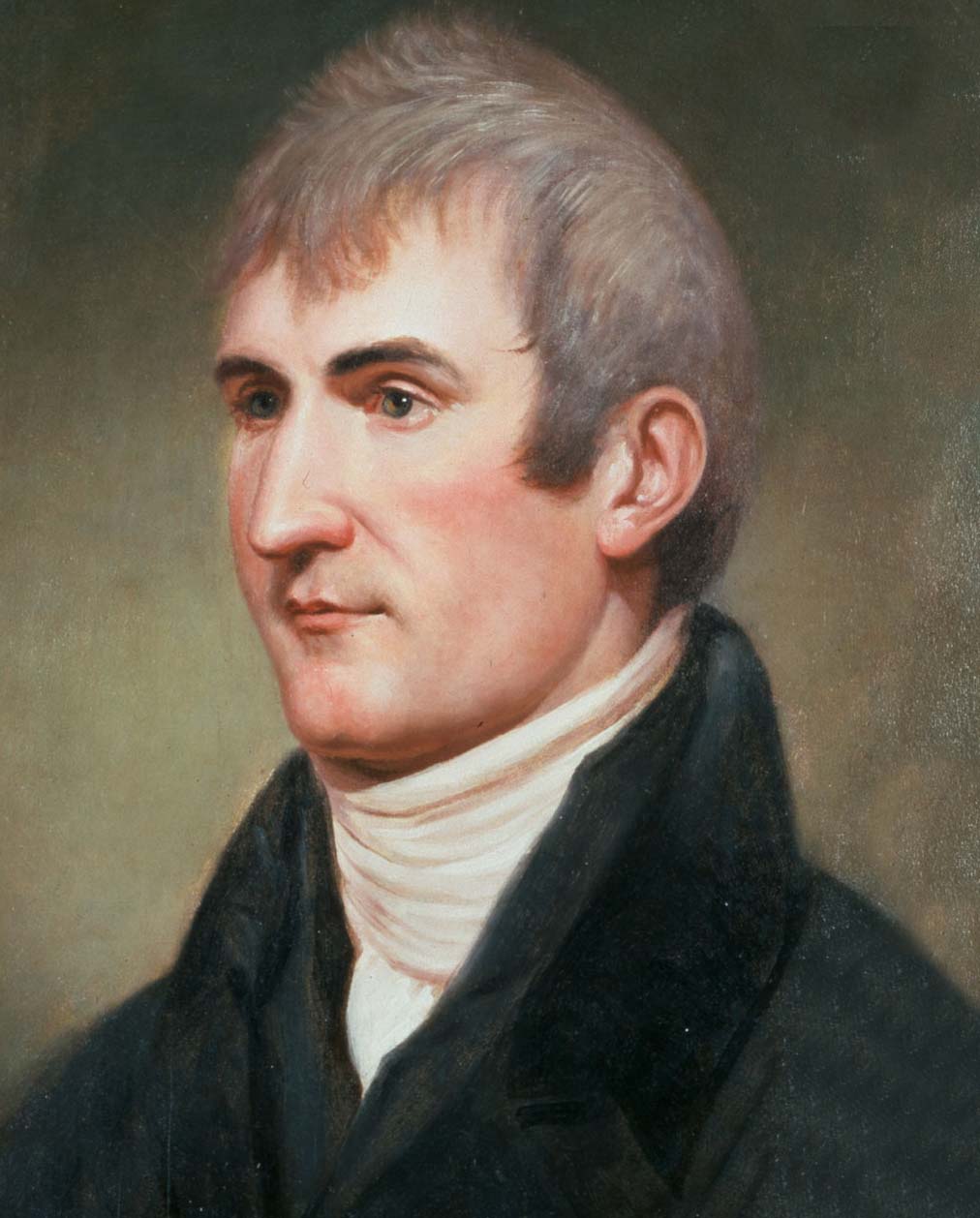


By the morning of July 14, 1805, the long ordeal of the Great Falls portage was nearly behind the Corps of Discovery. Two new canoes, hewn from cottonwood at the upper camp near the White Bear Islands, were ready for launching. Three of the expedition’s journal-keepers — Meriwether Lewis, William Clark, and Sergeant Patrick Gass — set down their accounts of the day, and the differences among them illuminate how labor, command, and observation were divided across the party.
Three Registers, One Day
Clark’s entry is the briefest and most utilitarian. His full account of the day’s work runs only a few lines:
a fine morning Calm and worm musquetors & Knats verry troublesom. The Canoes arrive at 12 oClock & unloade to Dry &c. finished & Lanced the 2 Canoes, Some rain this afternoon. all prepareing to Set out on tomorrow.
Clark, who had supervised the punishing land portage, writes here in the compressed shorthand of a commander tallying the day’s accomplishments: weather, arrival of the canoes, completion of the new vessels, readiness for departure. Lewis, by contrast, having remained at the upper camp overseeing canoe construction, opens his entry on the same domestic note — “This morning was calm fair and warm; the Musquetoes of course troublesome” — and then expands outward into a far longer account. He records the dimensions of the finished boats (“the one was 25 feet and the other 33 feet in length and about 3 feet wide”) and notes that “we have now the seats and oars to make and fit.”
Gass’s narrative, written for eventual publication, falls between the two captains in length but differs from both in voice. Where Lewis writes as a naturalist and Clark as a logistician, Gass writes as a chronicler organizing the expedition’s progress for an outside reader, even supplying a chapter heading. He pairs July 14 with the following day’s departure, summarizing succinctly: “In the afternoon some rain fell but we continued to work at the canoes, and finished them ready for loading.”
Lewis Alone on the Bluffs
The most striking divergence is what Lewis records that the others do not. While Clark and Gass remained at the boats, Lewis “walked out today and ascended the bluffs which are high rockey and steep,” continuing roughly three and a half miles to a “conspicuous eminence” near the mouth of Fort Mountain Creek. From this vantage he took a careful set of compass bearings on successive ranges of the Rocky Mountains:
To the point at which the Missouri first enters the Rocky Mountains S. 28° W. 25 To the termineation of the 1st Chain of Rocky Mountains; northwardly, being that through which the Missouri first passes N. 73° W 80 To the extremity or tirmineation of 2cd Chain of the Rocky Mountains N. 65 W. 150 To the most distant point of a third and continued chain of the same mts N. 50°W. 200
This passage — geographically the most consequential of the day — appears nowhere in Clark’s or Gass’s entries. Lewis is alone in registering the daunting topographic problem the Corps will face: not one mountain wall but at least three successive chains stretching westward two hundred miles. He also alone notes the natural history of the bottom — grass “about 2 feet high,” the appearance of “sand rush and nittles,” and “grasshoppers innumerable in the plains.”
Convergence on the Practical
Where the three narrators do converge is on the day’s logistical heartbeat. All three confirm that Sergeant Ordway brought the canoes up around midday — Clark’s “12 oClock,” Lewis’s “about noon” — that the two new canoes were finished and launched, and that an afternoon shower fell without halting work. Gass’s “some rain fell” and Lewis’s “slight shower at 4 P.M.” and Clark’s “Some rain this afternoon” form a tight triangulation around the same weather event. All three close with the same forward orientation: the party will set out the next morning.
Read together, the entries show the expedition’s documentary system functioning as designed. Clark’s brevity reflects efficient command; Gass’s measured prose reflects an enlisted man composing for posterity; Lewis’s expansive entry — bearings, botany, entomology — reflects the scientific mandate Jefferson had pressed upon him. The same sunny, mosquito-plagued day at the White Bear Islands becomes, in three hands, three different documents.


