
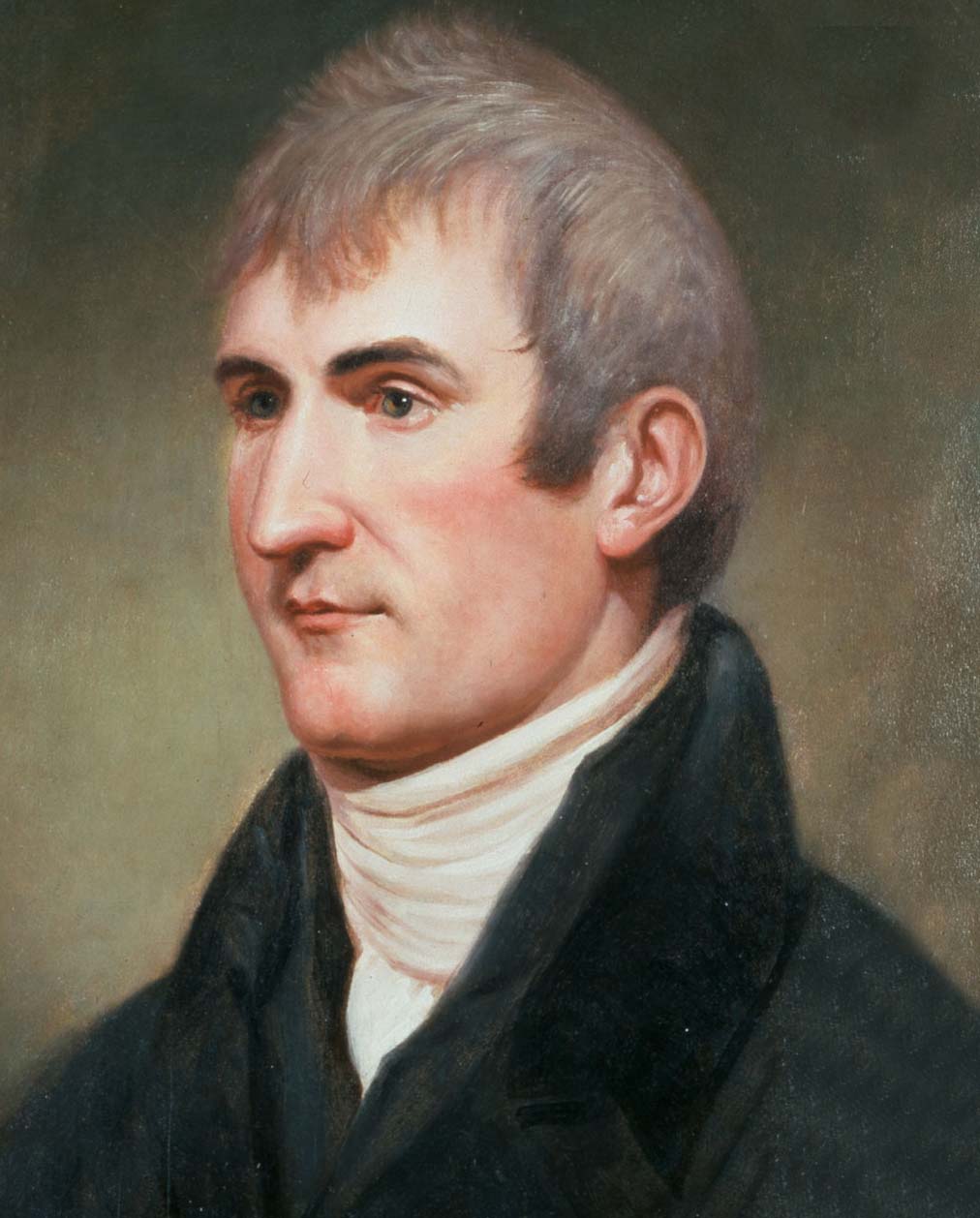


The 19th of May 1806 finds the Corps of Discovery encamped among the Nez Perce at Camp Chopunnish, waiting for the Bitterroot snows to melt. Four men keep journals that day — Lewis, Clark, Ordway, and Gass — and the resulting entries offer an unusually clean comparative case. The same handful of events occur in each: a trading party crosses the river for cows roots, hunters return empty-handed, a long-lost horse is recovered, and a delegation of Nez Perce arrives seeking medical care. Yet the four accounts diverge sharply in scope and sensibility.
The Lewis–Clark Pairing
Lewis and Clark’s entries for this date are, as on many days at Long Camp, near-twins. Both captains open with the morning rain ceasing at 8 o’clock, both name the same five-man trading party — Charbonneau, Thompson, Potts, Hall, and Wiser — and both list the trade goods as "a few awls, Kniting pins and Armbands." The parallel construction extends to the medical clinic: each captain tallies "4 men 8 women and a child," each prescribes eyewater generally, cathartics to two women, and 30 drops of laudanum to a third.
Lewis, however, supplies the clinical reasoning that Clark omits. Where Clark notes simply that one woman’s "Spirets were very low and much hiped," Lewis elaborates:
a third who appeared much dejected and who from their account of her disease we supposed it to be histerical, we gave 30 drops of Laudanum.
This is characteristic. Clark records the action; Lewis records the diagnosis. Lewis also generalizes the women’s symptoms into an ethnographic observation — "a weakness and pain in the loins is a common complaint with their women" — a register Clark does not adopt. Clark, by contrast, is the more tactile witness: he specifies that the rubbing with volatile liniment was applied to "backs hips legs thighs & arms," an anatomical inventory Lewis condenses to "the several parts."
Ordway and Gass: The Enlisted View
Sergeants Ordway and Gass write much shorter entries, and both omit the medical clinic entirely. Neither mentions the four men, eight women, and child who occupied a substantial portion of the captains’ afternoon. This is a striking silence. For the sergeants, the day’s news is the trading expedition and the hunters’ failure — the camp’s food economy — not the captains’ diplomatic medicine.
Ordway gives the clearest gloss of the trade goods returned, naming the commodity twice and supplying the indigenous term:
the men returnd from the village with a considerable quantity of white roots &C. which the natives call couse and a little Shap-pallell &C.
Gass, writing in his more polished published style, frames the same return differently — "a good many of them" — and shifts attention to a subject the captains barely touch: the running tally of recovered horses.
We got another of our old stock of horses; and have now all we left except three; two of which the old Snake guide took with him.
This is the only entry of the four to give a cumulative horse count, and the only one to recall the Shoshone guide’s earlier departure with two animals. Gass writes as a quartermaster; the captains write as physicians and ethnographers; Ordway writes as a working sergeant noting what came back in the bags.
Patterns of Notice and Omission
The horse recovered by the Field brothers — Lewis’s mount from the previous fall’s mountain crossing — appears in three entries but is described differently in each. Lewis claims it personally ("the horse which I rode"); Clark refers to it as "the horse Capt. Lewis rode"; Gass folds it anonymously into the stock count. Both captains note the immediate castration of three horses by Drouillard "in the ordinary," a detail the sergeants omit. Both captains also pause to admire an hour of impromptu horse racing — "several of those horses would be thought fleet in the U States," Lewis writes, with Clark echoing "Swift horses in the atlantic States" — a leisure moment neither sergeant records.
Read together, the four entries demonstrate the stratification of the expedition’s documentary record. The captains’ journals are heavily collaborative and overlap in phrasing to the point of shared composition, while preserving subtle individual signatures — Lewis the diagnostician, Clark the anatomist of action. The sergeants’ journals operate on a different plane entirely, attending to provisions and livestock while the captains’ attention is absorbed by the Nez Perce patients filling their tent.


