
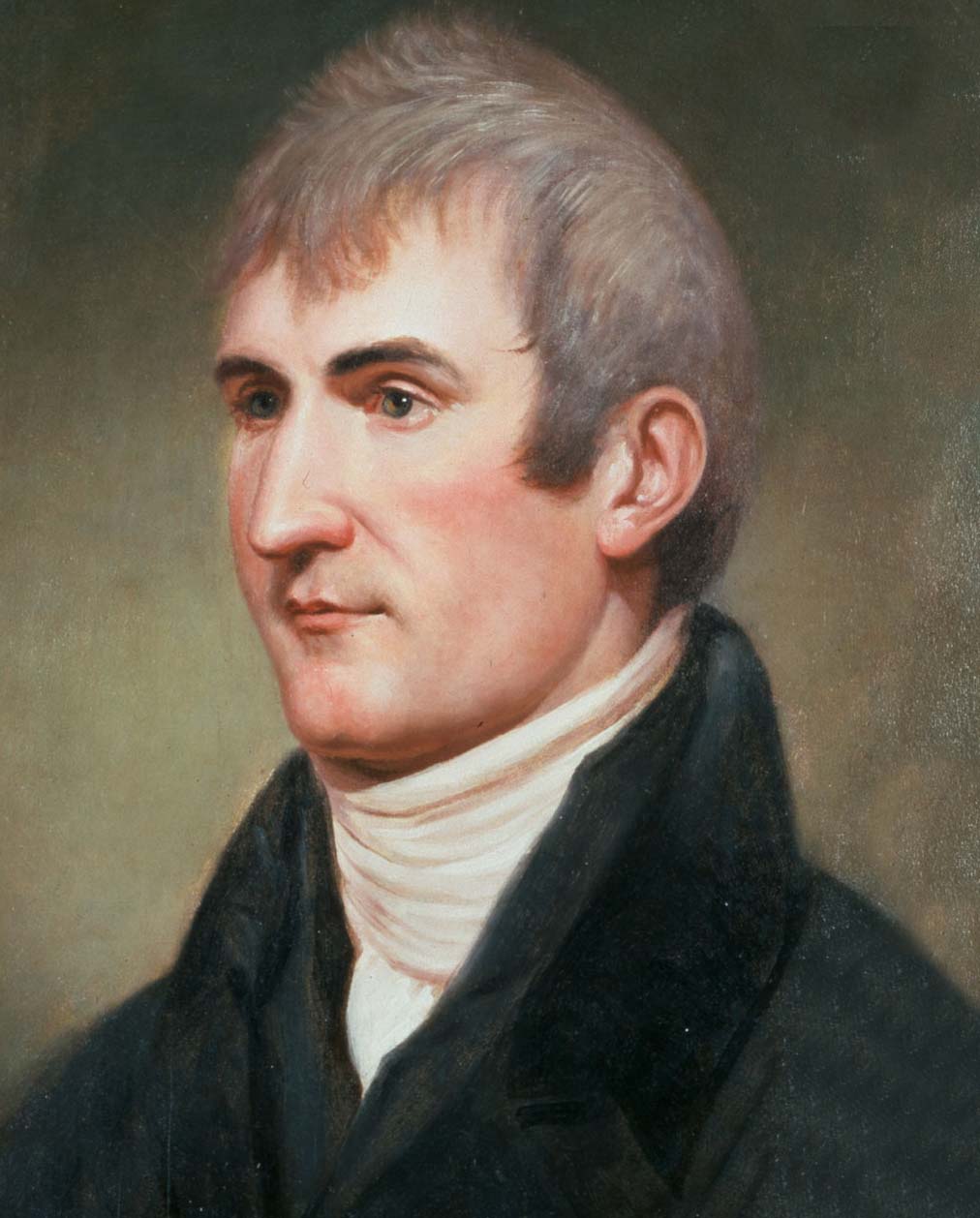

The entries of February 13, 1806 offer an unusually clear view of how the Lewis and Clark expedition’s record-keeping was stratified. Three narrators write from Fort Clatsop on the same day, but they produce strikingly different documents: Lewis composes an extended natural-history essay, Clark transcribes nearly the whole of it into his own journal, and Sergeant John Ordway records a single transaction in one line.
Lewis as Source, Clark as Copyist
The parallel between Lewis’s and Clark’s entries is so close that Clark is plainly working from Lewis’s draft. Both open with the identical sentence about the departing Clatsop visitors:
The Clatsop left us this morning at 11 A.M. not any thing transpired during the day worthy of notice.
Both then report the completion of meat-drying, the Indigenous prediction of a March run of small fish (which Lewis and Clark each independently identify as herring), and the secondhand account of the trader “More” (Lewis) or “Moore” (Clark) whose vessel reportedly carried three cows along the northwest coast. Both draw the same inference — that this constitutes “strong circumstantial proof” of a European settlement at Nootka Sound or beyond.
Clark’s only substantive deviation is a parenthetical hedge that Lewis does not include:
I think this (if those Cows were not Coats) Strong circumstantial proof that their is a Settlement of white persons at Nootka Sound
The aside — wondering whether the informants meant goats rather than cows — is characteristic of Clark’s habit of registering doubt about translation and hearsay. Lewis, by contrast, presents the report without qualification. Even when Clark is copying, he edits.
The Botanical Catalogue
The bulk of both captains’ entries is a methodical description of two ferns and (in Lewis’s version) a green brier. The botanical prose is technical, Linnaean in spirit, and almost word-for-word identical between the two journals. Lewis writes of the large fern’s rootstock that it is
somewhat flat on two sides about the size of a man’s arm and covered with innumerable black coarce capillary radicles which issue from every pat of it’s surface
Clark renders the same passage with only orthographic variation:
Somewhat flat on two Sides about the Size of a man’s arm and covered with innumerable black coarse capillary radicles which issue from every part of its surface
One notable asymmetry: Lewis includes a substantial paragraph on the green brier — its hooked thorns, its ternate leaves resembling “the perple raspberry common to the Atlantic states,” and its tendency to make the Columbia bottomlands “almost impenitrable.” Clark omits this passage entirely, moving directly from the Nootka speculation to the ferns. Whether the omission reflects Clark copying from an earlier draft of Lewis’s notes, or simply abridging, the effect is that Lewis’s herbarium is slightly richer than Clark’s on this date.
Ordway’s One-Line Economy
Sergeant Ordway, writing from the same fort on the same day, produces an entry of a different order entirely:
bought a sea otter skin from the Indian for a peace of Tobacco not the half of a carrit.
Where the captains spend hundreds of words on leaflets and radicles, Ordway records what neither Lewis nor Clark mentions: the actual commerce of the post. A sea otter pelt — a luxury good in the China trade and one the captains had repeatedly tried and failed to acquire on favorable terms during the autumn — has just been obtained for less than half a carrot of tobacco. The Clatsop visitors whose departure the captains note in passing are, in Ordway’s account, trading partners in a specific transaction.
The register difference is total. Lewis and Clark write for posterity and for Jefferson, cataloguing flora and speculating about coastal geopolitics. Ordway writes for himself, in the practical idiom of an enlisted man tracking what he has bought and what he paid. Read together, the three entries show the expedition’s documentary apparatus working at full stretch: scientific description, geographic inference, and ground-level economic record, all generated within the walls of Fort Clatsop on the same uneventful Thursday.


