
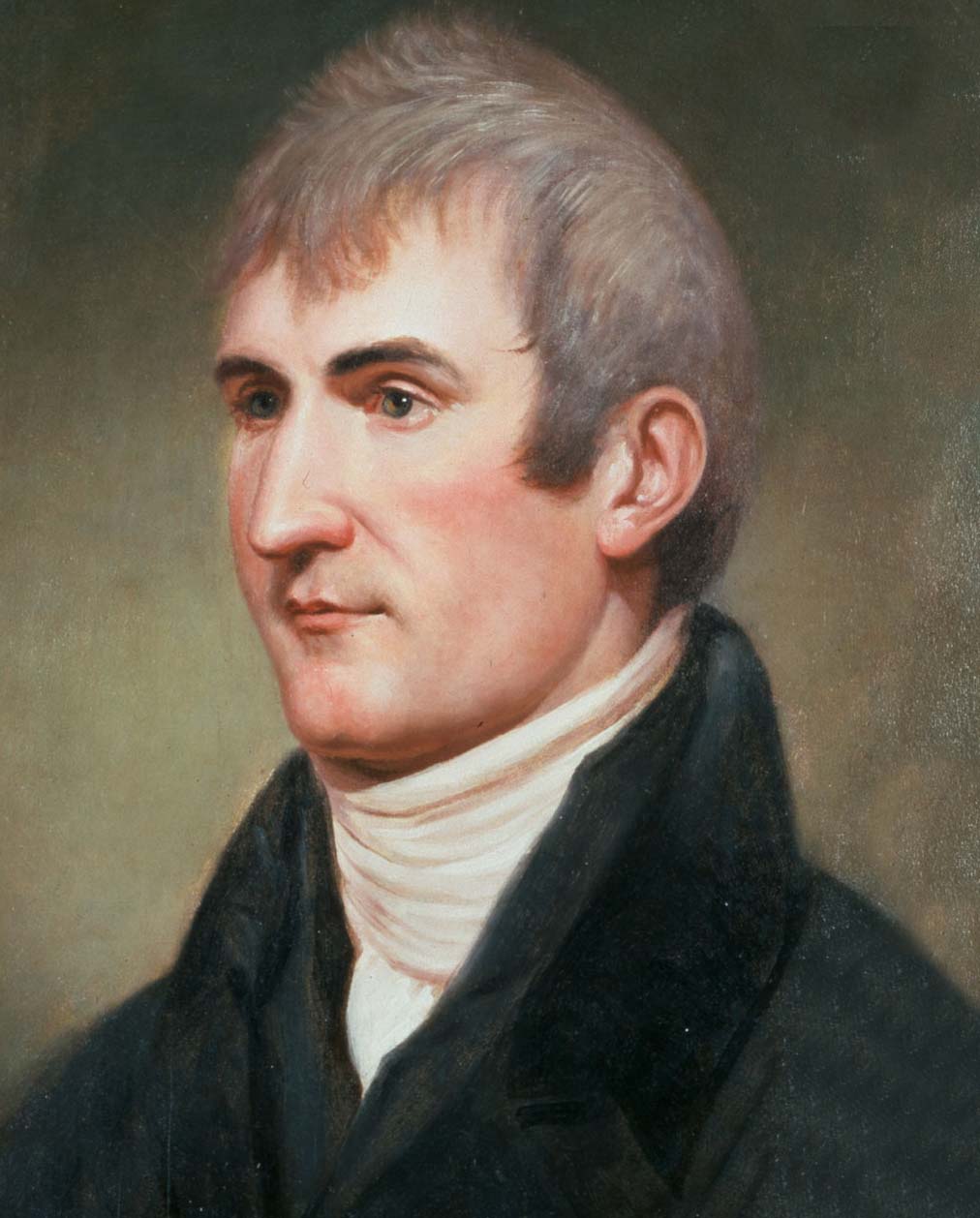


April 18, 1806 finds the Corps of Discovery encamped at the basin below the Long Narrows of the Columbia, struggling to convert their dwindling fleet of canoes into a string of pack horses. Four narrators—Meriwether Lewis, William Clark, Patrick Gass, and John Ordway—each commit the day to paper, and the resulting entries form a revealing study in how rank, role, and temperament shape what an observer chooses to record.
The Same Portage, Four Vantage Points
The day’s logistical spine is identical across all four journals: the party ascended to the foot of the rapids, made a short portage, towed canoes by cord, and landed at the basin below the Long Narrows where Clark had gone ahead to begin trading for horses. Lewis, writing with the precision of a commanding officer composing an official record, fixes the distances exactly:
here we found it necessary to unload the perogues and canoes and make a portage of 70 paces over a rock; we then drew our vessels up by a cord and the assistance of setingpoles. from hence we proceeded to the bason below the long narrows 5 ms. further and landed on the Lard. side at 1/2 after 3.
Ordway’s account tracks Lewis’s closely in sequence and substance—crossing to the north side, the short portage, the towing, the 3 P.M. landing—but his sergeant’s eye lingers on the practical disposition of equipment and provisions: “unloaded the canoes cut the large ones for firewood,” and the purchase of “2 dogs several cakes of chappalell.” The parallel between Ordway and Lewis here is close enough to suggest Ordway either drew on Lewis’s daily summary or, more likely, both men recorded shared camp orders.
Gass, the carpenter-sergeant whose published 1807 narrative often condenses, gives the most pessimistic version. He alone notes that one of the small canoes “got split so that we were obliged to carry the load two miles by land,” and he alone articulates the strategic bottom line: “Could we get about 12 horses we would be able to go by land.” Where Lewis abstracts and Ordway inventories, Gass calculates.
Clark Among the Skilloots: An Ethnographic Departure
The most striking divergence is Clark’s. Having gone ahead to barter at the Skillute village, he was stationary while the others labored upriver, and his entry expands into the longest and most ethnographically rich of the four. After noting the arrival of “Great numbers of the Indians from the falls and both above and below,” Clark devotes the bulk of his journal to a detailed description of two gambling games played between the Skadatts and the Skillutes:
they made use of 2 Small pices of bone in this form and Size a bone was given to 2 men of the Same party who changed it from hand to hand with great dexterity one hand above the other looking down, and when he was ready for the opposit party to guess he Seperated his hands Swinging them around the breast
Clark candidly admits the limits of his understanding of the second game played with sticks beneath a bark hat: “as this is a very intrecut game I cannot describe it.” This admission of ethnographic difficulty is characteristic of Clark, who consistently records what he cannot fully decode rather than smoothing it over. Lewis, Ordway, and Gass make no mention of the games at all, despite Lewis having walked up to the same Skillute village later in the day.
What Lewis Notices That Others Miss
Lewis, by contrast, records two details absent from the other three journals: the overnight visit by the Chilluckkittequaw chief and twelve of his nation—three of whom “slept at my feet”—and his own theatrical demonstration of technology at the village:
I shot my airgun in the presents of the natives at the village which excited great astonishment.
The airgun episode, recurring throughout the journals as a diplomatic set-piece, is the kind of moment Lewis preserves carefully and the enlisted men routinely omit. Lewis also voices the trading frustration most sharply, observing that the Indians “have a great abundance of horses but will not dispose of them” and that the four horses Clark obtained came at “more than double” the price paid to the Shoshones and Flatheads the previous summer.
Read together, the four April 18 entries map a clear division of attention: Lewis preserves diplomacy and command perspective; Clark, freed from the river, becomes ethnographer; Ordway tracks operational detail in close parallel with Lewis; and Gass distills the day to the strategic problem of getting twelve horses and walking out of the Columbia gorge.


