
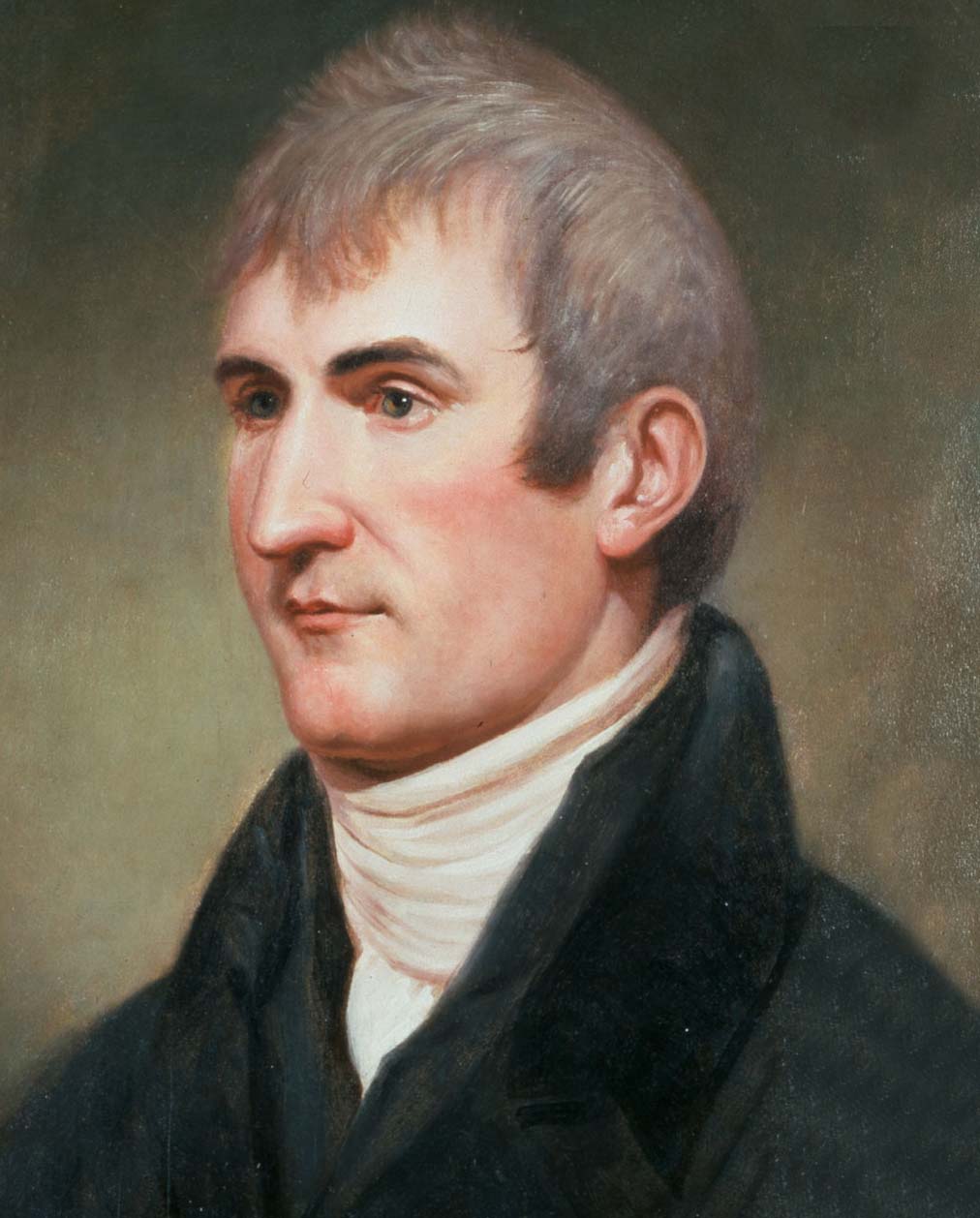
The entries of February 6, 1805, by Meriwether Lewis and Sergeant John Ordway describe the same winter day at Fort Mandan, yet they could hardly be more different in scope. Lewis composes a richly detailed account of Indigenous diplomacy, blacksmithing economics, and the captains’ provisioning strategy. Ordway, writing as an enlisted sergeant keeping a soldier’s log, condenses the day to a sentence and a half. Read together, the two entries illustrate how register and responsibility shaped what each man preserved for posterity.
Two Registers, One Day
Ordway’s entry is terse and operational. He notes that the wind continued to “trouble us verry much,” that Lewis “took his observations,” and that Shields returned with game:
Shields went out towards evening to hunt & killed 3 Goats which we brought in and eat the meat.
Lewis records the same hunt — “Shields killed three antelopes this evening” — but where Ordway writes “Goats,” Lewis uses the more zoologically precise “antelopes.” The divergence is characteristic: Ordway employs the common frontier vernacular for pronghorn, while Lewis, ever conscious of his role as natural historian for President Jefferson, reaches for the term he considers more accurate. Neither is wrong by the standards of 1805, but the difference signals the audiences each man imagined for his journal.
Lewis also confirms a small detail Ordway compresses into four words. Ordway notes only that Lewis “took his observations”; Lewis himself opens with the weather (“Fair morning Wind from N. W.”) that made such celestial work possible, and frames the day around a sley readied for the return of Clark’s hunting party. The sergeant logs the captain’s activity; the captain logs the reasoning behind it.
Diplomacy, Iron, and Corn
The richest material in Lewis’s entry is entirely absent from Ordway’s. Lewis names five Mandan visitors — “the Big white, the Coal, big-man, hairy horn and the black man” — and remarks, with evident relief, on their unusual brevity:
I smoked with them, after which they retired, a deportment not common, for they usually pester us with their good company the ballance of the day after once being introduced to our apartment.
The aside is one of the more candid lines in Lewis’s winter journal, betraying the strain of constant hospitality on a commander who valued his writing hours. Ordway, whose duties did not include receiving chiefs in the captains’ quarters, would have had no reason to record the visit at all.
Lewis then turns to the day’s most consequential transaction. The expedition’s blacksmiths — chiefly John Shields and Alexander Willard — had become, in his words, “a happy resoce to us in our present situation.” Mandan demand for iron arrow-points and hide-scrapers was so intense that Lewis authorized the dismantling of a burnt-out sheet-iron “callaboos” (a corruption of caboose, the boat’s portable stove) for trade:
for each piece about four inches square he obtained from seven to eight gallons of corn from the natives who appeared extreemly pleased with the exchange-
The detail is significant for ethnohistorians and economic historians alike: it documents both the Mandan capacity to absorb sheet iron at favorable rates and the expedition’s recognition that, lacking trade goods sufficient for the winter, ingenuity at the forge would substitute for the contents of the trade chest. Lewis frames the arrangement with quiet pride, observing that he could not “have devised any other method to have procured corn from the natives.”
What Each Narrator Was For
The asymmetry of February 6 is not a failure on Ordway’s part. His journal, by design, tracks weather, hunts, and the movement of men and supplies — the daily ledger of a sergeant. Lewis’s entry, by contrast, is an officer’s report and a naturalist’s notebook, attentive to diplomacy, economy, and the small social textures of life inside the fort. When Ordway and Lewis are read in parallel for this date, the result is not redundancy but stereoscopy: Ordway confirms the bare facts (the wind, the observations, Shields’s three pronghorn), while Lewis supplies the reasoning, the names, and the trade ratios that make the day legible as history.


