
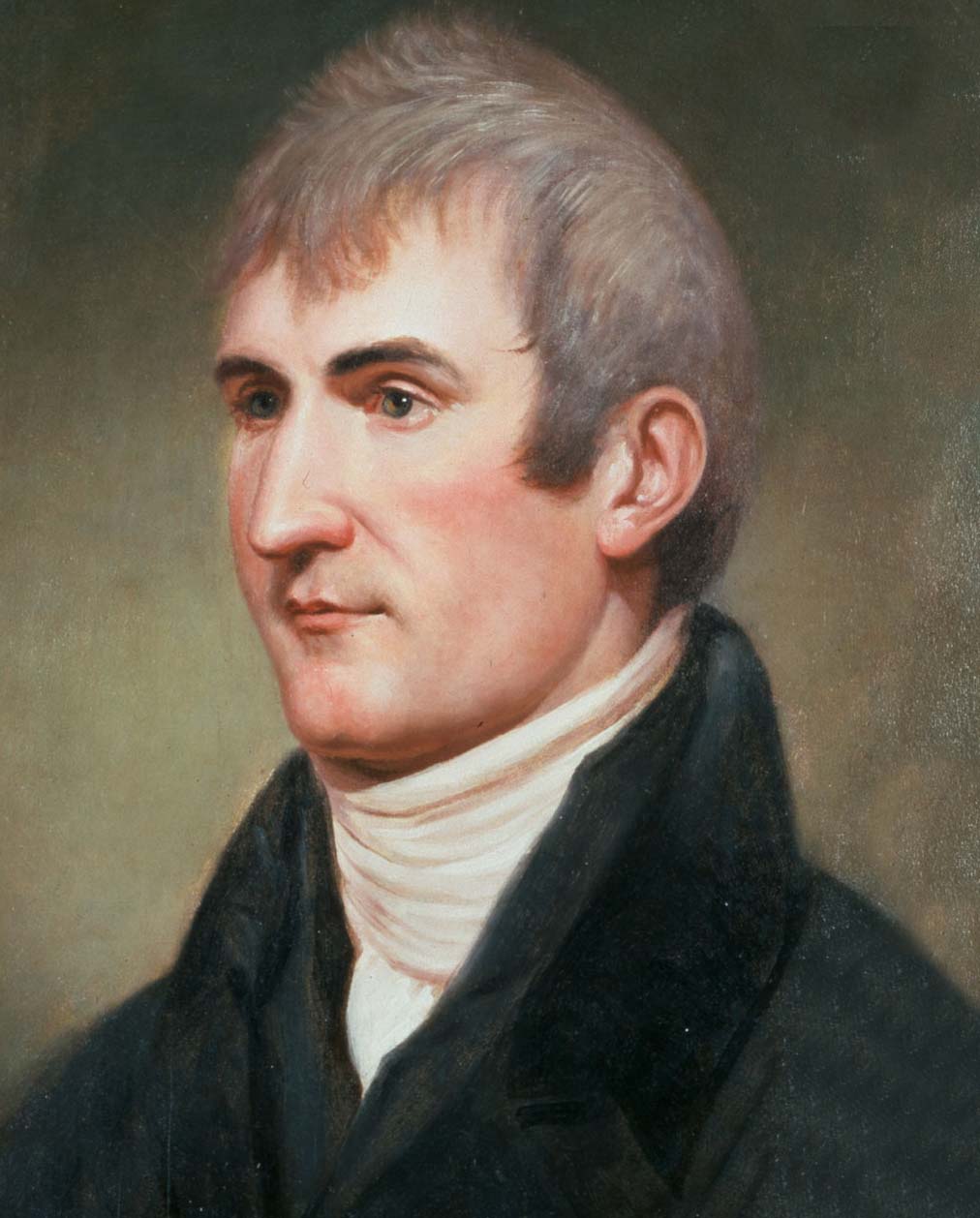


July 13, 1806 finds the Corps of Discovery operating in two widely separated theaters. At the Great Falls, Meriwether Lewis reopens the caches deposited the previous summer; far to the south, William Clark, Patrick Gass having remained with Lewis’s contingent, crosses the Three Forks of the Missouri to begin his overland push toward the Yellowstone. John Ordway, traveling with the canoe party, occupies a transitional role—setting out with Clark in the morning and parting from him by afternoon. The four journals together produce an unusually layered record of a single day during which the expedition’s planned division was executed.
Lewis at the White Bear Islands: A Catalogue of Losses
Lewis’s entry is dominated by the inventory of damage at the cache. The river had risen and saturated the deposit, and his losses were both practical and scientific:
had the cash opened found my bearskins entirly destroyed by the water, the river having risen so high that the water had penitrated. all my specimens of plants also lost. the Chart of the Missouri fortunately escaped.
The destruction of his botanical specimens—gathered across thousands of miles of ascent—is recorded with the same compressed factuality as the spoiled bearskins. Lewis adds a particularly vivid detail of the medicine chest:
the stoper had come out of a phial of laudinum and the contents had run into the drawer and distroyed a gret part of my medicine in such manner that it was past recovery.
Patrick Gass, sharing the camp, offers a far more compressed version of the same scene, noting only that the party
opened a deposit we had made here and found some things spoiled
before turning to the universal complaints of the day: tormenting mosquitoes and howling wolves. Gass’s brevity here is characteristic; where Lewis itemizes scientific loss, Gass registers atmosphere and discomfort. Both, however, agree on the mosquitoes—Lewis admits he could not have written at all without his
musquetoe bier
, while Gass simply notes the torment.
Clark and Ordway at the Three Forks: A Choreographed Separation
The southern half of the day belongs to Clark and Ordway, whose entries describe the same events from complementary vantage points. Both men note the rendezvous with Sergeant Pryor’s horse party at the mouth of the Madison, and both record that Pryor had arrived only an hour before. Clark, as commanding officer, frames the moment administratively:
previous to their departur I gave instructions how they were to proceed &c. I also wrote to Capt Lewis by Sergt. Ordway
Ordway, receiving those instructions, records the parting from below:
Cap’ Clark & party leaves us hear to cross over to the River Roshjone. So we parted I and 9 more proceeded on down the river with the canoes verry well
The two narrators thus bracket the split from opposite sides—Clark looking after the canoes as they depart, Ordway looking back at the horse party crossing eastward.
Hunting tallies in the two journals diverge in instructive ways. Clark credits Pryor’s party with
6 deer & a white bear
, while Ordway records only
a deer and one antelope
killed and a white bear merely wounded. Such discrepancies are common when reports pass through intermediaries, and they suggest that Clark may have logged the cumulative game brought in while Ordway noted only what he personally witnessed at the rendezvous.
Sacagawea’s Counsel and the Geographer’s Eye
Clark’s entry is the longest and most ethnographically significant of the four. Alone among the day’s narrators, he records the strategic intervention of Sacagawea regarding the route across the divide:
The indian woman who has been of great Service to me as a pilot through this Country recommends a gap in the mountain more South which I shall cross
The passage is one of Clark’s most direct acknowledgments of Sacagawea’s geographic knowledge—neither Lewis, Gass, nor Ordway notes her role on this date. Clark also offers a sustained landscape description of the country between the Gallatin and Madison rivers, cataloging soil quality, stratified white rock, and the wildlife of the bottoms: antelope, deer, wolves, beaver, otter, eagles, hawks, crows, and geese.
Lewis, by contrast, closes his entry with a single naturalist’s note that has no parallel in the others:
killed a buffaloe picker a beatifull bird
—almost certainly a reference to the cowbird or a similar species associated with bison herds. Where Clark inventories an entire valley, Lewis isolates a single specimen. The contrast captures, in miniature, the working temperaments the two captains exhibited throughout the return journey.


