
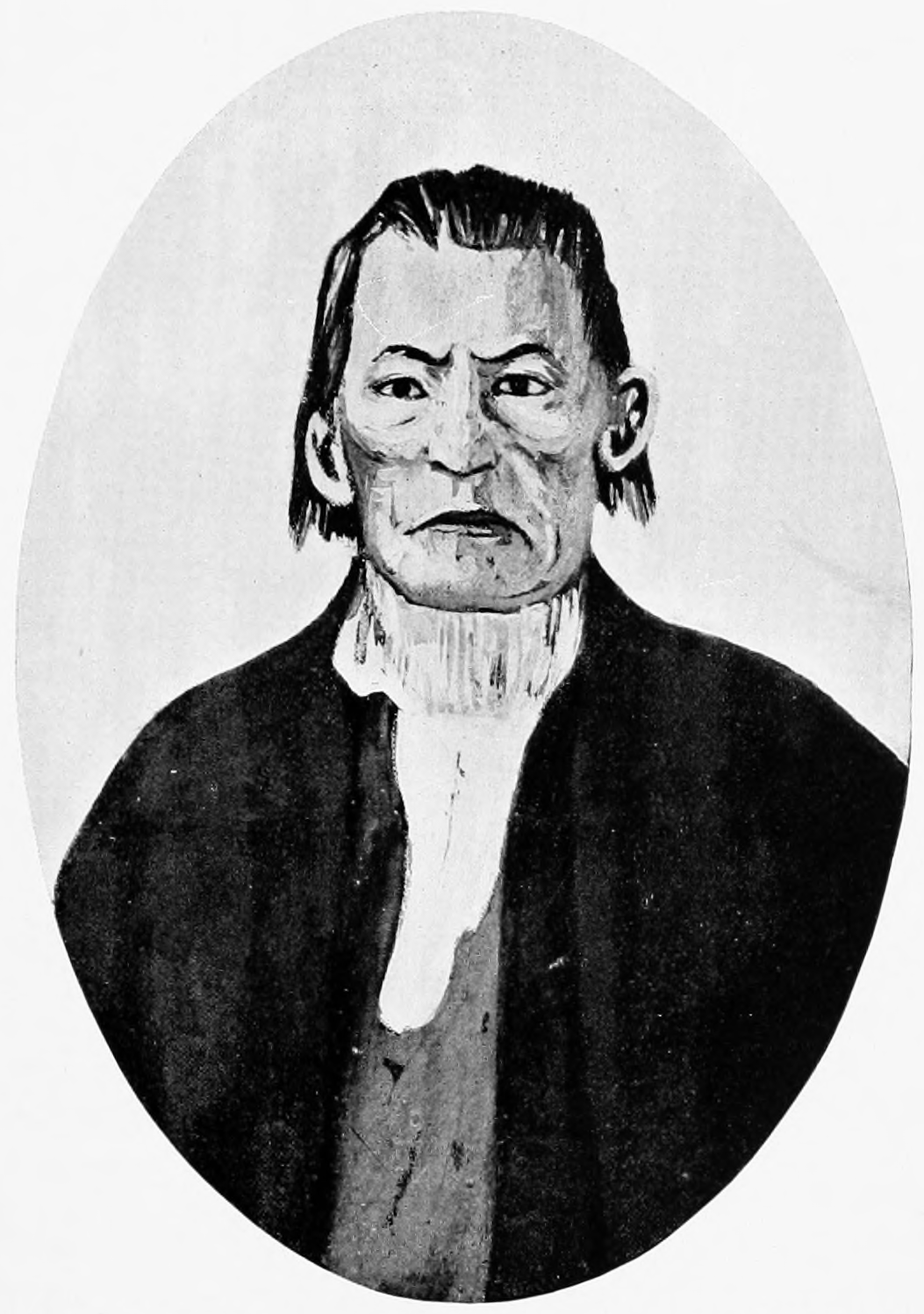

The expedition’s struggle along the north shore of the Columbia estuary on November 10, 1805 is preserved in two distinct voices. Sergeant Patrick Gass and Captain William Clark — the latter writing two parallel entries that survive in his field and fair notebooks — describe the same sequence of events: a hopeful morning launch, a forced retreat from rising swells, an attempted second start, and finally a cramped camp made on drift logs beneath sheer cliffs. The convergence of detail across narrators confirms the day’s outline; the divergence in emphasis reveals how rank, role, and writerly habit shaped each man’s record.
A Shared Sequence, Two Registers
Both Gass and Clark open with the night’s hard rain and the morning’s calmer water. Gass economically frames the day’s geography by reference to the previous camp, noting they “set out from Cape Swell, coasted along for 8 miles.” Clark, by contrast, attends to administrative detail — naming features as he passes them and leaving a blank where a name has not yet been chosen:
passed a Deep Bay on the Stard. Side I Call ____
This habit of provisional toponymy is characteristic of Clark the cartographer; Gass, the carpenter-sergeant, has no such proprietary impulse over the landscape. Where Clark catalogues, Gass narrates.
The two men align closely on the day’s central misadventure. Gass writes that after dining on pounded salmon and waiting roughly two hours, the party reloaded “but could not get round the point, the swells were still so high.” Clark’s field entry corroborates the timing — “about 3 oClock when the evening appearing favourable we loaded & Set out” — and adds the consequence Gass leaves implicit: that they were forced back a second time, after which the loading was stowed “on a rock above the tide water.”
The Camp on Floating Logs
Both narrators converge on the day’s most striking image: a camp pitched on driftwood at the foot of a cliff. Gass renders the predicament with the plainspoken compression that defines his journal:
Here we scarcely had room to lie between the rocks and water; but we made shift to do it among some drift wood that had been beat up by the tide.
Clark’s field entry sharpens the precariousness with a detail Gass omits — that the logs themselves were not stable ground:
The logs on which we lie is all on flote every high tide
This observation, that the men were sleeping on a raft of debris that lifted and shifted with each tidal cycle, is among the most vivid in either captain’s record of the estuary passage. It does not appear in Gass at all. Clark also specifies the height of the surrounding cliffs — “4 or 500 feet” in the field notebook, “about 500 feet” in the fair copy — where Gass simply calls them “high cliffs of rocks.”
Salt Water, Pounded Fish, and the Approach to the Sea
A subtler divergence appears in how each man registers the proximity of the Pacific. Gass closes his entry with a single declarative sentence: “The water is become very salt.” Clark notes the same phenomenon functionally rather than symbolically, explaining why the small drain mattered to camp selection — “we found verry convt. on account of its water, as that of the river is Brackish.” For Gass the salinity is a milestone; for Clark it is a logistical problem solved by a freshwater seep.
Both men record the menu without enthusiasm. Clark writes “nothing to eate but Pounded fish,” and his fair copy expands this slightly to “nothing to eate but dried fish pounded which we brought from the falls” — a small editorial gesture toward a future reader who would not know the provenance of the rations. Gass, writing for himself, needs no such gloss; his earlier mention of “pounded salmon, that we had procured from the Indians” suffices.
Wildlife observations also differ in scope. Gass notes “porpoises, sea otter and a great many sea gulls” — three species marking the marine transition. Clark’s field entry mentions only the gulls (“Saw great numbers of Sea Guls”) and omits the porpoises and otter entirely. On this Sunday at least, the sergeant proves the more attentive natural historian, while the captain’s eye remains fixed on shoreline, soundings, and the sodden bedding that occupied the party until late.


