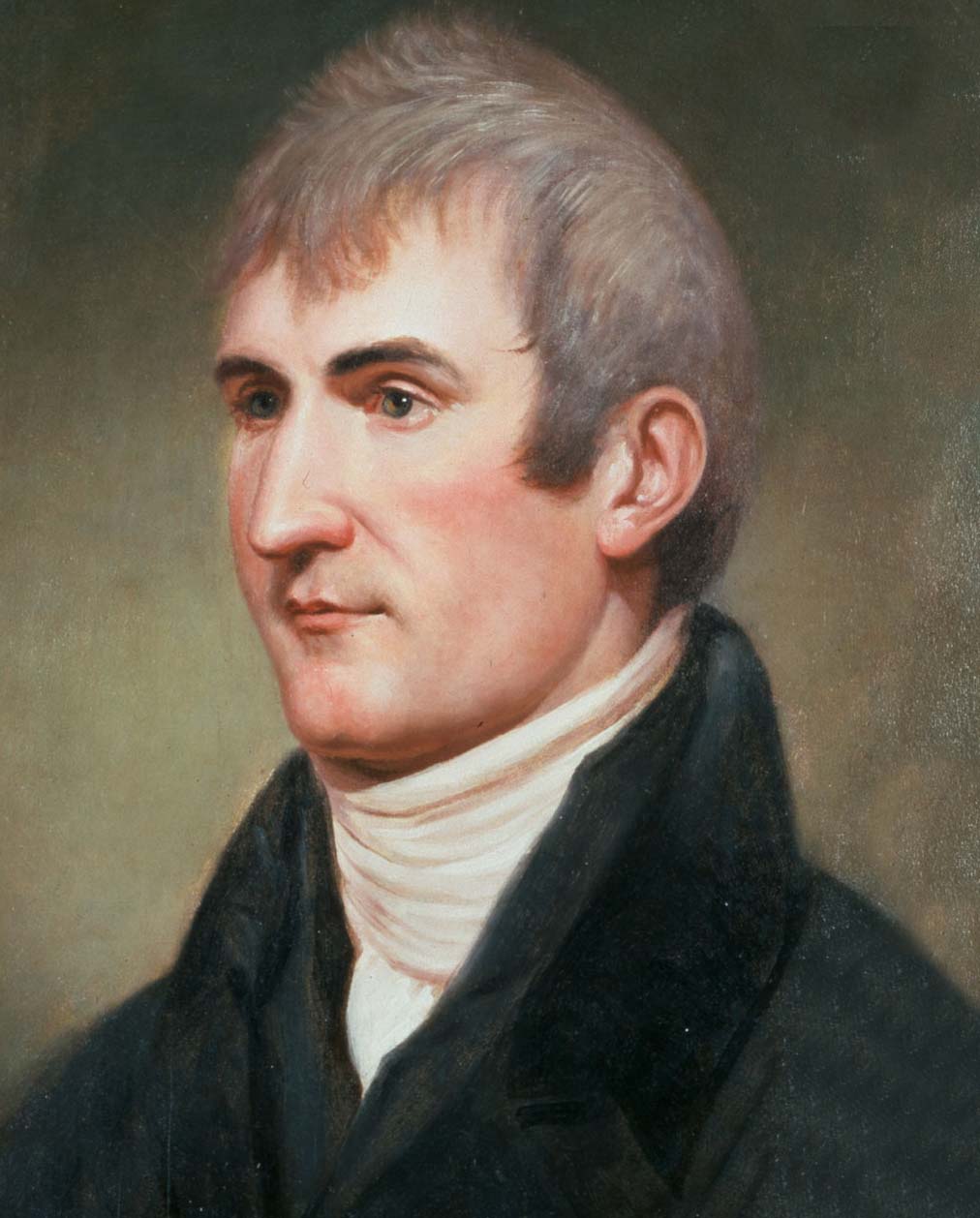


The entries of June 28, 1806 offer one of the clearest demonstrations in the expedition record of how four men, camped together on the same southern-facing slope above a Nez Perce fishery, produced four distinct kinds of documents from a shared experience. The party had retraced its westbound path of the previous September, found grass for the famished horses just where their Indian guides predicted, and halted early after only thirteen miles. What each narrator chose to record from that short day exposes the working habits behind the journals.
Lewis and Clark: Parallel Drafts of a Single Observation
The entries by Meriwether Lewis and William Clark are so close in wording that they must derive from a shared field note or from one captain copying the other. Both men open identically — “This morning we collected our horses and set out as usual after an early breakfast” — and both arrive at the same conclusion about travel over snow:
we find the travelling on the Snow not worse than without it, as easy passage it givs us over rocks and fallen timber fully compensates for the inconvenience of sliping, certain it is that we travel considerably faster on the snow than without it. (Clark)
Lewis’s version differs only in spelling and the insertion of “the” before “easy passage.” The same parallelism governs their measurement of snow compaction (“sinks from 2 to 3 inches with a horse”), their note on diurnal surface hardness, and their botanical inventory of the small black pheasant, the mountain huckleberry (Lewis: “whortleburry”), and the broad-leafed succulent grass the horses favored.
One small but telling divergence: Clark writes “I killed a Small black pheasant,” while Lewis writes “we killed a small black pheasant.” The collective pronoun in Lewis’s draft suggests he is working from Clark’s account rather than the reverse on this point — Lewis generalizing what Clark recorded as a personal act. The two captains also disagree on the date of the prior fall encampment they passed: Clark places it on “the 14 Sept.” while Lewis assigns it to “the 16 of September last.”
Gass and Ordway: The Enlisted Register
Sergeant Patrick Gass and Sergeant John Ordway, working independently, produce shorter and pragmatically focused accounts. Ordway is the most compressed of the four, dispatching the day in a few lines and noting weather the captains omit entirely:
in the evening we had Thunder & hail.
Neither Lewis nor Clark mentions this storm. Ordway also frames the route question in practical terms his officers do not — that the guides “took us on a ridge different from that we went last fall, but a better way” — registering the tactical judgment of Nez Perce pathfinding without the captains’ geographic precision about forks and fisheries.
Gass, characteristically, supplies the literary flourish absent from the other three journals. Where Lewis and Clark catalog snow depth in inches, Gass produces the day’s most memorable image:
On the south side of this ridge there is summer with grass and other herbage in abundance; and on the north side, winter with snow six or eight feet deep.
This seasonal antithesis — a rhetorical device entirely foreign to the captains’ registers — is the kind of observation Gass’s published 1807 narrative would later be celebrated for. Gass also alone records the commissary detail that “our meat is exhausted” and that the men were subsisting on pounded roots made into “thick soup,” along with the failed evening hunt. The captains, focused on natural history and route, pass over the food situation in silence.
What Each Narrator Sees
Read together, the four entries divide the day’s experience along predictable lines. Lewis and Clark provide the scientific and topographic record — snow physics, ornithology, botany, mileage, the geography of the dividing ridge and the trail to the fishery. Ordway logs weather and a judgment on the guides. Gass attends to the commissary, the hunt, and the human contrast between the two faces of the mountain.
The textual relationship between the two captains’ entries on this date — verbatim in long stretches, divergent only in pronouns and a two-day discrepancy on a prior date — is a useful reminder for readers that the Lewis and Clark journals are not four independent witnesses on every page. On June 28, 1806, they are effectively two: the captains’ shared draft, and the two sergeants writing on their own.


