
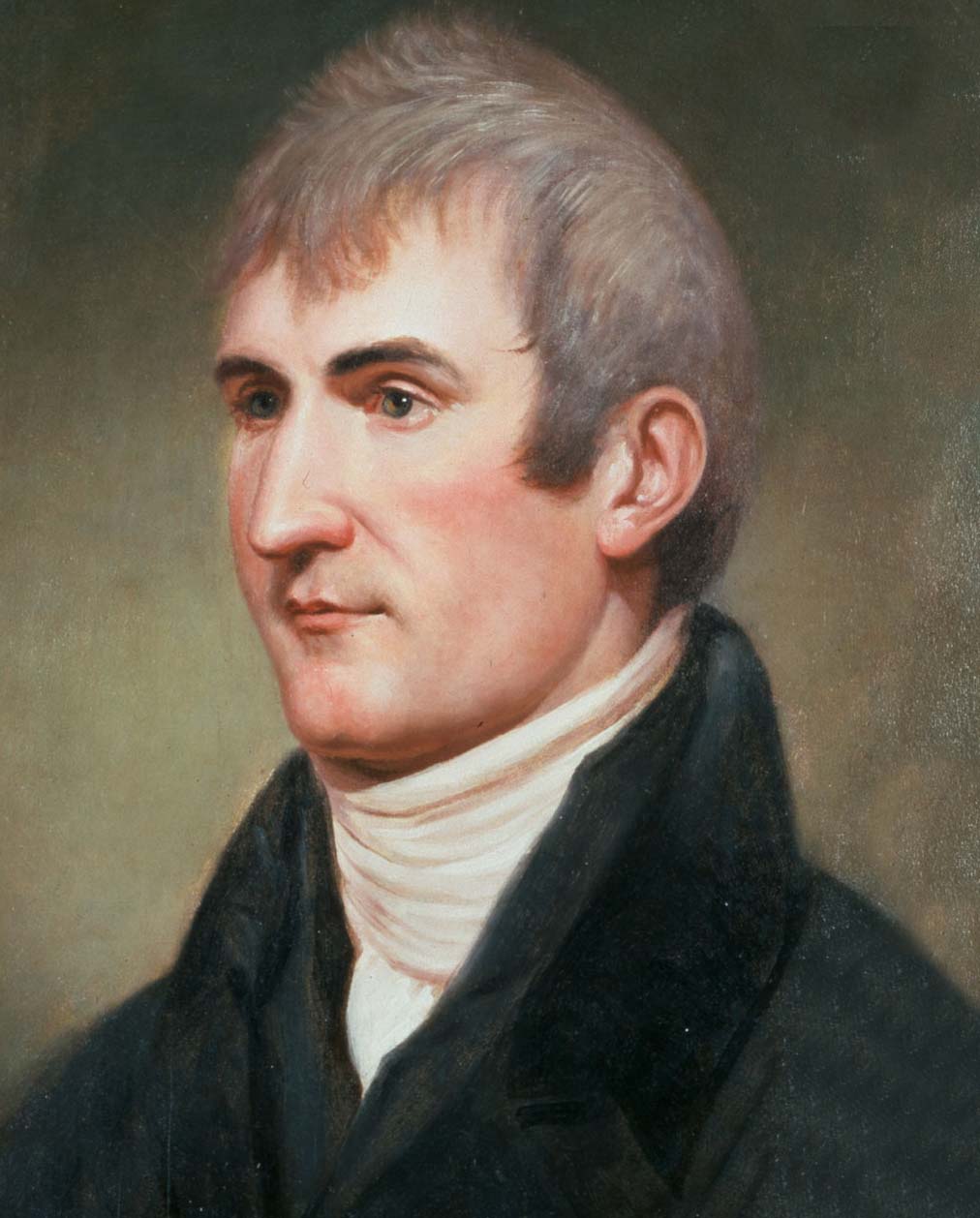


July 9, 1805 marks among the personal setbacks of the expedition: the failure of the iron-framed skin boat Lewis had designed at Harpers Ferry and shepherded across half a continent. The three journals kept on this date — by Lewis, Clark, and Sergeant Gass — record the same sequence of events (launch, storm, leak, abandonment) but at radically different lengths and emotional registers. Read together, they show how a single day’s events refracted through the personalities and roles of three narrators.
The Inventor’s Lament
Lewis devotes by far the longest entry — nearly the whole day’s record — to the boat he calls his “favorite.” His morning is buoyant: the vessel “lay like a perfect cork on the water,” and he notes with evident pride that “five men would carry her with the greatest ease.” Then a violent windstorm forces the men to unload the canoes, and by evening Lewis discovers that the tallow-and-coal composition he had improvised in place of pitch has separated from the skins.
I need not add that this circumstance mortifyed me not a little; and to prevent her leaking without pich was impossible with us, and to obtain this article was equally impossible, therefore the evil was irraparable
What follows is unique to Lewis’s journal: a detailed engineering post-mortem. He observes that the section made of buffalo hides with the hair left on “about 1/8th of an inch in length” had held the composition and remained sound, and he reasons that “had I only singed my Elk skins in stead of shaving them I beleive the composition would have remained and the boat have answered.” This is the voice of the experimenter cataloging what he has learned even as the experiment dies. He closes with an unmistakably literary flourish:
but it was now too late to introduce a remidy and I bid a dieu to my boat, and her expected services.
Clark’s Logistical Shorthand
Clark records the same events in roughly a fifth the space. Where Lewis dramatizes, Clark abstracts. He notes simply that the boat “would not answer without the addition of Tar which we had none of” and that the substitution of “Cole & Tallow” failed because it “Seperated from the Skins when exposed to the water.” Clark allows himself one phrase of feeling — “this falire of our favourate boat was a great disapointment to us” — but immediately pivots to the operational consequence: the party has “more baggage than our Canoes would Carry,” and new canoes must be built. He closes by recording his own decision to ride upriver in search of timber, the kind of forward-looking command note that distinguishes his entries throughout the journey.
The lexical overlap with Lewis is suggestive. Both captains use the word “favorite/favourate” for the boat, and both fix on the absence of pitch as the proximate cause. But Clark’s entry reads as if compressed from a longer conversation rather than copied from Lewis’s text — the wording differs, and Clark adds details Lewis omits, including the cache (“Carsh”) prepared for a skin and “a fiew papers.”
Gass: The Sergeant’s View from the Ranks
Patrick Gass, writing as a working sergeant rather than a commanding officer, gives the most laconic account of the three. His entire entry runs to a single short paragraph. He records the loading, the launch (“She rides very light but leaks some”), the northwest storm, and the unloading — practical details that match Lewis and Clark — and then summarizes the verdict in plain workmanlike prose:
The tallow and coal were found not to answer the purpose; for as soon as dry, it cracked and scaled off, and the water came through the skins. Therefore for want of tar or pitch we had, after all our labour, to haul our new boat on shore, and leave it at this place.
Notably, Gass uses none of the captains’ affectionate language. There is no “favorite,” no “adieu,” no engineering speculation about elk-hair length. The phrase “after all our labour” is the closest Gass comes to feeling, and it speaks for the enlisted men who had hauled, sewn, and stretched the skins. Gass also misses or omits a detail Lewis emphasizes — the plan to sink the boat overnight to soften the skins — focusing instead on the simpler fact of abandonment.
Patterns Across the Three Journals
The day illustrates a recurring division of narrative labor on the expedition. Lewis is the reflective, technically minded narrator who treats setbacks as occasions for analysis and elegy. Clark is the operational narrator who records decisions and next steps. Gass, writing for an audience of fellow soldiers and (eventually) the public, supplies a compact, declarative summary stripped of officer-class sentiment. None of the three entries can be reduced to either of the others: Lewis’s diagnosis of the elk-skin shaving, Clark’s note of the cache, and Gass’s blunt “after all our labour” each preserve information the others leave out.


