
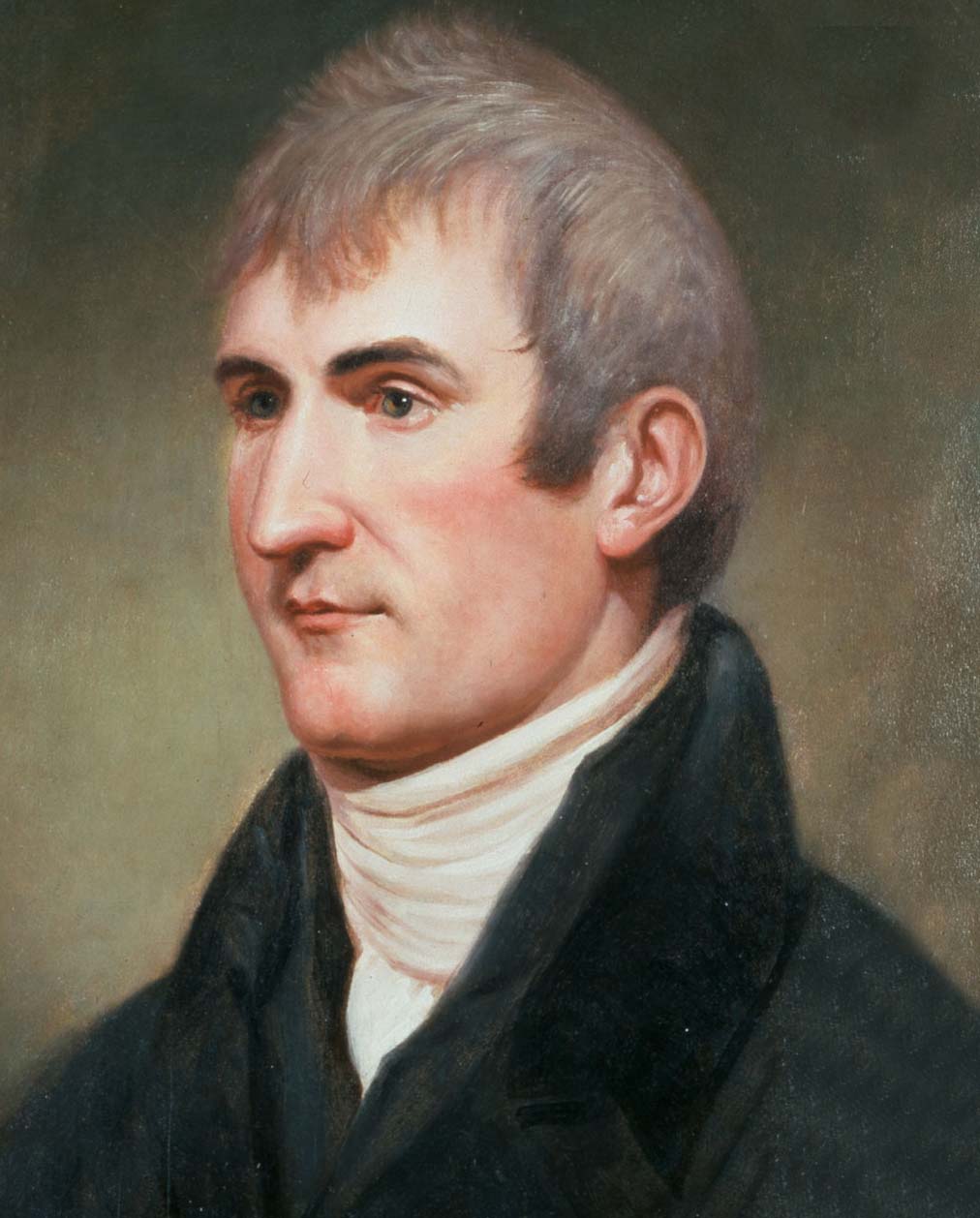

The journal entries for January 21, 1806, open with routine fort business: the hunters Shannon and Labiche return with three elk, a party is ordered out for the meat the next morning, and visiting Indians depart around noon. Both Meriwether Lewis and William Clark record these events in nearly identical phrasing. The bulk of each entry, however, is devoted to an extended botanical description of a thistle root the local people call shan-ne-tahque — a description that the two captains evidently composed in tandem.
Parallel Texts, Shared Method
The entries demonstrate the well-documented Fort Clatsop practice in which Clark copied substantial passages from Lewis, or both worked from a common draft. The structural parallel is unmistakable. Lewis writes:
The root of the thistle, called by the natives shan-ne-tahque is a perpendicular fusiform and possesses from two to four radicles; is from 9 to 15 Inces in length and about the size a mans thumb
Clark records the same passage with only minor orthographic variation:
The root of the thistle called by the nativs Chan-ne-tak-que is pirpendicular and possesses from two to 4 radicles; is from 9 to 15 inches in length and is Commonly about the Size of a mans thum
Two small but interesting differences emerge here. Lewis includes the technical botanical descriptor fusiform — spindle-shaped — which Clark drops entirely. This pattern recurs throughout the Fort Clatsop natural-history entries: Lewis, with his Philadelphia training under Benjamin Smith Barton, regularly reaches for Linnaean and morphological vocabulary that Clark either omits or simplifies. The two men’s transcriptions of the native name also diverge, with Lewis hearing shan-ne-tahque and Clark Chan-ne-tak-que — a reminder that even in collaborative composition each captain rendered Indigenous phonology by his own ear.
Divergences in Taste and Soil
Where the entries part company most substantively is in the description of the raw root and its preferred habitat. Lewis is dismissive of the unprepared root:
this root is sometimes eaten also when first taken from the ground without any preperation; but in this way is vastly in-ferior.
Clark, by contrast, offers a more nuanced verdict, noting that the raw root is initially palatable but does not keep:
in this way it is well tasted but soon weathers and becoms hard and insipped.
Clark’s version supplies an empirical detail — the root’s deterioration over time — that Lewis either did not record or chose to compress into a single judgment. This is a small but characteristic reversal of the usual pattern in which Lewis is the more granular observer; here Clark preserves the practical knowledge, perhaps gathered directly from the Indigenous informants who supplied the specimen.
The two men also disagree on the soil the plant prefers. Lewis specifies a deep rich dry lome, while Clark writes deep rich moist lome. Whether this represents a transcription slip, a genuine difference of recollection, or a later correction by one captain, the discrepancy is the kind of textual crux that has long occupied editors of the journals.
The Sweetness Both Men Agreed On
On one point the captains are emphatic and identical. Both describe the prepared root — pit-cooked by the same method used for camas (pashshequo quawmash in Lewis, gash she quo, qua-mosh in Clark) — as extraordinarily sweet. Lewis writes that it becomes black, and is more shugary than any fuit or root that I have met with in uce among the natives; the sweet is precisely that of the sugar in flavor. Clark echoes the comparison nearly verbatim. After more than a month of subsisting largely on lean elk, the captains’ shared enthusiasm for a sugar-flavored root is itself a small piece of expedition history — a glimpse of the dietary monotony that made any sweetness memorable enough to record twice, in nearly the same words, on the same January day.
The remainder of both entries — the description of the cylindrical, hispid stem, the half-grown root leaves still in their verdure, the dead cauline leaves with prickled margins and hairy disks, the mutilated flower and thistle-like pericarp — runs in lockstep, confirming that the botanical passage was composed jointly or copied from a shared field note. The January 21 entries thus offer a compact case study in the captains’ collaborative authorship: a shared frame, a shared specimen, and within that frame the persistent small signatures of two distinct observers.


