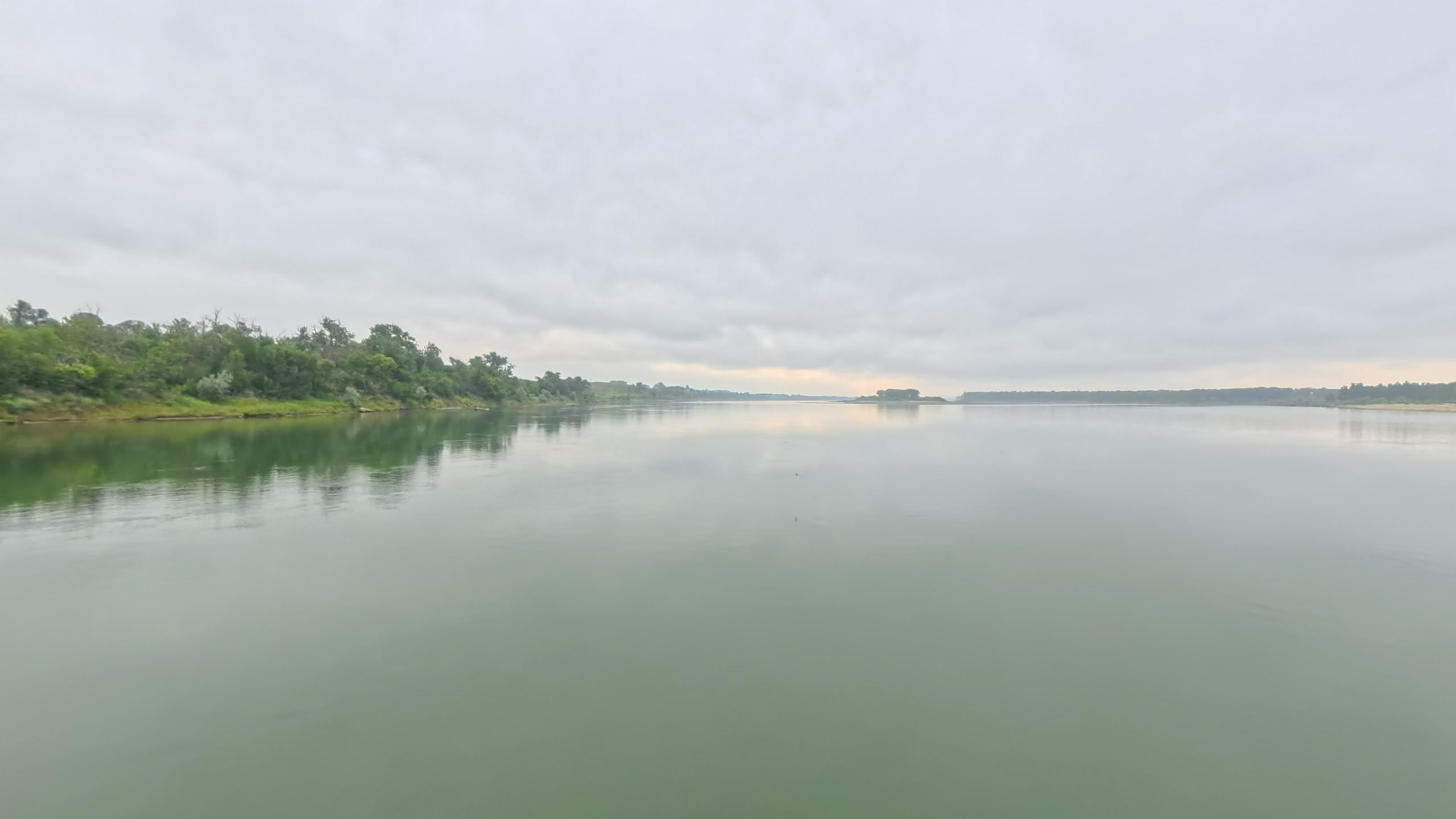


The journal entries from December 30, 1804, offer a compact case study in how three expedition narrators stationed at the same post — Fort Mandan, in present-day North Dakota — could record the same twenty-four hours through utterly different lenses. Clark logs temperature and tally; Ordway lingers over Mandan foodways; Gass relays secondhand natural history from visiting traders. Read together, the three entries reconstruct a day that no single journal preserves.
Clark’s Terse Ledger
Captain William Clark’s entry is, as often, the briefest of the three. He records the essentials: the day of the week, the cold, the visitors, and a single deer.
30th December Sunday 1804 Cold the Termtr. at 20 d below 0 a number of Indians here to day they are much Supprised at the Bellows one Deer Killed
Clark’s prose has the rhythm of a daily ledger — temperature, presence of Indians, hunting result. The one detail that breaks the pattern is the observation that the Mandan visitors "are much Supprised at the Bellows," presumably the blacksmith’s bellows operated by the expedition’s smiths, whose iron work had already become a key item of trade with the surrounding villages. Clark notes the reaction but does not elaborate; the surprise itself is the data point.
Ordway’s Ethnographic Eye
Sergeant John Ordway, by contrast, treats the Mandan visit as an opportunity to describe what they brought and how they prepared it. Where Clark writes "a number of Indians here," Ordway specifies the trade goods and the culinary technique:
they Brought us corn & Beans Squasshes, also a Some of their kind of Bread which they make of pearched corn and beans mixed together & made in round balls, they have a Sweet kind of corn which they Boil considerable of it when it is in the milk & drys it which they keep through the winter Season.
Ordway’s description of the parched-corn-and-bean balls and the boiled-and-dried sweet corn is among the more specific accounts of Mandan food preservation in the expedition record. The detail that the corn is harvested "in the milk" — that is, while the kernels are still soft — and then boiled and dried for winter storage is exactly the kind of practical observation that Clark’s ledger style omits. Ordway’s register here is closer to that of a quartermaster taking inventory of a foreign kitchen than that of a captain logging the day’s events.
Gass and the Prarow
Sergeant Patrick Gass takes a third tack. His entry concentrates not on the Mandan trade but on the arrival of two engagés from the North West Company, who had been wintering at the Hidatsa (Gros Ventre) village upriver. From them Gass extracts a piece of natural-historical clarification:
Two men belonging to the N. W. company, who stay at the Grossventers village, came to the fort. They say this animal which the French call a prarow, or brarow, is a species of the badger.
The "prarow" or "brarow" — from French blaireau, badger — had been a creature of some curiosity to the captains. Gass’s willingness to record what the Canadian traders told him, and to identify the animal as a badger, reflects the expedition’s ongoing dependence on the established fur-trade network for zoological as well as geographical information. It is a detail neither Clark nor Ordway thought to write down.
Three Registers, One Day
The three entries do not contradict one another; they barely overlap. Clark’s thermometer reading at twenty below zero anchors the day in physical fact. Ordway’s account of Mandan cuisine fills in the substance of the trade Clark merely notes. Gass’s note on the prarow records a conversation the other two journals ignore entirely. A reader relying on Clark alone would know the cold and the bellows; a reader with Ordway would know what was on the table; only Gass preserves the visit of the North West Company men and their lexical gloss on a Plains mammal.
The pattern is consistent with what appears throughout the Fort Mandan winter: Clark abbreviates, Ordway expands on practical and cultural detail, and Gass — whose published narrative was prepared for a reading public — often pauses on the curious or the explanatory. Together, on December 30, 1804, they offer a fuller Sunday at Fort Mandan than any one of them recorded alone.


