
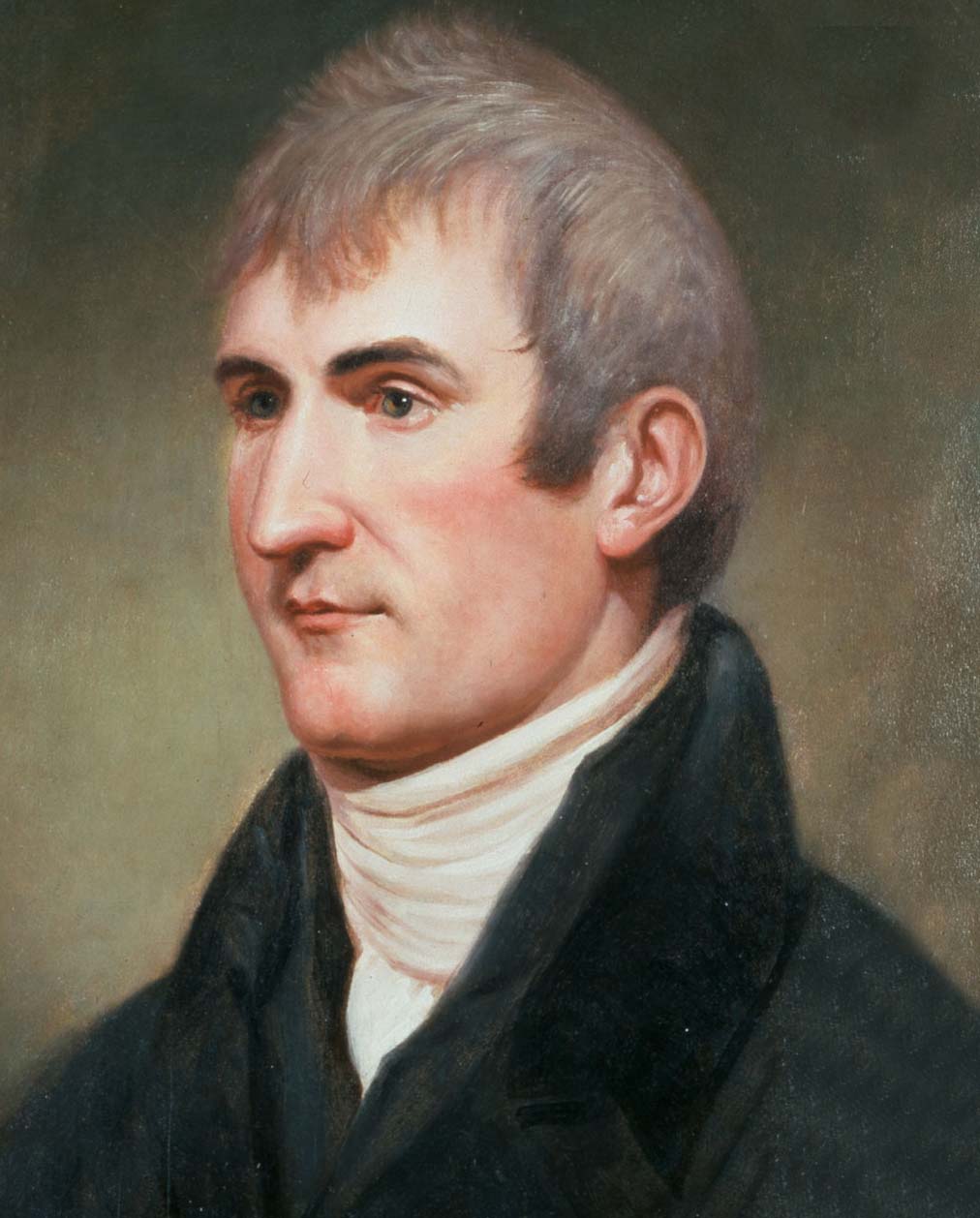


By July 11, 1806, the Corps of Discovery had split into separate detachments to explore different routes on the homeward journey. Meriwether Lewis was approaching the White Bear Islands on the Missouri above the Great Falls, while William Clark was descending the Jefferson River toward the Three Forks. Patrick Gass traveled with Lewis’s party; John Ordway with Clark’s. The four journals from this single day offer an unusually rich opportunity to observe how the same expedition, divided across hundreds of miles of country, generated radically different prose registers and observational priorities.
Lewis’s Lyrical Plain and Gass’s Plain Account
Lewis opens his entry in a register that is almost pastoral, attentive to weather, birdsong, and the aesthetic quality of the landscape:
the morning was fair and the plains looked beatifull the grass much improved by the late rain. the air was pleasant and a vast assemblage of little birds which croud to the groves on the river sung most enchantingly.
This sensibility quickly gives way to among the arresting buffalo passages in the journals. Lewis estimates ten thousand animals within a two-mile circle and notes the rutting bulls’ “tremendious roaring” audible “for many miles.” He even observes the behavioral effect on the expedition’s stock: “our horses had not been acquainted with the buffaloe they appeared much allarmed at their appearance and bellowing.” The detail about the seasonality of the rut — “it is now the season at which the buffaloe begin to coppelate” — is the kind of natural-history annotation Lewis habitually adds and that the enlisted journalists almost never do.
Gass, traveling with the same detachment and witnessing the same scene, reduces the entire spectacle to a working soldier’s summary:
Here our hunters, in a short time, killed five buffaloe; and we saved the best of the meat; and of the skins made two canoes to transport ourselves and baggage across the river. The buffaloe are in large droves about this place.
Where Lewis sees ten thousand animals and hears continual roaring, Gass records five killed and “large droves.” Gass’s published 1807 narrative was edited from his field notes by David McKeehan, and the compressed, task-focused register is consistent throughout. Notably, both Lewis and Gass agree on the operational core of the day: two skin canoes constructed from buffalo hides — one in “the mandan fassion with a single skin in the form of a bason” (Lewis) and another of Lewis’s own design.
Clark’s Navigational Detail, Ordway’s Beaver Census
Several hundred miles to the south, Clark and Ordway describe a wholly different country. Clark’s entry is the longest of the four and is dominated by river navigation: a “very crooked Chanel,” headwinds “from the S W imediately off Some high mountains Covered with Snow,” and the wind shifting “to the N. E.” by evening. He fixes locations with characteristic precision — passing Sergeant Pryor’s camp at the “beavers head,” then Philanthropy River, then arriving at the mouth of Wisdom (Big Hole) River, where he encamps in the exact “Spot we had encamped the 6th of August last” the previous year.
Clark also records a small archaeological detail of the expedition’s own past: “here we found a Bayonet which had been left & the Canoe quite safe.” He directs that the cached canoe be cannibalized — “that all the nails be taken out of this Canoe and paddles to be made of her Sides.”
Ordway, writing in the same camp on the same evening, confirms Clark’s framework but emphasizes a different fauna:
this evening the beaver Sign and lodges without number all this day. they are pleantier in this valley than I have seen on the route &C.
Clark independently corroborates this — “I have Seen great Nos. of Beaver on the banks and in the water as I passed down to day” — but Ordway’s superlative (“pleantier… than I have seen on the route”) is the kind of comparative judgment across the entire journey that the sergeant frequently ventured. The two accounts of the hunters’ kills differ slightly in their tallies: Ordway credits Collins with two deer and Gibson with a buck, while Clark records Collins’s deer at the morning rendezvous and then attributes the fat buck plus “5 young gees nearly grown” to Gibson and Colter together at Wisdom River.
Patterns Across the Divided Corps
The four entries together demonstrate the distinct narrative habits the expedition’s writers had settled into by their second summer in the field. Lewis frames landscape aesthetically and quantifies wildlife in dramatic round numbers. Clark privileges navigation, weather direction, and place-fixing against prior camps. Gass compresses to operational essentials. Ordway contributes the comparative ecological note. None of the four entries on July 11 appears to copy from another — they were, after all, written in two camps separated by mountains — but the systematic differences in register would persist even when the captains were side by side, and they remain the chief reason scholars continue to read all four journals together rather than relying on any single voice.


