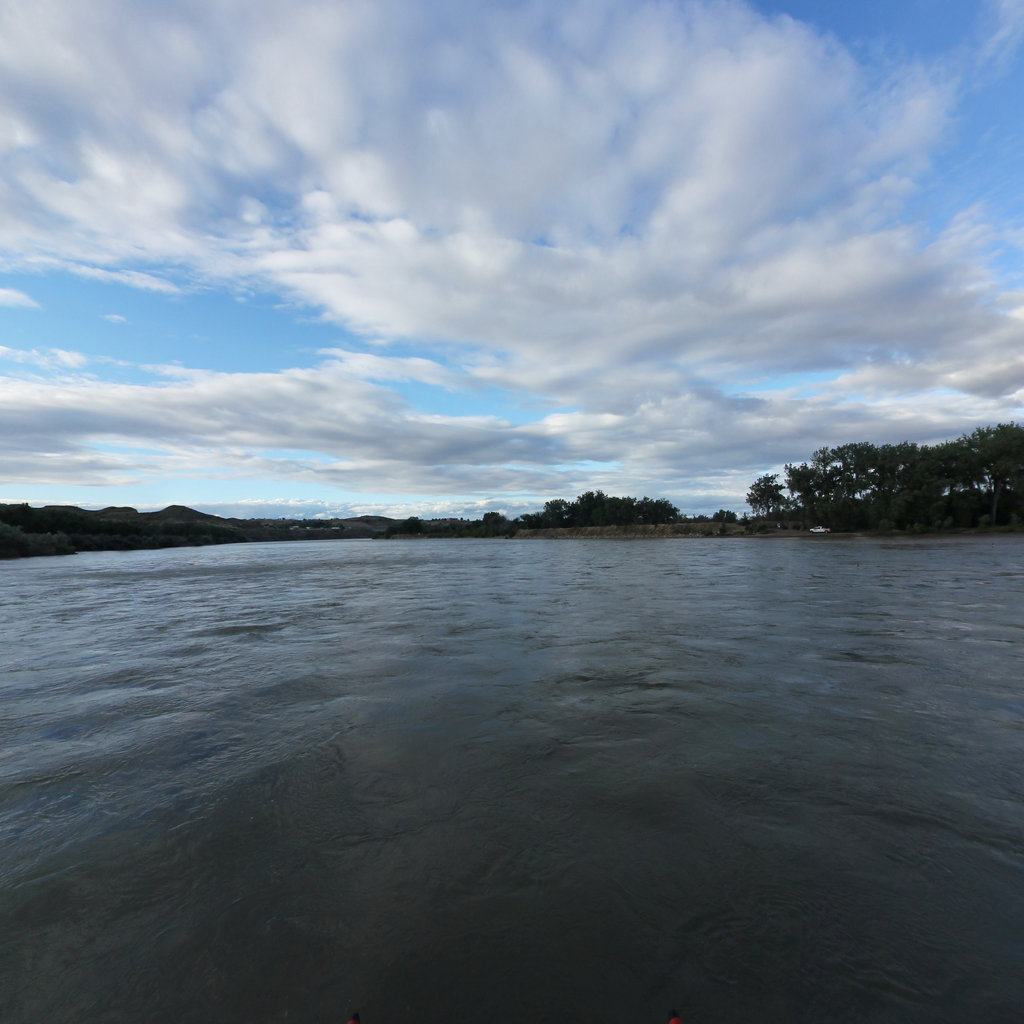
Clark: July 28, 1806
Clark and his party set out at daybreak and traveled down the Yellowstone River by canoe, passing numerous islands, creeks, and brooks. He noted and named Table Creek for nearby flat-topped mounds, and reached what he believed to be the Little Bighorn River. He observed contrasting cliff geology along the banks and several seams of low-quality coal embedded in the bluffs. Elk were extremely abundant along the river, while deer and antelope were scarcer; beaver were plentiful. Shields killed two deer and Labiche killed an antelope. They camped on a small island.
Monday 28th July 1806. Set out this morning at day light and proceeded on
glideing down this Smooth Stream passing maney Isld. and Several Creeks
and brooks at 6 miles passed a Creek or brook of 80 yards wide on the N W.
Side Containing but little water. 6 miles lower passed a small Creek 20
yds wide on the Stard Side 18 Miles lower passed a large dry creek on the
Lard Side 5 Miles lower passed a river 70 yards wide Containing but little
water on the Lard Side which I call Table Creek from the tops of Several
mounds in the Plains to the N W. resembling a table. four miles Still
lower I arived at the enterance of a river 100 yards wide back of a Small
island on the South Side. it contains Some Cotton wood timber and has a
bold Current, it’s water like those of all other Streams which I have
passed in the Canoes are muddy. I take this river to be the one the
Indians Call the Little Big Horn river. The Clifts on the South Side of
the Rochejhone are Generally compd. of a yellowish Gritty Soft rock,
whilest those of the N. is light Coloured and much harder in the evening I
passd. Straters of Coal in the banks on either Side those on the Stard.
Bluffs was about 30 feet above the water and in 2 vanes from 4 to 8 feet
thick, in a horozontal position. the Coal Contained in the Lard Bluffs is
in Several vaines of different hights and thickness. this Coal or
Carbonated wood is like that of the Missouri of an inferior quallity.
passed a large Creek on the Stard. Side between the 1st and 2nd Coal
Bluffs passed Several Brooks the chanel of them were wide and contained
but little running water, and encamped on the upper point of a Small
island opposit the enterance of a Creek 25 Yards wide on the Stard. Side
with water.
The Elk on the banks of the river were So abundant that we have not been
out of Sight of them to day. J Shields killed 2 deer & Labeech killed
an Antilope to day. the antilopes and deer are not Abundant. Beaver plenty
Read this entry in modern English AI-translated
Monday 28th July 1806. Set out this morning at daylight and proceeded on, gliding down this smooth stream, passing many islands and several creeks and brooks. At 6 miles passed a creek or brook of 80 yards wide on the NW side, containing but little water. 6 miles lower passed a small creek 20 yards wide on the starboard side. 18 miles lower passed a large dry creek on the larboard side. 5 miles lower passed a river 70 yards wide containing but little water on the larboard side, which I call Table Creek from the tops of several mounds in the plains to the NW resembling a table. Four miles still lower I arrived at the entrance of a river 100 yards wide back of a small island on the south side. It contains some cottonwood timber and has a bold current; its water, like those of all other streams which I have passed in the canoes, is muddy. I take this river to be the one the Indians call the Little Big Horn River. The cliffs on the south side of the Rochejhone are generally composed of a yellowish, gritty, soft rock, while those of the north are light colored and much harder. In the evening I passed strata of coal in the banks on either side. Those on the starboard bluffs were about 30 feet above the water and in 2 veins from 4 to 8 feet thick, in a horizontal position. The coal contained in the larboard bluffs is in several veins of different heights and thicknesses. This coal, or carbonated wood, is like that of the Missouri, of an inferior quality. Passed a large creek on the starboard side between the 1st and 2nd coal bluffs. Passed several brooks; the channels of them were wide and contained but little running water. Camped on the upper point of a small island opposite the entrance of a creek 25 yards wide on the starboard side with water.
The elk on the banks of the river were so abundant that we have not been out of sight of them today. J. Shields killed 2 deer and Labeech (Labiche) killed an antelope today. The antelopes and deer are not abundant. Beaver plenty.
This modernization is AI-generated for accessibility. The original above is the authoritative version.
Entities mentioned in this entry
Auto-extracted from the entry text. Hover any entity for context.