Journal Entry

Clark: June 7, 1804

June 7, 1804
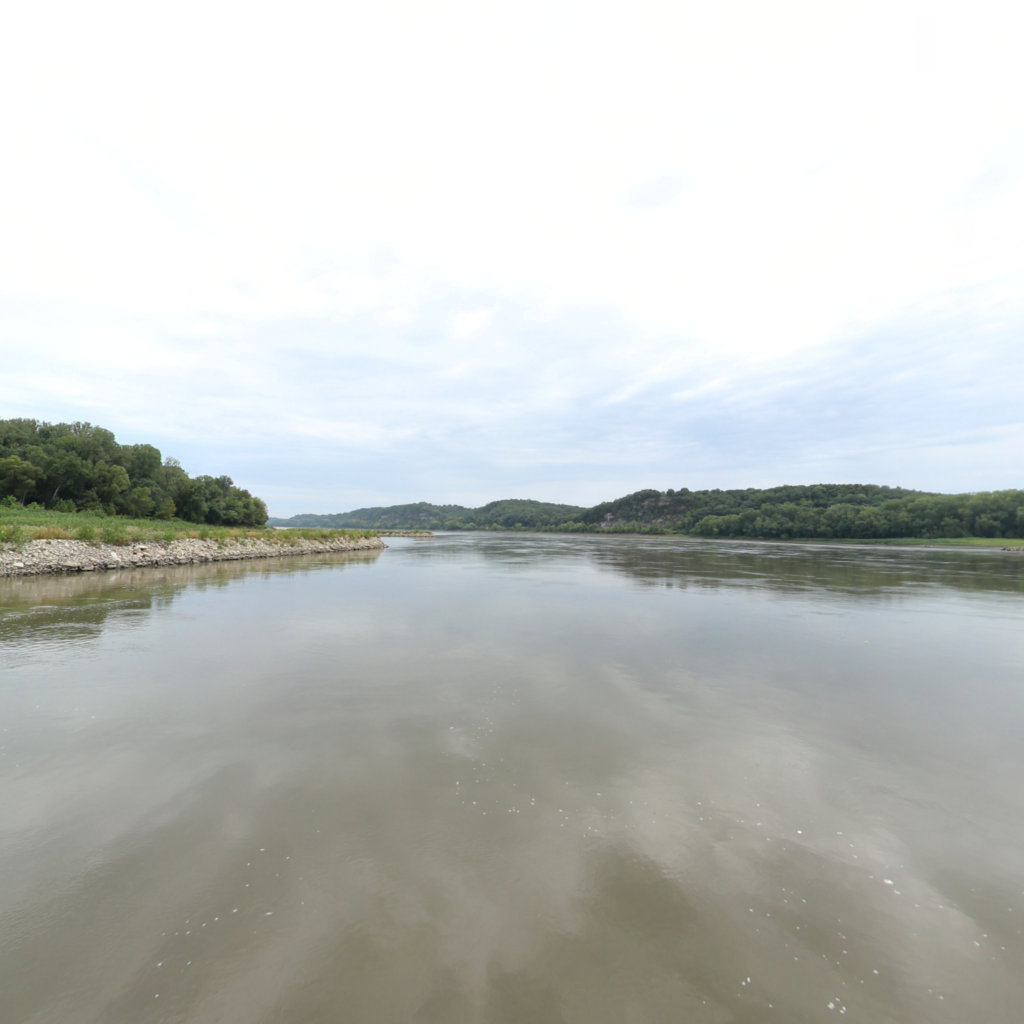
Missouri River near Osage River
AI Summary

The expedition departed early and traveled past an island to the mouth of Big Manitou Creek, about 4.5 miles on, where they breakfasted. Nearby they examined Native American rock paintings and carvings inlaid with colored flint, and killed three rattlesnakes at a den in the rocks. Captain Lewis took several men up the creek to inspect weak saltwater springs requiring 400-600 gallons per bushel of salt. They camped at the mouth of Good Woman's River. Hunters returned with three bears and reported rich, well-watered country between the two creeks.

Thursday 7th of June 1804 Set out early passed the head of the Isd from
the Isd. N. 61° W. to the mouth of a Creek Called big monitu on St. Sd.
41/2 ms. psd. a Sand bar in the river, Som Buffalow Sign Sent out George
Drewyer & Newmon to hunt Capt Lewis and 6 men went to a Lick up this
Creek on the right Side over 2 mes. & 2 other not far above the water
runs out of the bank & not verry Strong. 3 to 500 G for a bushell.

S 88° W. 2 Miles to a pt. on Lbd. Side, high bluff on the Stbd. Side,
Monitou Creek is 30 yds. Wide at the mouth, passed a painted part of a
Projecting rock we found ther a Den of rattle Snakes, Killed 3 proceeded
on passed, S 81°W 4 ms. to apt. on S. Side passed an Island in the Middle
of the river, S. 87° W. to a pt. of high Land on the L. S. pass’g over the
Middle of a willow Island, ms. 31/2 proceed on 1/2 a mile on this Course a
Camped at the mouth of Good womans river on the S. S. about 35 yds wide,
& navagable Som D. our hunters brought in 3 bear this evening-&
infd. that the Countrey between this R. & the Monitou R is rich and
well watered, Capt. Lewis went out an hour this evening

June 7th Thursday 1804 Set out early passed the head of the Island opposit
which we Camped last night, and brackfast at the Mouth of a large Creek on
the S. S. Of 30 yds wide Called big Monetou, from the pt. of the Isd. or
Course of last night to the mouth of this Creek is N 61° W 41/2 ms. a
Short distance above the mouth of this Creek, is Several Courious
Paintings and Carveing in the projecting rock of Limestone inlade with
white red & blue flint, of a verry good quallity, the Indians have
taken of this flint great quantities. We landed at this Inscription and
found it a Den of rattle Snakes, we had not landed 3 minutes before three
verry large Snakes wer observed on the Crevises of the rocks & Killedat
the mouth of the last mentioned Creek Capt. Lewis took four or five men
& went to Some Licks or Springs of Salt water from two to four miles
up the Creek on Rt. Side the water of those Springs are not Strong, Say
from 4 to 600 Gs. of water for a Bushel of Salt passed Some Small willow
Islands and Camped at the Mouth of a Small river called Good Womans River
this river is about 35 yards wide and Said to be navagable for Perogues
Several Leagues Capt. Lewis with 2 men went up the Creek a Short distance.
our Hunters brought in three Bear this evening, and informs that the
Countrey thro which they passed from the last Creek is fine rich land,
& well watered.

Read this entry in modern English AI-translated

Thursday, 7th of June 1804. Set out early, passed the head of the Island. From the Island, N. 61° W. to the mouth of a creek called Big Monitou on the starboard side, 4½ miles. Passed a sand bar in the river. Saw some buffalo sign. Sent out George Drewyer (Drouillard) and Newmon (Newman) to hunt. Capt Lewis (Capt. Lewis) and 6 men went to a lick up this creek on the right side, over 2 miles, and 2 others not far above. The water runs out of the bank and is not very strong — 3 to 500 gallons for a bushel.

S. 88° W. 2 miles to a point on the larboard side; high bluff on the starboard side. Monitou Creek is 30 yards wide at the mouth. Passed a painted part of a projecting rock where we found a den of rattlesnakes; killed 3. Proceeded on. S. 81° W. 4 miles to a point on the south side, passed an island in the middle of the river. S. 87° W. to a point of high land on the larboard side, passing over the middle of a willow island, 3½ miles. Proceeded on ½ a mile on this course and camped at the mouth of Good Woman's River on the south side, about 35 yards wide and navigable some distance. Our hunters brought in 3 bears this evening and informed us that the country between this river and the Monitou River is rich and well watered. Capt. Lewis went out an hour this evening.

June 7th, Thursday 1804. Set out early, passed the head of the island opposite which we camped last night, and breakfasted at the mouth of a large creek on the south side, 30 yards wide, called Big Monetou. From the point of the island (or course of last night) to the mouth of this creek is N. 61° W., 4½ miles. A short distance above the mouth of this creek are several curious paintings and carvings in the projecting rock of limestone, inlaid with white, red, and blue flint of a very good quality. The Indians have taken great quantities of this flint. We landed at this inscription and found it a den of rattlesnakes. We had not landed 3 minutes before three very large snakes were observed on the crevices of the rocks and killed.

At the mouth of the last mentioned creek, Capt. Lewis took four or five men and went to some licks or springs of salt water, from two to four miles up the creek on the right side. The water of those springs is not strong — say from 4 to 600 gallons of water for a bushel of salt. Passed some small willow islands and camped at the mouth of a small river called Good Woman's River. This river is about 35 yards wide and said to be navigable for pirogues several leagues. Capt. Lewis with 2 men went up the creek a short distance. Our hunters brought in three bears this evening and informed us that the country through which they passed from the last creek is fine, rich land, and well watered.

This modernization is AI-generated for accessibility. The original above is the authoritative version.

Entities mentioned in this entry

Tribes & Nations:
Plants:
Foods:

Auto-extracted from the entry text. Hover any entity for context.

Our Partners