Journal Entry

Clark: October 14, 1805

October 14, 1805
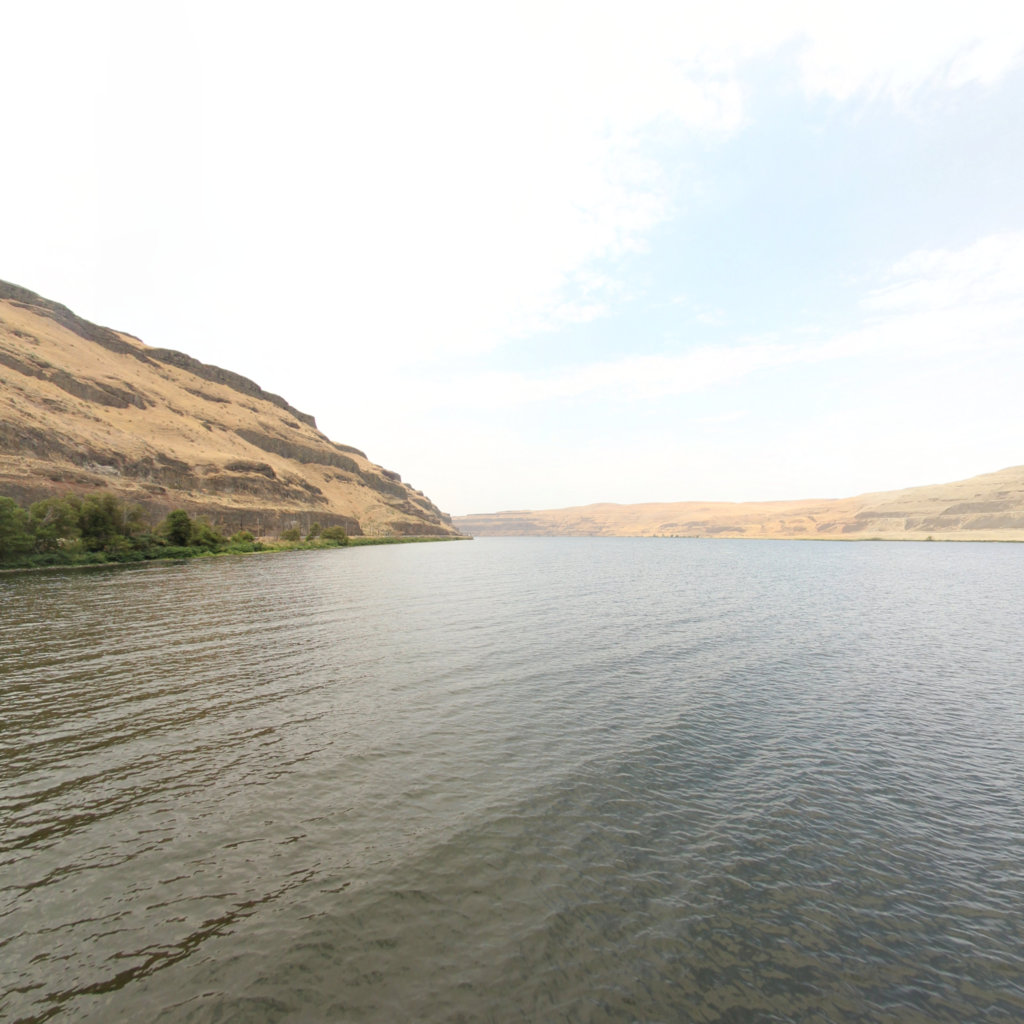
Snake River rapids, near Lewiston
AI Summary

On a cold, windy day, the expedition set out at 8 a.m. and navigated several rapids along the river. Two and a half miles in, they passed a large ship-shaped rock. After dining on blue-winged teal at the head of a three-mile rapid, a stern canoe steered by Drouillard struck a rock and sank, soaking gear and losing bedding, tomahawks, shot pouches, prepared roots, and loose powder. They dried goods on an island, using buried Indian house timbers for firewood out of necessity. They covered 20 miles.

October 14th Monday 1805 a verry Cool morning wind from the West Set out
at 8 oClock proceeded on

at this rapid the Canoe a Stern Steared by drewyer Struck a rock turned
the men got out on a rock the Stern of the Canoe took in water and She
Sunk the men on the rock hel her, a number of articles floated all that
Could be Cought were taken by 2 of the othr Canoes, Great many articles
lost among other things 2 of the mens beding Shot pouches Tomahaws &c.
&c. and every article wet of which we have great Cause to lament as
all our loose Powder two Canisters, all our roots prepared in the Indian
way, and one half of our goods, fortunately the lead canisters which was
in the canoe was tied down, otherwise they must have been lost as the
Canoe turned over we got off the men from the rock toed our canoe on Shore
after takeing out all the Stores &c. we Could & put them out to
dry on the Island on which we found Some wood which was covered with
Stones, this is the Parts of an Indian house, which we used for fire wood,
by the wish of our two ChiefsThose Chees, one of them was in the
Canoe, Swam in & Saved Some property, The Inds. have buried fish on
this Isld. which we are Cautious not to touch. our Small Canoe & three
Indians in another was out of Sight at the time our missfortune hapined,
and did not join us. wind hard S W.

October 14th Monday 1805 a Verry Cold morning wind from the West and Cool
untill about 12 oClock When it Shifted to the S. W. at 21/2 miles passed a
remarkable rock verry large and resembling the hull of a Ship Situated on
a Lard point at Some distance from the assending Countrey passed rapids at
6 and 9 miles. at 12 miles we Came too at the head of a rapid which the
Indians told me was verry bad, we viewed the rapid found it bad in
decending three Stern Canoes Stuk fast for Some time on the head of the
rapid and one Struk a rock in the worst part, fortunately all landed Safe
below the rapid which was nearly 3 miles in length. here we dined, and for
the first time for three weeks past I had a good dinner of Blue wing Teel,
after dinner we Set out and had not proceded on two miles before our Stern
Canoe in passing thro a Short rapid opposit the head of an Island, run on
a Smoth rock and turned broad Side, the men got out on the rock all except
one of our Indian Chiefs who Swam on Shore, The Canoe filed and Sunk a
number of articles floated out, Such as the mens bedding clothes &
Skins, the Lodge &c. &c. the greater part of which were cought by
2 of the Canoes, whilst a 3rd was unloading & Steming the Swift
Current to the relief of the men on the rock who could with much
dificuelty hold the Canoe. however in about an hour we got the men an
Canoe to Shore with the Loss of Some bedding Tomahaws Shot pouches Skins
Clothes &c &c. all wet we had every articles exposed to the Sun to
dry on the Island, our loss in provisions is verry Considerable all our
roots was in the Canoe that Sunk, and Cannot be dried Sufficint to Save,
our loose powder was also in the Canoe and is all wett This I think, we
Shall saved.In this Island we found some Split timber the parts of
a house which the Indians had verry Securely covered with Stone, we also
observed a place where the Indians had buried there fish, we have made it
a point at all times not to take any thing belonging to the Indians even
their wood. but at this time we are Compelled to violate that rule and
take a part of the Split timber we find here bured for fire wood, as no
other is to be found in any direction. our Small Canoe which was a head
returned at night with 2 ores which they found floating below. The wind
this after noon from the S. W. as usial and hard way of the forks to the
Indian Camps at the first were not one mouthfull to eate untill night as
our hunters could kill nothing and I could See & catch no fish except
a few Small ones. The Indians gave us 2 Sammon boiled which I gave to the
men, one of my men Shot a Sammon in the river about Sunset those fish gave
us a Supper. all the Camp flocked about me untill I went to Sleepand
I beleve if they had a Sufficency to eate themselves and any to Spare they
would be liberal of it I detected the men to mend their Mockessons to
night and turn out in the morning early to hunt Deer fish birds &c.
&c. Saw great numbers of the large Black grass hopper. Some bars which
were verry wild, but few Birds. a number of ground Lizards; Some fiew
Pigions plainly See a rainge of mountains which bore S. E. & N. W. the
nearest point south about 60 miles, and becoms high toward the N. W. The
plaines on each Side is wavering. Labiesh killed 2 gees & 2 Ducks of
the large kind. at two oClock we loaded & Set out, our Powder &
Provisions of roots not Sufficently dry. we Shall put them out at the
forks or mouth of this river which is at no great distance, and at which
place we Shall delay to make Some Selestial observations &c. passed
Eleven Island and Seven rapids to day. Several of the rapids verry bad and
dificuelt to pass. The Islands of different Sizes and all of round Stone
and Sand, no timber of any kind in Sight of the river, a fiew Small
willows excepted; in the evening the countrey becomes lower not exceding
90 or 100 feet above the water and back is a wavering Plain on each Side,
passed thro narrows for 3 miles where the Clifts of rocks juted to the
river on each Side compressing the water of the river through a narrow
chanel; below which it widens into a kind of bason nearly round without
any proceptiable current, at the lower part of this bason is a bad
dificuelt and dangerous rapid to pass, at the upper part of this rapid we
over took the three Indians who had Polited us thro the rapids from the
forks. those people with our 2 Chiefs had proceeded on to this place where
they thought proper to delay for us to warn us of the difficulties of this
rapid. we landed at a parcel of Split timber, the timber of a house of
Indians out hunting the Antilope in the plains; and raised on Scaffolds to
Save them from the Spring floods. here we were obliged for the first time
to take the property of the Indians without the consent or approbation of
the owner. the night was cold & we made use of a part of those boards
and Split logs for fire wood. Killed two teel this evening. Examined the
rapids which we found more dificuelt to pass than we expected from the
Indians information. a Suckcession of Sholes, appears to reach from bank
to bank for 3 miles which was also intersepted with large rocks Sticking
up in every direction, and the chanel through which we must pass crooked
and narrow. we only made 20 miles today, owing to the detention in passing
rapids &c.

Read this entry in modern English AI-translated

October 14th Monday 1805. A very cool morning, wind from the west. Set out at 8 o'clock and proceeded on. At this rapid the canoe astern, steered by Drewyer (Drouillard), struck a rock and turned. The men got out onto a rock, the stern of the canoe took in water, and she sunk. The men on the rock held her. A number of articles floated; all that could be caught were taken by 2 of the other canoes. Many articles were lost, among other things 2 of the men's bedding, shot pouches, tomahawks, etc., etc., and every article was wet, of which we have great cause to lament, as all our loose powder, two canisters, all our roots prepared in the Indian way, and one half of our goods. Fortunately the lead canisters which were in the canoe were tied down, otherwise they must have been lost as the canoe turned over. We got the men off the rock and towed our canoe on shore after taking out all the stores, etc., we could, and put them out to dry on the island, on which we found some wood which was covered with stones. This is the parts of an Indian house, which we used for firewood, by the wish of our two Chiefs. Those Chiefs—one of them was in the canoe—swam in and saved some property. The Indians have buried fish on this island, which we are cautious not to touch. Our small canoe and three Indians in another was out of sight at the time our misfortune happened, and did not join us. Wind hard from the SW.


October 14th Monday 1805. A very cold morning, wind from the west and cool until about 12 o'clock when it shifted to the SW. At 2½ miles passed a remarkable rock, very large and resembling the hull of a ship, situated on a larboard point at some distance from the ascending country. Passed rapids at 6 and 9 miles. At 12 miles we came to at the head of a rapid which the Indians told me was very bad. We viewed the rapid and found it bad in descending. Three stern canoes stuck fast for some time on the head of the rapid, and one struck a rock in the worst part. Fortunately all landed safe below the rapid, which was nearly 3 miles in length. Here we dined, and for the first time for three weeks past I had a good dinner of blue-wing teal.

After dinner we set out, and had not proceeded on two miles before our stern canoe, in passing through a short rapid opposite the head of an island, ran on a smooth rock and turned broadside. The men got out on the rock, all except one of our Indian Chiefs who swam on shore. The canoe filled and sunk, and a number of articles floated out, such as the men's bedding, clothes, and skins, the lodge, etc., etc., the greater part of which were caught by 2 of the canoes, while a third was unloading and stemming the swift current to the relief of the men on the rock, who could with much difficulty hold the canoe. However, in about an hour we got the men and canoe to shore, with the loss of some bedding, tomahawks, shot pouches, skins, clothes, etc., etc., all wet. We had every article exposed to the sun to dry on the island. Our loss in provisions is very considerable; all our roots were in the canoe that sunk, and cannot be dried sufficiently to save. Our loose powder was also in the canoe and is all wet. This, I think, we shall save.

On this island we found some split timber, the parts of a house which the Indians had very securely covered with stone. We also observed a place where the Indians had buried their fish. We have made it a point at all times not to take anything belonging to the Indians, even their wood; but at this time we are compelled to violate that rule and take a part of the split timber we find here buried, for firewood, as no other is to be found in any direction. Our small canoe, which was ahead, returned at night with 2 oars which they found floating below. The wind this afternoon from the SW as usual and hard.

On the way from the forks to the Indian camps at the first, we had not one mouthful to eat until night, as our hunters could kill nothing and I could see and catch no fish except a few small ones. The Indians gave us 2 salmon boiled, which I gave to the men. One of my men shot a salmon in the river about sunset, and those fish gave us a supper. All the camp flocked about me until I went to sleep, and I believe if they had a sufficiency to eat themselves and any to spare, they would be liberal of it. I directed the men to mend their moccasins tonight and turn out in the morning early to hunt deer, fish, birds, etc., etc.

Saw great numbers of the large black grasshopper. Some bears, which were very wild, but few birds. A number of ground lizards; some few pigeons. Plainly see a range of mountains which bore SE and NW, the nearest point south about 60 miles, and becomes high toward the NW. The plains on each side are waving. Labiche killed 2 geese and 2 ducks of the large kind.

At two o'clock we loaded and set out. Our powder and provisions of roots are not sufficiently dry. We shall put them out at the forks or mouth of this river, which is at no great distance, and at which place we shall delay to make some celestial observations, etc. Passed eleven islands and seven rapids today. Several of the rapids very bad and difficult to pass. The islands are of different sizes and all of round stone and sand. No timber of any kind in sight of the river, a few small willows excepted. In the evening the country becomes lower, not exceeding 90 or 100 feet above the water, and back is a waving plain on each side. Passed through narrows for 3 miles where the cliffs of rocks jutted to the river on each side, compressing the water of the river through a narrow channel, below which it widens into a kind of basin nearly round, without any perceptible current. At the lower part of this basin is a bad, difficult, and dangerous rapid to pass.

At the upper part of this rapid we overtook the three Indians who had piloted us through the rapids from the forks. Those people, with our 2 Chiefs, had proceeded on to this place, where they thought proper to delay for us to warn us of the difficulties of this rapid. We landed at a parcel of split timber, the timber of a house of Indians out hunting the antelope in the plains, and raised on scaffolds to save them from the spring floods. Here we were obliged for the first time to take the property of the Indians without the consent or approbation of the owner. The night was cold, and we made use of a part of those boards and split logs for firewood. Killed two teal this evening.

Examined the rapids, which we found more difficult to pass than we expected from the Indians' information. A succession of shoals appears to reach from bank to bank for 3 miles, which was also intersected with large rocks sticking up in every direction, and the channel through which we must pass crooked and narrow. We only made 20 miles today, owing to the detention in passing rapids, etc.

This modernization is AI-generated for accessibility. The original above is the authoritative version.

Our Partners