Clark: October 24, 1805
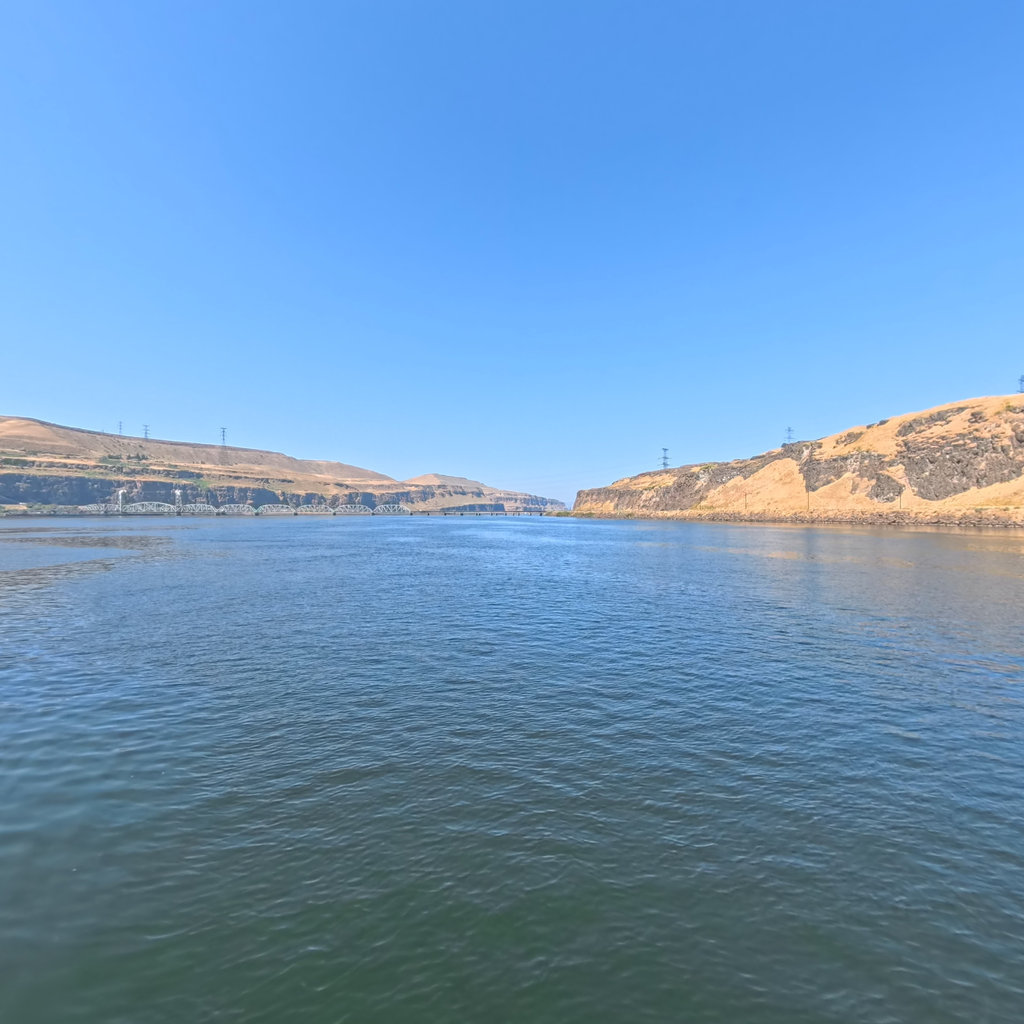
On a fine morning, the expedition's two elderly Nez Perce chiefs wanted to turn back, fearing hostility from tribes downstream, but Clark persuaded them to stay two more nights to help broker peace. While Lewis crossed the river to view the falls, Clark led the party through dangerous narrows where the river was compressed to 45 yards wide with violent whirlpools. Non-swimmers and valuables were sent overland past the worst stretch. They camped at a village of 20 wooden plank houses, met the principal chief from below, exchanged gifts, made peace, and Pierre Cruzatte's fiddle entertained the natives.
October 24th Thursday 1805 a fine morning the Indians approached us with
caution. our 2 old Chiefs deturmin to return home, Saying they were at war
with Indians below and they would kill them we pursuaded them to Stay 2
nights longer with us, with a view to make a peace with those Indians
below as well as to have them with us dureing our Delay with this tribe.
Capt Lewis went to view the falls I Set out with the party at 9 oClock a m
at 21/2 miles passed a rock which makes from the Stard Side 4 Lodges above
1 below and Confined the river in a narrow channel of about 45 yards this
continued for about 1/4 of a mile & widened to about 200 yards, in
those narrows the water was agitated in a most Shocking manner boils Swell
& whorl pools, we passed with great risque It being impossible to make
a portage of the Canoes, about 2 miles lower passed a verry Bad place
between 2 rocks one large & in the middle of the river here our Canoes
took in Some water, I put all the men who Could not Swim on Shore; &
Sent a fiew articles Such as guns & papers, and landed at a village of
20 houses on the Stard Side in a Deep bason where the river ap-prd. to be
blocked up with emence rocks I walked down and examined the pass found it
narrow, and one verry bad place a little in the narrows I pursued this
Chanel which is from 50 to 100 yards wide and Swels and boils with a most
Tremendeous manner; prosued this channel 5 ms & returned found Capt
Lewis & a Chief from below with maney of his men on a visit to us, one
of our Party Pete Crusat played on the violin which pleased the Savage,
the men danced, Great numbers of Sea Orter Pole Cats about those
fishories. the houses of those Indians are 20 feet Square and Sunk 8 feet
under ground & Covered with bark with a Small door round at top rose
about 18 Inches above ground, to keep out the Snow I saw 107 parcels of
fish Stacked, and great quantites in the houses
—
October 24th Thursday 1805 The morning fare after a beautifull night, the
nativs approached us this morning with great caution. our two old chiefs
expressed a desire to return to their band from this place, Saying “that
they Could be of no further Service to us, as their nation extended no
further down the river than those falls, and as the nation below had
expressed hostile intentions against us, would Certainly kill them;
perticularly as They had been at war with each other;” we requested them
to Stay with us two nights longer, and we would See the nation below and
make a peace between them, they replied they “were anxious to return and
See our horses” we insisted on their Staying with us two nights longer to
which they agreed; our views were to detain those Chiefs with us untill we
Should pass the next falls, which we were told was verry bad, and at no
great distance below, that they might inform us of any designs of the
nativs, and if possible to bring about a peace between them and the tribes
below.
The first pitch of this falls is 20 feet perpendicular, then passing thro
a narrow Chanel for 1 mile to a rapid of about 18 feet fall below which
the water has no perceptable fall but verry rapid See Sketch No. 1. It may
be proper here to remark that from Some obstruction below, the cause of
which we have not yet learned, the water in high fluds (which are in the
Spring) rise below these falls nearly to a leavel with the water above the
falls; the marks of which can be plainly trac’d around the falls. at that
Stage of the water the Salmon must pass up which abounds in Such great
numbers abovebelow those falls are Salmon trout and great numbers
of the heads of a Species of trout Smaller than the Salmon. those fish
they catch out of the Salmon Season, and are at this time in the act of
burrying those which they had drid for winter food. the mode of buring
those fish is in holes of various Sizes, lined with Straw on which they
lay fish Skins in which they inclose the fish which is laid verry close,
and then Covered with earth of about 12 or 15 inches thick. Capt Lewis and
three men crossed the river and on the opposit Side to view the falls
which he had not yet taken a full view ofAt 9 oClock a.m. I Set out
with the party and proceeded on down a rapid Stream of about 400 yards
wide at 21/2 miles the river widened into a large bason to the Stard. Side
on which there is five Lodges of Indians. here a tremendious black rock
Presented itself high and Steep appearing to choke up the river nor could
I See where the water passed further than the Current was drawn with great
velocity to the Lard Side of this rock at which place I heard a great
roreing. I landed at the Lodges and the natives went with me to the top of
this rock which makes from the Stard. Side; from the top of which I could
See the dificuelties we had to pass for Several miles below; at this place
the water of this great river is compressed into a Chanel between two
rocks not exceeding forty five yards wide and continues for a 1/4 of a
mile when it again widens to 200 yards and continues this width for about
2 miles when it is again intersepted by rocks. This obstruction in the
river accounts for the water in high floods riseing to Such a hite at the
last falls. The whole of the Current of this great river must at all
Stages pass thro this narrow chanel of 45 yards wide. as the portage of
our canoes over this high rock would be impossible with our Strength, and
the only danger in passing thro those narrows was the whorls and Swills
arriseing from the Compression of the water, and which I thought (as also
our principal watermen Peter Crusat) by good Stearing we could pass down
Safe, accordingly I detur mined to pass through this place notwithstanding
the horrid appearance of this agitated gut Swelling, boiling &
whorling in every direction (which from the top of the rock did not appear
as bad as when I was in it;) however we passed Safe to the astonishment of
all the Inds. of the last Lodges who viewed us from the top of the rock.
passed one Lodge below this rock and halted on the Stard. Side to view a
verry bad place, the Current divided by 2 Islands of rocks the lower of
them large and in the middle of the river, this place being verry bad I
Sent by land all the men who could not Swim and Such articles as was most
valuable to us Such as papers Guns & amunition, and proceeded down
with the Canoes two at a time to a village of 20 wood housies in a Deep
bend to the Stard. Side below which a rugid black rock about 20 feet biter
than the Common high fluds of the river with Several dry Chapels which
appeared to Choke the river up quite across; this I took to be the 2d
falls or the place the nativs above call timm, The nativs of this village
reived me verry kindly, one of whome envited me into his house, which I
found to be large and comodious, and the first wooden houses in which
Indians have lived Since we left those in the vicinty of the Illinois,
they are scattered permiscuisly on a elivated Situation near a mound of
about 30 feet above the Common leavel, which mound has Some remains of
houses and has every appearance of being artificialthose houses are
about the Same Shape Size and form 20 feet wide and 30 feet long with one
Dore raised 18 Inches above ground, they are 291/2 inches high & 14
wide, forming in a half Circle above those houses were Sunk into the earth
Six feet, the roofs of them was Supported by a ridge pole resting on three
Strong pieces of Split timber thro one of which the dore was cut that and
the walls the top of which was just above ground Suported a certain number
of Spars which are Covered with the Bark of the white Ceadar, or Arber
Vitea; and the whole attached and Secured by the fibers of the Cedar. the
eaves at or near the earth, the gable ends and Side walls are Secured with
Split boards which is Seported on iner Side with Strong pieces of timber
under the eves &c. to keep those pieces errect & the earth from
without pressing in the boards, Suported by Strong posts at the Corners to
which those poles were attached to give aditional Strength, Small openings
were left above the ground, for the purpose, as I conjectured, of
deschargeing Their arrows at a besiegeing enimey; Light is admited Thro an
opening at top which also Serves for the Smoke to pass through. one half
of those houses is apropriated for the Storeing away Dried & pounded
fish which is the principal food The other part next the dore is the part
occupied by the nativs who have beds raised on either Side, with a fire
place in the center of this Space each house appeared to be occupied by
about three families; that part which is apropriated for fish was crouded
with that article, and a fiew baskets of burriesI dispatched a
Sufficent number of the good Swimers back for the 2 canoes above the last
rapid and with 2 men walked down three miles to examine the river Over a
bed of rocks, which the water at verry high fluds passes over, on those
rocks I Saw Several large Scaffols on which the Indians dry fish; as this
is out of Season the poles on which they dry those fish are tied up verry
Securely in large bundles and put upon the Scaffolds, I counted 107 Stacks
of dried pounded fish in different places on those rocks which must have
contained io,ooo w. of neet fish, The evening being late I could not
examine the river to my Satisfaction, the Chanel is narrow and compressed
for about 2 miles, when it widens into a deep bason to the Stard. Side,
& again contracts into a narrow chanel divided by a rock I returned
through a rockey open countrey infested with pole-cats to the village
where I met with Capt. Lewis the two old Chiefs who accompanied us &
the party & canoes who had all arrived Safe; the Canoes haveing taken
in Some water at the last rapids. here we formed a Camp near the Village,
The principal Chief from the nation below with Several of his men visited
us, and afforded a favourable oppertunity of bringing about a Piece and
good understanding between this chief and his people and the two Chiefs
who accompanied us which we have the Satisfaction to Say we have
accomplished, as we have every reason to believe and that those two bands
or nations are and will be on the most friendly terms with each other.
gave this Great Chief a Medal and Some other articles, of which he was
much pleased, Peter Crusat played on the violin and the men danced which
delighted the nativs, who Shew every civility towards us. we Smoked with
those people untill late at night, when every one retired to rest.
Read this entry in modern English AI-translated
October 24th, Thursday 1805. A fine morning. The Indians approached us with caution. Our two old Chiefs determined to return home, saying they were at war with the Indians below and that those Indians would kill them. We persuaded them to stay two nights longer with us, with the view of making peace with those Indians below as well as having them with us during our delay with this tribe. Capt Lewis (Capt. Lewis) went to view the falls. I set out with the party at 9 o'clock a.m. At 2½ miles we passed a rock that juts out from the starboard side, with 4 lodges above it and 1 below, and confined the river in a narrow channel of about 45 yards. This continued for about ¼ of a mile, then widened to about 200 yards. In those narrows the water was agitated in a most shocking manner — boils, swells, and whirlpools. We passed with great risk, it being impossible to make a portage of the canoes. About 2 miles lower we passed a very bad place between 2 rocks, one large and in the middle of the river. Here our canoes took in some water. I put all the men who could not swim on shore, and sent a few articles such as guns and papers, and landed at a village of 20 houses on the starboard side in a deep basin where the river appeared to be blocked up with immense rocks. I walked down and examined the pass, found it narrow, and one very bad place a little within the narrows. I followed this channel, which is from 50 to 100 yards wide and swells and boils in a most tremendous manner. I followed this channel 5 miles and returned, and found Capt Lewis and a Chief from below with many of his men on a visit to us. One of our party, Pete Crusat (Pierre Cruzatte), played on the violin, which pleased the natives, and the men danced. Great numbers of sea otter and polecats are about these fisheries. The houses of these Indians are 20 feet square and sunk 8 feet underground and covered with bark, with a small door rounded at the top, raised about 18 inches above ground to keep out the snow. I saw 107 parcels of fish stacked, and great quantities in the houses.
October 24th, Thursday 1805. The morning was fair after a beautiful night. The natives approached us this morning with great caution. Our two old chiefs expressed a desire to return to their band from this place, saying "that they could be of no further service to us, as their nation extended no further down the river than these falls, and as the nation below had expressed hostile intentions against us, would certainly kill them, particularly as they had been at war with each other." We requested them to stay with us two nights longer, and we would see the nation below and make a peace between them. They replied they "were anxious to return and see our horses." We insisted on their staying with us two nights longer, to which they agreed. Our intent was to detain those Chiefs with us until we should pass the next falls, which we were told was very bad and at no great distance below, so that they might inform us of any designs of the natives, and if possible bring about a peace between them and the tribes below.
The first pitch of these falls is 20 feet perpendicular, then passing through a narrow channel for 1 mile to a rapid of about 18 feet fall, below which the water has no perceptible fall but is very rapid. See Sketch No. 1. It may be proper here to remark that, due to some obstruction below — the cause of which we have not yet learned — the water in high floods (which are in the spring) rises below these falls nearly to a level with the water above the falls; the marks of which can be plainly traced around the falls. At that stage of the water the salmon must pass up, and they abound in such great numbers above. Below these falls are salmon trout and great numbers of the heads of a species of trout smaller than the salmon. These fish they catch out of the salmon season, and they are at this time in the act of burying those which they had dried for winter food. The mode of burying these fish is in holes of various sizes, lined with straw, on which they lay fish skins in which they enclose the fish, which is laid very close, and then covered with earth about 12 or 15 inches thick. Capt Lewis (Capt. Lewis) and three men crossed the river to the opposite side to view the falls, of which he had not yet taken a full view.
At 9 o'clock a.m. I set out with the party and proceeded down a rapid stream of about 400 yards wide. At 2½ miles the river widened into a large basin to the starboard side, on which there are five lodges of Indians. Here a tremendous black rock presented itself, high and steep, appearing to choke up the river. Nor could I see where the water passed, except that the current was drawn with great velocity to the larboard side of this rock, where I heard a great roaring. I landed at the lodges, and the natives went with me to the top of this rock, which juts from the starboard side. From the top I could see the difficulties we had to pass for several miles below. At this place the water of this great river is compressed into a channel between two rocks not exceeding forty-five yards wide, and continues for ¼ of a mile, when it again widens to 200 yards and continues this width for about 2 miles, when it is again intercepted by rocks. This obstruction in the river accounts for the water in high floods rising to such a height at the last falls. The whole of the current of this great river must at all stages pass through this narrow channel of 45 yards wide. As the portage of our canoes over this high rock would be impossible with our strength, and the only danger in passing through these narrows was the whirls and swells arising from the compression of the water, which I thought (as also our principal waterman Peter Crusat (Pierre Cruzatte)) we could pass down safely by good steering, accordingly I determined to pass through this place, notwithstanding the horrid appearance of this agitated gut, swelling, boiling, and whirling in every direction (which from the top of the rock did not appear as bad as when I was in it). However, we passed safely, to the astonishment of all the Indians of the last lodges, who watched us from the top of the rock. We passed one lodge below this rock and halted on the starboard side to view a very bad place, the current divided by 2 islands of rocks, the lower of them large and in the middle of the river. This place being very bad, I sent by land all the men who could not swim, along with such articles as were most valuable to us — papers, guns, and ammunition — and proceeded down with the canoes, two at a time, to a village of 20 wooden houses in a deep bend on the starboard side. Below it a rugged black rock, about 20 feet higher than the common high floods of the river, with several dry channels, appeared to choke the river quite across. This I took to be the 2nd falls, or the place the natives above call Timm. The natives of this village received me very kindly. One of them invited me into his house, which I found to be large and commodious, and the first wooden houses in which Indians have lived since we left those in the vicinity of the Illinois. They are scattered without order in an elevated situation near a mound of about 30 feet above the common level, which mound has some remains of houses and has every appearance of being artificial. These houses are about the same shape, size, and form — 20 feet wide and 30 feet long, with one door raised 18 inches above the ground. The doors are 29½ inches high and 14 wide, forming a half circle above. These houses were sunk into the earth six feet. The roofs were supported by a ridge pole resting on three strong pieces of split timber, through one of which the door was cut. That, and the walls — the top of which was just above ground — supported a number of spars which are covered with the bark of the white cedar, or Arbor Vitae, and the whole attached and secured by the fibers of the cedar. The eaves are at or near the earth. The gable ends and side walls are secured with split boards, which are supported on the inner side with strong pieces of timber under the eaves, etc., to keep those pieces erect and the earth from outside pressing in the boards, supported by strong posts at the corners to which those poles were attached to give additional strength. Small openings were left above the ground, for the purpose, as I conjectured, of discharging their arrows at a besieging enemy. Light is admitted through an opening at the top, which also serves for the smoke to pass through. One half of these houses is set aside for storing dried and pounded fish, which is the principal food. The other part next to the door is occupied by the natives, who have beds raised on either side, with a fireplace in the center of this space. Each house appeared to be occupied by about three families. That part appropriated for fish was crowded with that article, and a few baskets of berries.
I dispatched a sufficient number of the good swimmers back for the 2 canoes above the last rapid, and with 2 men walked down three miles to examine the river over a bed of rocks, which the water at very high floods passes over. On those rocks I saw several large scaffolds on which the Indians dry fish. As this is out of season, the poles on which they dry the fish are tied up very securely in large bundles and put upon the scaffolds. I counted 107 stacks of dried pounded fish in different places on those rocks, which must have contained 10,000 pounds of net fish. The evening being late, I could not examine the river to my satisfaction. The channel is narrow and compressed for about 2 miles, when it widens into a deep basin to the starboard side, and again contracts into a narrow channel divided by a rock. I returned through a rocky open country infested with polecats to the village, where I met with Capt. Lewis, the two old Chiefs who accompanied us, and the party and canoes, who had all arrived safely, the canoes having taken in some water at the last rapids. Here we formed a camp near the village. The principal Chief from the nation below, with several of his men, visited us, and afforded a favorable opportunity of bringing about a peace and good understanding between this Chief and his people and the two Chiefs who accompanied us — which we have the satisfaction to say we have accomplished, as we have every reason to believe — and that those two bands or nations are and will be on the most friendly terms with each other. We gave this Great Chief a medal and some other articles, with which he was much pleased. Peter Crusat (Pierre Cruzatte) played on the violin and the men danced, which delighted the natives, who showed every civility towards us. We smoked with these people until late at night, when everyone retired to rest.
This modernization is AI-generated for accessibility. The original above is the authoritative version.
Entities mentioned in this entry
Auto-extracted from the entry text. Hover any entity for context.