Journal Entry

Lewis: June 5, 1805

June 5, 1805
Marias River decision camp
AI Summary

On a cold, cloudy morning following overnight rain and strong northwest winds, the party set out at sunrise and traveled up the river through level, beautiful plains teeming with buffalo, wolves, foxes, and antelope. Lewis named a tributary Lark Creek and spotted a distant conical peak he called Tower Mountain, along with other lofty mountains to the northwest. They passed a vast colony of burrowing squirrels, which they shot for supper, and Shields missed a shot at a mountain cock. The day ended with five elk and a mule deer killed, camping in a timbered bottom.

Wednesday June 5th 1805. This morning was cloudy and so could that I was
obleged to have recourse to a blanket coat in order to keep myself
comfortable altho walking. the rain continued during the greater part of
last night. the wind hard from N. W. we set out at sunrise and proceded up
the river eight miles on the course last taken yesterday evening, at the
extremity of which a large creek falls in on the Stard. 25 yards. wide at
it’s entrance, some timber but no water, notwithstanding the rain; it’s
course upwards is N. E. it is astonishing what a quantity of water it
takes to saturate the soil of this country, the earth of the plains are
now opened in large crivices in many places and yet looks like a rich loam
from the entrance of this Creek (which I called Lark C.) the river boar N.
50. W. 4 m. at the entrance of this creek the bluffs were very steep and
approached the river so near on the Stard. side that we ascended the hills
and passed through the plains; at the extremity of this course we returned
to the river which then boar North 2 rues. from the same point, I
discovered a lofty single mountain which appeard to be at a great
distance, perhaps 80 or more miles it boar N. 52 W. from it’s conic figure
I called it tower Mountain. we now passed through the river bottoms to the
extremity of the last course thence with the river S 60° W 11/2 m. S 10 W.
3 m N 50 W 11/2 at the extremity of which I again ascended the bluffs and
took a course to a point of the Lard. bluffs of the river which boar West
10 m. the river making a deep bend to the south that is of at least five
miles from the center of the chord line to the center of the bend. on this
course we passed through the plains found the plains as yesterday
extreemly leavel and beautifull, great quanties of Buffaloe, some wolves
foxes and Antelopes seen. near the river the plain is cut by deep ravines
in this plain and from one to nine miles from the river or any water, we
saw the largest collection of the burrowing or barking squirrels that we
had ever yet seen; we passed through a skirt of the territory of this
community for about 7 miles. I saw a flock of the mountain cock, or a
large species of heath hen with a long pointed tail which the Indians
informed us were common to the Rockey Mountains, I sent Shields to kill
one of them but he was obliged to fire a long distance at them and missed
his aim. as we had not killed or eat anything today we each killed a
burrowing squrrel as we passed them in order to make shure of our suppers.
we again intersepted the river at the expiration of the last course or the
lard. bluffs, from whence it now boar N 80° W. 2 mes. from this point saw
some other lofty mountains to the N. W. of Tower Mtn. which boar N. 65°W.
80 or 100 mes. distant at the expiration of this course we killed five Elk
and a blacktailed or mule deer and encamped on Stard. side of the river in
a handsome well timbered bottom where there were several old stick lodges.
in the forepart of the day there was but little timber in the river
bottoms but the quantity is now greater than usual. the river is about 80
yds. wide with a strong steady courant and from 6 to 10 feet water. I had
the burrowing squirrels roasted by way of experiment and found the flesh
well flavored and tender; some of them were very fat.

Read this entry in modern English AI-translated

Wednesday, June 5th, 1805. This morning was cloudy and so cold that I was obliged to resort to a blanket coat in order to keep myself comfortable, even while walking. The rain continued during the greater part of last night. The wind was hard from the northwest. We set out at sunrise and proceeded up the river eight miles on the course last taken yesterday evening, at the end of which a large creek falls in on the starboard side, 25 yards wide at its entrance, with some timber but no water, notwithstanding the rain; its course upward is northeast. It is astonishing what a quantity of water it takes to saturate the soil of this country; the earth of the plains is now opened in large crevices in many places, and yet it looks like a rich loam.

From the entrance of this creek (which I called Lark Creek), the river bore N. 50° W. for 4 miles. At the entrance of this creek the bluffs were very steep and approached the river so near on the starboard side that we ascended the hills and passed through the plains; at the end of this course we returned to the river, which then bore north 2 leagues. From the same point I discovered a lofty single mountain which appeared to be at a great distance, perhaps 80 or more miles; it bore N. 52° W. From its conical shape I called it Tower Mountain. We now passed through the river bottoms to the end of the last course, then with the river S. 60° W. 1½ miles, S. 10° W. 3 miles, N. 50° W. 1½ miles, at the end of which I again ascended the bluffs and took a course to a point of the larboard bluffs of the river, which bore west 10 miles, the river making a deep bend to the south of at least five miles from the center of the chord line to the center of the bend.

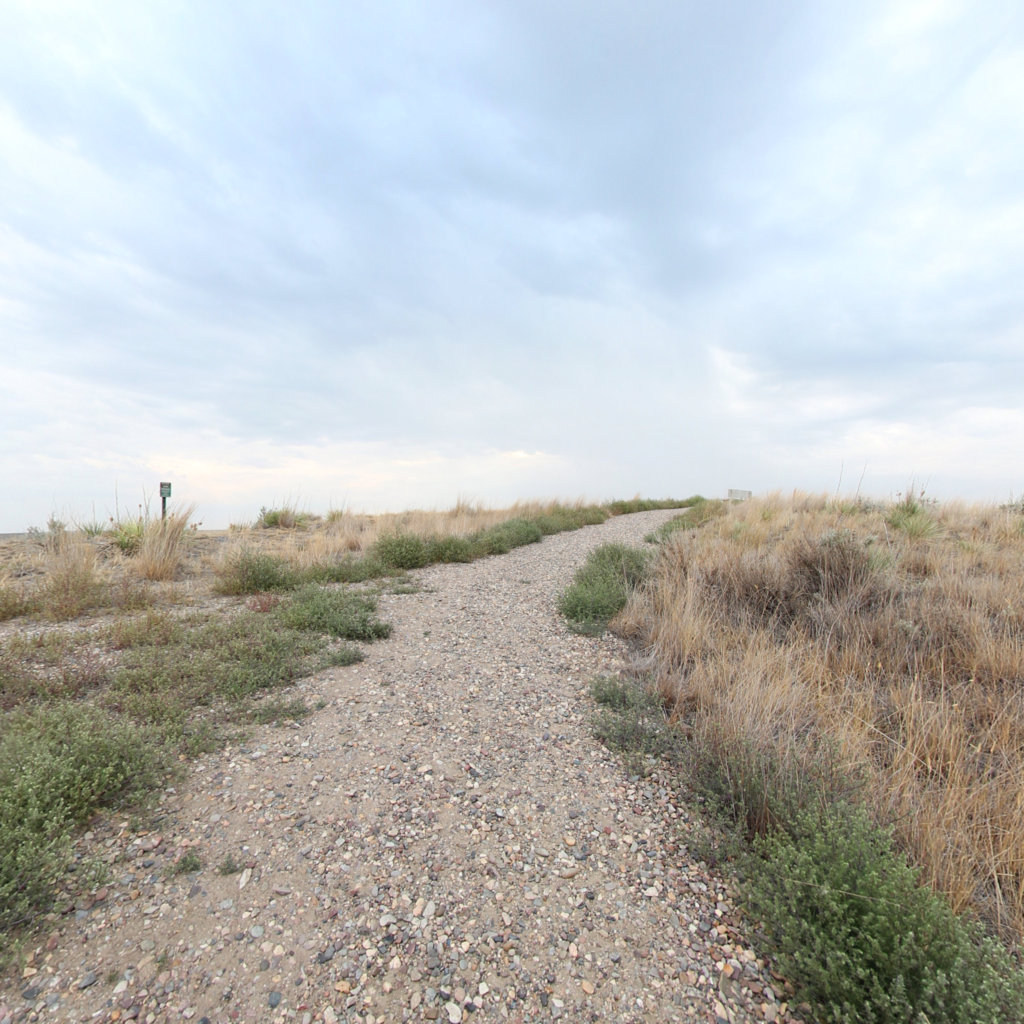
On this course we passed through the plains and found them, as yesterday, extremely level and beautiful, with great quantities of buffalo, and some wolves, foxes, and antelopes seen. Near the river the plain is cut by deep ravines. In this plain, from one to nine miles from the river or any water, we saw the largest collection of the burrowing or barking squirrels that we had ever yet seen; we passed through a skirt of the territory of this community for about 7 miles. I saw a flock of the mountain cock, or a large species of heath hen with a long pointed tail, which the Indians informed us were common to the Rocky Mountains. I sent Shields to kill one of them, but he was obliged to fire from a long distance at them and missed his aim. As we had not killed or eaten anything today, we each killed a burrowing squirrel as we passed them, in order to make sure of our suppers.

We again intersected the river at the end of the last course at the larboard bluffs, from where it now bore N. 80° W. 2 miles. From this point we saw some other lofty mountains to the northwest of Tower Mountain, which bore N. 65° W., 80 or 100 miles distant. At the end of this course we killed five elk and a blacktailed or mule deer, and camped on the starboard side of the river in a handsome, well-timbered bottom where there were several old stick lodges. In the forepart of the day there was but little timber in the river bottoms, but the quantity is now greater than usual. The river is about 80 yards wide with a strong, steady current and from 6 to 10 feet of water. I had the burrowing squirrels roasted by way of experiment and found the flesh well flavored and tender; some of them were very fat.

This modernization is AI-generated for accessibility. The original above is the authoritative version.

Our Partners