Lewis: May 4, 1806
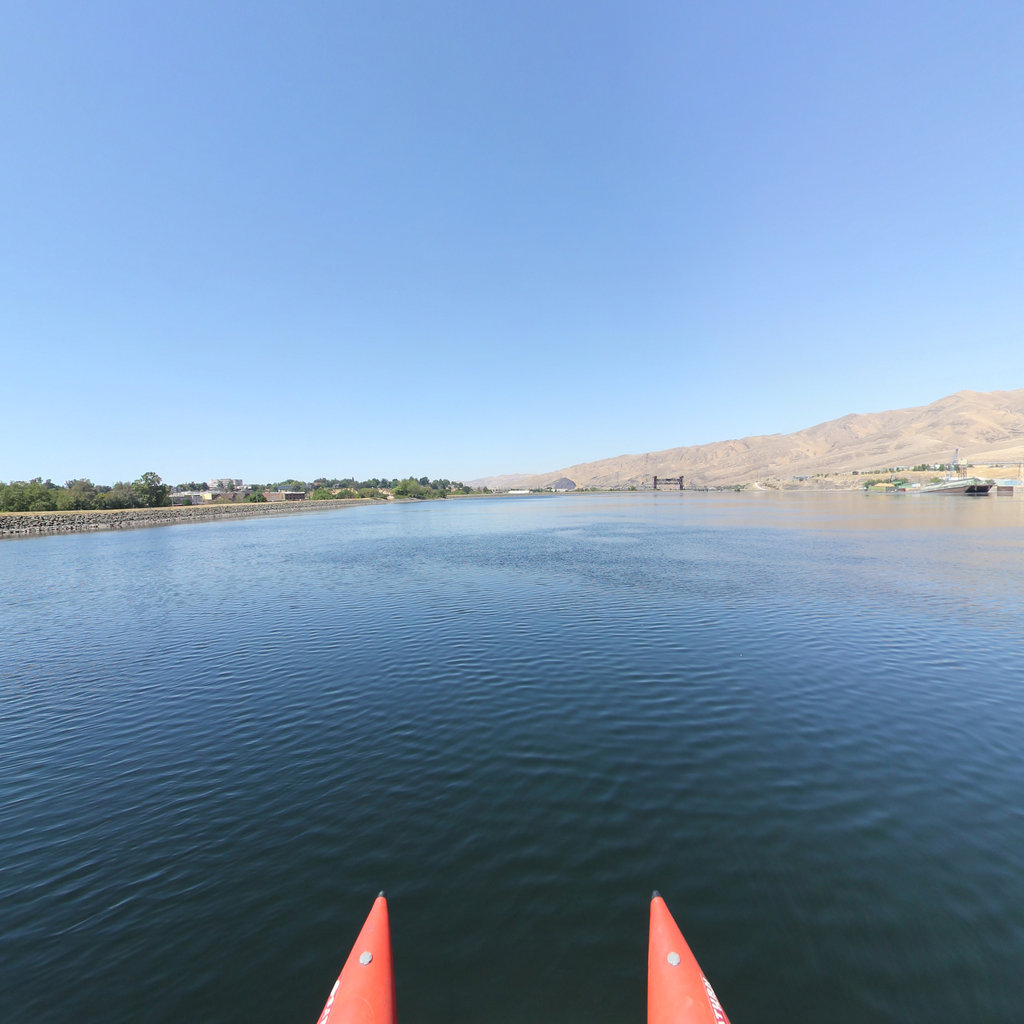
On a cold morning, the party rode northeast across fertile high plains and down a rocky creek to Lewis's River, just below the Kooskooske. A pack horse slipped into the creek but the ammunition, sealed in canisters, was unharmed. They breakfasted at an impoverished six-family lodge, buying two lean dogs and root bread. After meeting Chief Te-toh-ar-sky and their former pilot, who advised crossing the river for a shorter route to the Twisted Hair's camp, they ferried across in Indian canoes and camped, having traveled 15 miles.
Sunday May 4th 1806. Collected our horses and set out early; the morning
was cold and disagreeable. we ascended the Lard. hills of the creek and
steered N. 60° E. 4 miles through a high level plain to a ravine which
forms the source of a small creek, thence down this creek N. 75° E. 8 ms.
to it’s entrance into Lewis’s river 71/2 ms. below the entrance of the
Kooskooske. on the river a little above this creek we arrived at a lodge
of 6 families of which Weark-koomt had spoken. we halted here for
breakfast and with much difficulty purchase 2 lean dogs. the inhabitants
were miserably poor. we obtained a few large cakes of half cured bread
made of a root which resembles the sweet potatoe, with these we made some
scope and took breakfast. the lands through which we passed today are
fertile consisting of a dark rich loam the hills of the river are high and
approach it nearly on both sides. no timber in the plains. the S. W.
Mountains which appear to be about 15 Ms. above us still continue to
become lower they are covered with snow at present nearly to their bases.
Lewis’s river appeas to pass through these mots. near their N. Eastern
extremity. these hills terminate in a high level plain between the
Kooskooske and Lewis’s river. these plains are in many places well covered
with the Longleafed pine, with some Larch and balsom fir. the soil is
extreemly fertile no dose it appear so thisty as that of the same apparent
texture of the open plains. it produces great quantities of the quawmash a
root of which the natives are extreemly fond. a great portion of the
Chopunnish we are informed are now distributed in small vilages through
this plain collecting the quawmash and cows; the salmon not yet having
arrived to call them to the river. the hills of the creek which we
decended this morning are high and in most parts rocky and abrupt. one of
our pack horses sliped from one of those hights and fell into the creek
with it’s load consisting principally of ammunition but fortunately neith
the horse nor load suffered any material injury. the amunition being
secured in canesters the water did not effect it.after dinner we
continued our rout up the West side of the river 3 Ms. opposite to 2
lodges the one containing 3 and the other 2 families of the Chopunnish
nation; here we met with Te-toh, ar sky, the youngest of the two cheifs
who accompanied us last fall the great falls of the Columbia here we also
met with our pilot who decended the river with us as far as the Columbia.
these indians recommended our passing the river at this place and
ascending the Kooskooske on the N. E. side. they said it was nearer and a
better rout to the forkes of that river where the twisted hair resided in
whose charge we had left our horses; thither they promised to conduct us.
we determined to take the advice of the indians and immediately prepared
to pass the river which with the assistance of three indian canoes we
effected in the course of the evening, purchased a little wood and some
bread of cows from the natives and encamped having traveled 15 Ms. only
today. We-ark-koomt whose people resided on the West side of Lewis’s river
above left us when we determined to pass the river and went on to his
lodg. the evening was cold and disagreeable, and the natives crouded about
our fire in great numbers insomuch that we could scarcely cook of keep
ourselves warm. at all these lodges of the Chopunnish I observe an
appendage of a small lodg with one fire which seems to be the retreat of
their women in a certain situation. the men are not permitted to approach
this lodge within a certain distance and if they have any thing to convey
to the occupants of this little hospital they stand at the distance of 50
or 60 paces and throw it towards them as far as they can and retire.
Read this entry in modern English AI-translated
Sunday May 4th 1806. We collected our horses and set out early; the morning was cold and disagreeable. We ascended the larboard hills of the creek and steered N. 60° E. 4 miles through a high level plain to a ravine which forms the source of a small creek, then down this creek N. 75° E. 8 miles to its entrance into Lewis's river, 7½ miles below the entrance of the Kooskooske. On the river a little above this creek we arrived at a lodge of 6 families of which Weark-koomt had spoken. We halted here for breakfast and with much difficulty purchased 2 lean dogs. The inhabitants were miserably poor. We obtained a few large cakes of half-cured bread made of a root which resembles the sweet potato; with these we made some soup and took breakfast.
The lands through which we passed today are fertile, consisting of a dark rich loam. The hills of the river are high and approach it nearly on both sides. There is no timber in the plains. The S.W. Mountains, which appear to be about 15 miles above us, still continue to become lower; they are covered with snow at present nearly to their bases. Lewis's river appears to pass through these mountains near their northeastern extremity. These hills terminate in a high level plain between the Kooskooske and Lewis's river. These plains are in many places well covered with the longleafed pine, with some larch and balsam fir. The soil is extremely fertile, nor does it appear so thirsty as that of the same apparent texture in the open plains. It produces great quantities of the quawmash, a root of which the natives are extremely fond. A great portion of the Chopunnish, we are informed, are now distributed in small villages through this plain collecting the quawmash and cows; the salmon not yet having arrived to call them to the river.
The hills of the creek which we descended this morning are high and in most parts rocky and abrupt. One of our pack horses slipped from one of those heights and fell into the creek with its load, consisting principally of ammunition, but fortunately neither the horse nor load suffered any material injury. The ammunition being secured in canisters, the water did not affect it.
After dinner we continued our route up the west side of the river 3 miles, opposite to 2 lodges, the one containing 3 and the other 2 families of the Chopunnish nation. Here we met with Te-toh, ar sky, the youngest of the two chiefs who accompanied us last fall to the great falls of the Columbia. Here we also met with our pilot who descended the river with us as far as the Columbia. These Indians recommended our passing the river at this place and ascending the Kooskooske on the northeast side. They said it was nearer and a better route to the forks of that river where the Twisted Hair resided, in whose charge we had left our horses; thither they promised to conduct us. We determined to take the advice of the Indians and immediately prepared to pass the river, which with the assistance of three Indian canoes we accomplished in the course of the evening. We purchased a little wood and some bread of cows from the natives and camped, having traveled only 15 miles today.
We-ark-koomt, whose people resided on the west side of Lewis's river above, left us when we determined to pass the river and went on to his lodge. The evening was cold and disagreeable, and the natives crowded about our fire in great numbers, so much so that we could scarcely cook or keep ourselves warm. At all these lodges of the Chopunnish I observe an appendage of a small lodge with one fire which seems to be the retreat of their women in a certain situation. The men are not permitted to approach this lodge within a certain distance, and if they have anything to convey to the occupants of this little hospital, they stand at the distance of 50 or 60 paces and throw it towards them as far as they can and retire.
This modernization is AI-generated for accessibility. The original above is the authoritative version.
Entities mentioned in this entry
Auto-extracted from the entry text. Hover any entity for context.