Journal Entry

Lewis: May 5, 1805

May 5, 1805
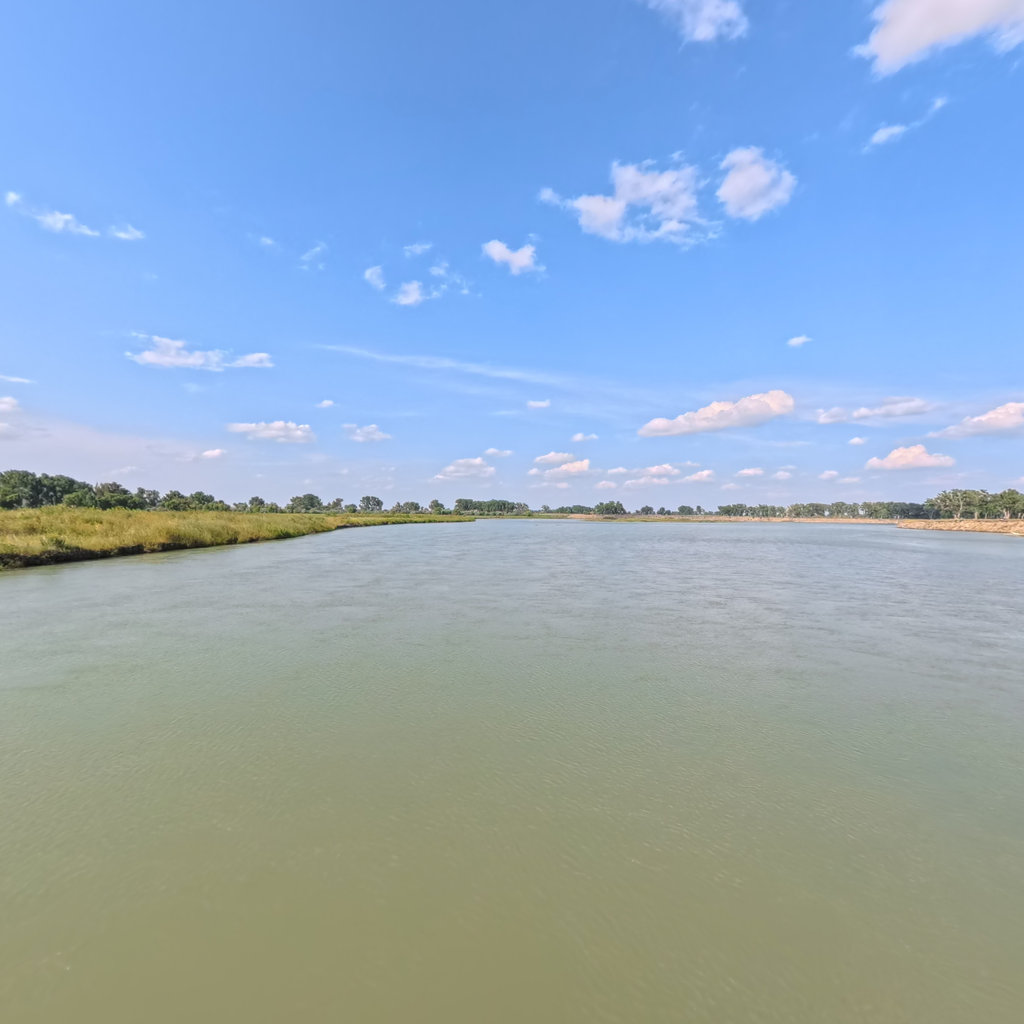
Missouri River near Porcupine River
AI Summary

On a fine Sunday, the party traveled through country abundant with game. Lewis killed a deer while walking ashore, and the white pirogue's rudder irons broke on a sawyer but were quickly repaired with rawhide and nails. The men feasted on buffalo, venison, and beaver tail, though fish remained scarce. Lewis recorded detailed observations of small geese, white brant, and two species of wolves. Captain Clark and Drouillard killed an enormous brown bear, requiring ten shots; it measured over eight feet and was butchered for its oil. The party also took two elk, a buffalo, and an antelope.

Sunday May 5th 1805 A fine morning I walked on shore untill 8 A M when we
halted for breakfast and in the course of my walk killed a deer which I
carried about a mile and a half to the river, it was in good order. soon
after seting out the rudder irons of the white perogue were broken by her
runing fowl on a sawyer, she was however refitted in a few minutes with
some tugs of raw hide and nales. as usual saw a great quantity of game
today; Buffaloe Elk and goats or Antelopes feeding in every direction; we
kill whatever we wish, the buffaloe furnish us with fine veal and fat
beef, we also have venison and beaver tales when we wish them; the flesh
of the Elk and goat are less esteemed, and certainly are inferior. we have
not been able to take any fish for some time past. The country is as
yesterday beatifull in the extreme.

saw the carcases of many Buffaloe lying dead along the shore partially
devoured by the wolves and bear. saw a great number of white brant also
the common brown brant, geese of the common kind and a small species of
geese which differ considerably from the common canadian goose; their neck
head and beak are considerably thicker shorter and larger than the other
in proportion to it’s size, they are also more than a third smaller, and
their note more like that of the brant or a young goose which has not
perfectly acquired his notes, in all other rispects they are the same in
colour habits and the number of feathers in the tale, they frequently also
ascociate with the large geese when in flocks, but never saw them pared
off with the large or common goose. The white brant ascociate in very
large flocks, they do not appear to be mated or pared off as if they
intended to raise their young in this quarter, I therefore doubt whether
they reside here during the summer for that purpose.

this bird is about the size of the common brown brant or two thirds of the
common goose, it is not so long by six inches from point to point of the
wings when extended as the other; the beak head and neck are also larger
and stronger; their beak legs and feet are of a redish or fleshcoloured
white. the eye is of moderate size, the puple of a deep sea green
incircled with a ring of yellowish brown. it has sixteen feathers of equal
length in the tale; their note differs but little from the common brant,
their flesh much the same, and in my opinion preferable to the goose, the
flesh is dark. they are entirely of a beatifull pure white except the
large feathers of the 1st and second joints of the wings which are jut
black. form and habits are the same with the other brant; they sometimes
ascociate and form one common flock. Capt Clark found a den of young
wolves in the course of his walk today and also saw a great number of
those anamals; they are very abundant in this quarter, and are of two
species the small woolf or burrowing dog of the praries are the
inhabitants almost invariably of the open plains; they usually ascociate
in bands of ten or twelve sometimes more and burrow near some pass or
place much frequented by game; not being able alone to take a deer or goat
they are rarely ever found alone but hunt in bands; they frequently watch
and seize their prey near their burrows; in these burrows they raise their
young and to them they also resort when pursued; when a person approaches
them they frequently bark, their note being precisely that of the small
dog. they are of an intermediate size between that of the fox and dog,
very active fleet and delicately formed; the ears large erect and pointed
the head long and pointed more like that of the fox; tale long; the hair
and fur also resembles the fox tho is much coarser and inferior. they are
of a pale redish brown colour. the eye of a deep sea green colour small
and piercing. their tallons are reather longer than those of the ordinary
wolf or that common to the atlantic states, none of which are to be found
in this quarter, nor I believe above the river Plat.The large woolf
found here is not as large as those of the atlantic states. they are lower
and thicker made shorter leged. their colour which is not effected by the
seasons, is a grey or blackish brown and every intermediate shade from
that to a creen coloured white; these wolves resort the woodlands and are
also found in the plains, but never take refuge in the ground or burrow so
far as I have been able to inform myself. we scarcely see a gang of
buffaloe without observing a parsel of those faithfull shepherds on their
skirts in readiness to take care of the mamed & wounded. the large
wolf never barks, but howls as those of the atlantic states do. Capt.
Clark and Drewyer killed the largest brown bear this evening which we have
yet seen. it was a most tremendious looking anamal, and extreemly hard to
kill notwithstanding he had five balls through his lungs and five others
in various parts he swam more than half the distance acoss the river to a
sandbar & it was at least twenty minutes before he died; he did not
attempt to attact, but fled and made the most tremendous roaring from the
moment he was shot. We had no means of weighing this monster; Capt. Clark
thought he would weigh 500 lbs. for my own part I think the estimate too
small by 100 lbs. he measured 8 Feet 71/2 Inches from the nose to the
extremety of the hind feet, 5 F. to 1/2 Inch arround the breast, 1 F. 11
I. arround the middle of the arm, & 3 F. 11 I. arround the neck; his
tallons which were five in number on each foot were 4 1/8 Inches in
length. he was in good order, we therefore divided him among the party and
made them boil the oil and put it in a cask for future uce; the oil is as
hard as hogs lard when cool, much more so than that of the black bear.
this bear differs from the common black bear in several respects; it’s
tallons are much longer and more blont, it’s tale shorter, it’s hair which
is of a redish or bey brown, is longer thicker and finer than that of the
black bear; his liver lungs and heart are much larger even in proportion
with his size; the heart particularly was as large as that of a large Ox.
his maw was also ten times the size of black bear, and was filled with
flesh and fish. his testicles were pendant from the belly and placed four
inches assunder in seperate bags or pouches.this animal also feeds
on roots and almost every species of wild fruit.

The party killed two Elk and a Buffaloe today, and my dog caught a goat,
which he overtook by superior fleetness, the goat it must be understood
was with young and extreemly poor. a great number of these goats are
devowered by the wolves and bear at this season when they are poor and
passing the river from S. W. to N. E. they are very inactive and easily
taken in the water, a man can out swim them with great ease; the Indians
take them in great numbers in the river at this season and in autumn when
they repass to the S. W.

Read this entry in modern English AI-translated

Sunday, May 5th, 1805. A fine morning. I walked on shore until 8 A.M., when we halted for breakfast, and during my walk I killed a deer which I carried about a mile and a half to the river. It was in good condition. Soon after setting out, the rudder irons of the white pirogue were broken when she ran afoul of a sawyer; however, she was refitted in a few minutes with some strips of rawhide and nails. As usual, we saw a great quantity of game today: buffalo, elk, and goats or antelopes feeding in every direction. We kill whatever we wish. The buffalo furnish us with fine veal and fat beef; we also have venison and beaver tails when we want them. The flesh of the elk and goat is less esteemed, and is certainly inferior. We have not been able to catch any fish for some time past. The country is, as yesterday, beautiful in the extreme.

I saw the carcasses of many buffalo lying dead along the shore, partially devoured by the wolves and bears. I saw a great number of white brant, also the common brown brant, geese of the common kind, and a small species of geese which differ considerably from the common Canadian goose. Their neck, head, and beak are considerably thicker, shorter, and larger than the other in proportion to its size; they are also more than a third smaller, and their note is more like that of the brant or of a young goose that has not perfectly acquired its notes. In all other respects they are the same in color, habits, and the number of feathers in the tail. They frequently associate with the large geese when in flocks, but I have never seen them paired off with the large or common goose. The white brant associate in very large flocks; they do not appear to be mated or paired off as if they intended to raise their young in this quarter, so I doubt whether they reside here during the summer for that purpose.

This bird is about the size of the common brown brant, or two-thirds of the common goose. It is not as long by six inches from point to point of the wings when extended as the other; the beak, head, and neck are also larger and stronger. Their beak, legs, and feet are of a reddish or flesh-colored white. The eye is of moderate size, the pupil a deep sea green encircled with a ring of yellowish brown. It has sixteen feathers of equal length in the tail. Their note differs but little from the common brant; their flesh is much the same, and in my opinion preferable to the goose; the flesh is dark. They are entirely of a beautiful pure white except for the large feathers of the first and second joints of the wings, which are jet black. Their form and habits are the same as the other brant; they sometimes associate and form one common flock. Capt Clark (Capt. Clark) found a den of young wolves in the course of his walk today, and also saw a great number of those animals. They are very abundant in this quarter, and are of two species. The small wolf, or burrowing dog of the prairies, is almost invariably an inhabitant of the open plains. They usually associate in bands of ten or twelve, sometimes more, and burrow near some pass or place much frequented by game. Not being able alone to take a deer or goat, they are rarely found alone but hunt in bands. They frequently watch and seize their prey near their burrows; in these burrows they raise their young, and to them they also resort when pursued. When a person approaches them they frequently bark, their note being precisely that of the small dog. They are of an intermediate size between that of the fox and the dog, very active, fleet, and delicately formed. The ears are large, erect, and pointed; the head long and pointed, more like that of the fox; the tail long. The hair and fur also resemble the fox, though it is much coarser and inferior. They are of a pale reddish brown color. The eye is of a deep sea green color, small and piercing. Their talons are rather longer than those of the ordinary wolf, or that common to the Atlantic states, none of which are to be found in this quarter, nor, I believe, above the river Plat (Platte).

The large wolf found here is not as large as those of the Atlantic states. They are lower and thicker, with shorter legs. Their color, which is not affected by the seasons, is a gray or blackish brown and every intermediate shade from that to a cream-colored white. These wolves resort to the woodlands and are also found in the plains, but never take refuge in the ground or burrow, so far as I have been able to learn. We scarcely see a herd of buffalo without observing a number of those faithful shepherds on their skirts, in readiness to take care of the maimed and wounded. The large wolf never barks, but howls as those of the Atlantic states do. Capt. Clark and Drewyer (Drouillard) killed the largest brown bear this evening that we have yet seen. It was a most tremendous-looking animal, and extremely hard to kill. Notwithstanding that he had five balls through his lungs and five others in various parts, he swam more than half the distance across the river to a sandbar, and it was at least twenty minutes before he died. He did not attempt to attack, but fled, and made the most tremendous roaring from the moment he was shot. We had no means of weighing this monster. Capt. Clark thought he would weigh 500 lbs.; for my own part, I think the estimate is too small by 100 lbs. He measured 8 feet 7½ inches from the nose to the extremity of the hind feet, 5 feet ½ inch around the breast, 1 foot 11 inches around the middle of the arm, and 3 feet 11 inches around the neck. His talons, which were five in number on each foot, were 4⅛ inches in length. He was in good condition, so we divided him among the party and had them boil the oil and put it in a cask for future use. The oil is as hard as hog's lard when cool, much more so than that of the black bear. This bear differs from the common black bear in several respects: its talons are much longer and more blunt; its tail shorter; its hair, which is of a reddish or bay brown, is longer, thicker, and finer than that of the black bear. His liver, lungs, and heart are much larger, even in proportion to his size; the heart, in particular, was as large as that of a large ox. His maw was also ten times the size of a black bear's, and was filled with flesh and fish. His testicles were pendant from the belly and placed four inches asunder in separate bags or pouches. This animal also feeds on roots and almost every species of wild fruit.

The party killed two elk and a buffalo today, and my dog caught a goat, which he overtook by superior fleetness. The goat, it must be understood, was with young and extremely poor. A great number of these goats are devoured by the wolves and bears at this season, when they are poor and passing the river from S.W. to N.E. They are very inactive and easily taken in the water; a man can out-swim them with great ease. The Indians take them in great numbers in the river at this season, and in autumn when they repass to the S.W.

This modernization is AI-generated for accessibility. The original above is the authoritative version.

Our Partners