Lewis: May 8, 1806
Thursday May 8th 1806. Most of the hunters turned out by light this
morning a few others remained without our permission or knoledge untill
late in the morning, we chid them severely for their indolence and
inattention to the order of last evening. about 8 OCk. Sheilds returned
with a small deer on which we breakfasted. by 11 A.M. all our hunters
returned, Drewyer and Cruzatte brought each a deer, Collins wounded
another which my dog caught at a little distance from the camp. our stock
of provision now consisted of 4 deer and the remnant of the horse which we
killed at Colter’s Creek. Sheilds killed a duck of an uncommon kind. the
head beak and wing of which I preserved. the beak is remarkably wide and
obtusely pointed, on it’s edges it is furnished with a sceries of teeth
very long and fine not unlike the teeth of a comb. the belley is of a
brick red, the lower part of the neck white, the upper part or but of the
wing is a sky blue, underneath which a narrow stripe of white succeeds
marking the wing transversly, the large feathers are of a dark colour.
tail short and pointed and consists of 12 dark brown feathers. the back is
black and sides white; legs yellow and feet formed like the Duckinmallard
which it also resembles in size and form. the eye is moderately large,
puple black and iris of an orrange colour. the colours and appearance of
the female is precisely that of the duckinmallard only, reather smaller.
we are informed that the natives in this quarter were much distressed for
food in the course of the last winter; they were compelled to collect the
moss which grows on the pine which they boiled and eat; near this camp I
observed many pine trees which appear to have been cut down about that
season which they inform us was done in order to collect the seed of the
longleafed pine which in those moments of distress also furnishes an
article of food; the seed of this speceis of pine is about the size and
much the shape of the seed of the large sunflower; they are nutricious and
not unpleasent when roasted or boiled, during this month the natives also
peal this pine and eat the succulent or inner bark. in the creek near our
encampment I observed a falling trap constructed on the same plan with
those frequent seen in the atlantic states for catching the fish decending
the stream Capt. C. took several small trout from this trap.
Neesh-ne-park-kee-ook and several other indians joined us this morning. we
gave this cheif and the indians with us some venison, horsebeef, the
entrels of the four deer, and four fawns which were taken from two of the
does that were killed, they eat none of their food raw, tho the entrals
had but little preperation and the fawns were boiled and consumed hair
hide and entrals. these people sometimes eat the flesh of the horse tho
they will in most instances suffer extreem hunger before they will kill
their horses for that purpose, this seems reather to proceede from an
attatchment to this animal, than a dislike to it’s flesh for I observe
many of them eat very heartily of the horsebeef which we give them. The
Shoshone man was displeased because we did not give him as much venison as
he could eat and in consequence refused to interpret, we took no further
notice of him and in the course of a few hours he became very officious
and seemed anxious to reinstate himself in our good opinons. the relation
of the twisted hair and Neeshneparkkeook gave us a sketch of the
principall watercourses West of the Rocky Mountains a copy of which I
preserved; they make the main Southwardly branch of Lewis’s river much
more extensive than the other, and place many villages of the Shoshonees
on it’s western side. at half after 3 P.M. we departed; for the lodge of
the Twisted hair accompanyed by the Cheif and sundry other indians. the
relation of the twisted hair left us. the road led us up a steep and high
hill to a high and level plain mostly untimbered, through which we passed
parrallel with the river about 4 miles when we met the Twisted hair and a
party of six men. to this Cheif we had confided the care of our horses and
a part of our saddles when we decended the river last fall. the Twisted
hair received us very coolly an occurrence as unexpected as it was
unaccountable to us. he shortly began to speak with a loud voice and in a
angry manner, when he had ceased to speak he was answered by the Cutnose
Cheif or Neeshneparkkeook; we readily discovered that a violet quarrel had
taken place between these Cheifs but at that instant knew not the cause;
we afterwards learnt that it was on the subject of our horses. this
contreversy between the cheifs detained us about 20 minutes; in order to
put an end to this dispute as well as to releive our horses from the
embarasment of their loads, we informed the Cheifs that we should continue
our march to the first water and encamp accordingly we moved on and the
Indians all followed. about two miles on the road we arrived at a little
branch which run to the wright. here we encamped for the evening having
traveled 6 miles today. the two cheifs with their little bands formed
seperate camps at a short distance from ours, they all appeared to be in
an ill humour. we had been informed some days since that the natives had
discovered the deposit of our saddles and taken them away and that our
horses were much scattered. we were very anxious to learn the particulars
or truth of these reports from the twisted hair, as it must in some
measure govern us in the establishment of our perminent camp which in
consequence of our detention by the snow of the mountains has become
necessary. to obtain our horses and saddles as quickly as possible is our
wish, and we are somewhat apprehensive that this difference which has
taken place between these Chiefs may millitate against our operations in
this rispect. we were therefore desireous to bring about a good
understanding between them as soon as possible. The Shoshone boy refused
to speak, he aledged it was a quarrel between two Cheifs and that he had
no business with it; it was in vain that we urged that his interpreting
what we said on this subject was not taking the responsibil ity of the
inteference on himself, he remained obstenately silent. about an hour
after we had encamped Drewyer returned from hunting we sent him to the
Twisted hair to make some enquiries relative to our horses and saddles and
to ask him to come and smoke with us. The Twisted hair accepted the
invitation and came to our fire. The twisted hair informed us that
accordingly to the promis he had made us when he seperated from us at the
falls of the Columbia he collected our horses on his return and took
charge of them, that about this time the Cutnose or Neeshneparkkeook and
Tun-nach’-emoo-tools or the broken arm returned from a war excurtion
against the Shoshonees on the South branch of Lewis’s river which had
caused their absence when we were in this neighbourhood. that these men
became dissatisfyed with him in consequence of our having confided the
horses to his care and that they were eternally quarreling with him
insomuch that he thought it best as he was an old man to relinquish any
further attention to the horses, that they had consequently become
scattered; that most of the horses were near this place, a part were in
the forks between the Chopunnish and Kooskooske rivers and three or four
others were at the lodge of the broken Arm about half a days march higher
up the river. he informed us with rispect to our saddles that on the rise
of the water this spring the earth had fallen from the door of the cash
and exposed the saddles, he being informed of their situation had taken
them up and placed them in another cash where they were at this time; he
said it was probable that a part of them had fallen into the water but of
this he was not certain. The Twisted hair said if we would spend the day
tomorrow at his lodge which was a few miles only from hence and on the
road leading to the Broken arm’s lodge, he would collect such of our
horses as were near this place and our saddles, that he would also send
some young men over the Kooskooske to collect those in the forks and bring
them to the lodge of the broken Arm to met us. he advised us to go to the
lodge of the broken Arm as he said he was a Cheif of great emenence among
them, and promised to accompany us thither if we wished him. we told him
that we should take his advice in every particular, that we had confided
the horses to his care and expected that he would collect them and deliver
them to us which when he performed we should pay him the two guns and
amunition we had promised him for that service. he seemed much pleased and
promised his utmost exertions. we sent Drewyer to the Cutnose who also
came to our fire and smoked with ourselves and the Twisted hair we took
occasion in the course of the evening to express our regret that there
should be a misunderstanding between these Cheifs; the Cutnose told us in
the presents of the Twisted hair that he the twisted hair was a bad old
man that he woar two faces, that in stead of taking care of our horses as
he had promised us that he had suffered his young men to ride them hunting
and had injured them very much; that this was the cause why himself and
the Broken arm had forbid his using them. the other made no reply. we
informed the Cutnose of our intention of spending tomorrow at the Twisted
hair’s lodge in order to collect our horses and saddles and that we should
proceede the next day to the Broken Arm’s lodge, he appeared well
satisfyed with this arrangement and said he would continue with us, and
would give us any assistance in his power; he said he knew the broken arm
expected us at his lodge and that he had two bad horses for us,
metaphorically speaking a present of two good horses. he said the broken
arm had learnt our want of provision and had sent four of his young men
with a supply to meet us but that they had taken a different road and had
missed us.about 10 P.M. our guests left us and we layed down to
rest.
Entities mentioned in this entry
Auto-extracted from the entry text. Hover any entity for context.
Terrain360 · the place today
Clearwater to Snake River in 360°
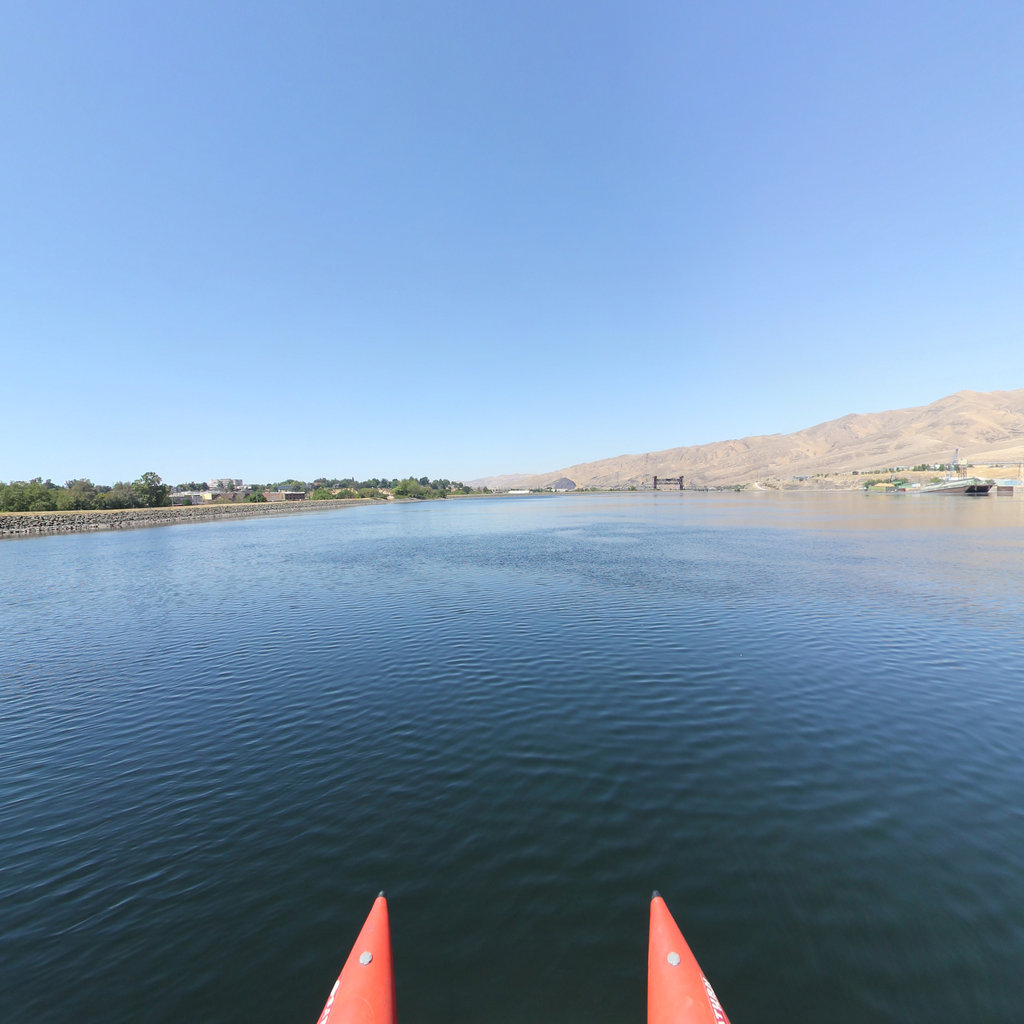
10 frames across 1.7 mi of the route around this location
Analyses
- Hunger’s Evidence: Pine Bark, Fish Traps, and Diplomatic Strain on the Kooskooskee
- Pierre Cruzatte: Fiddler, Waterman, and the Man Who Shot Meriwether Lewis
- Seaman: Lewis’s Newfoundland and the Fourth Member of the Corps
- John Colter: The Hunter Who Walked Away From Home
- The Shoshone Nation: Sacagawea’s People and the Horse Trade
- The Nez Perce (Chopunnish): Allies of the Bitterroot and Kooskooske
Artwork
Help improve this record
See something that needs correcting, or know a source we are missing? The archive gets better through its readers.


