Fort Mandan, preparing for departure — Patrick Gass: February 25, 1805
is! ‘until the canges. came up; and. about 7 7 proceeded :
on our voyage. ‘Che forenoon was pleasant. We —
hu yacsed two screcks oppos site to each other. on the op- – 4
be
ee
rs eS
Pieris
of £
7 a
re
Pee. ee
“posite sides of the viver. About 12 we passed a! bot~
oin on the N ae ‘side with one solitary. tree Onis,
a sn which +t ere was. an ca vele’s nest. ‘he bot-
URES, s here are a small As we Wwontaune thisaf..
ternoon some of the. party killed three of what ther
“French and natives call mountain, sheep. ; but they oe
and fect, They are of a dan colour oe
s _ the ate are very a wit : thos of the ‘
heh Phey have a fine soft. hair, Captair
them the Ibex, and says they resemb:
animal | more than any other, T hey are in size,
hat Jarger than a deer. The hills here are ae 3
we and steep. One of our men in an atte: mt…
~ toclimb one had his shoulder dislocated ; it wa
however replaced «without much difficulty. ‘The Eye as
hills are very much washed in general: they app say
Tike tee vinand of eh washing Maas e vine ve we
a | eltepe a ye trees ay ee tipper id of it. “We went
a 18. miles and encamped on the. South didee tae
« Sunday 26th. Weset outearly ina fine morning,
and passed through a desert country ; ;in which there-
is no timber on any part, except a few scattered ines |
en the hills. ‘We saw few animals of any kind, but —
A oe Ibex or, mountain sheep. One of our men kil- >
eda male, which had horns two feet long and four
aed 5 diameter at abe. root. 3 ed e passe two o Cree if
¥:
eis “ ‘The Thex seyemnbien. the; chitin the shape of it body;
i hut differs in th ‘ forns which are much largér > They are |
– bent backwards, full of knots; and it is generally asserted
that there is a knotadded every year. There are some of
ae te we ey ERR atin tae al least two iti
of oy a It is. “anative oe ake Rb! ee
and mountains of Greece; – extremely ‘SVEE ot
of running | with ease along is edges of
en ig Walk or. r the Fox, though insti
“JOURN: AL |
ae ees a bat on the North side ; : and. in eee i
one of the men killeda buffaloe. At dark we came
to large rapids, where we had to unite the crews of
two or three canoes, to force them — through. It was. .
– gometime after night. before. we could encamp. We a
| – < at length, after having gone twenty-one mHes en- :
_. eamped on the South side in a small grove of timbers, ,
Tee Fe first we had seen eons | tke day. To ge
lee: TES heard of that snimaly and Sond Nn ; Case's: * 4
~*~ verbal. description, we are led to believe, that it much. —
ako one nearly resembles the wild pee ae called the Muffion
~~ or Musmon, to.be found in the uncultivated ; parts of Greece,
Sardinia, Corsica and i inthe desart ¢ of Tartary ; and which
is thought to be the primitive race and ue veal sheep in its 4
wild aad savage state. Perhaps it may be found tobeex. —
, ~ actly the same ; of which we find the following description,
© The Mufilon, or Musmon, though covered with hair,
Bears a stronger similitude to the Ram than. to: any ie 2
animal; 5 ‘like the Ramit has. the. eyes placed near the horns 3
and its ears are shorter than those of the goat: it alsore-—
Y veer les the Ram in its horns, and im all the particular eons “a
tours of its form.. The horns also are alike ; they arcof & 4
white or yellow colour; they, have three sides” as in the
- Ram, and bend backwards 3 in the same manner behind the. _
ears. The rauzzile and inside of the ears ere of a whitish ol
colour tinctured with yellow ; the other parts of the face *
- are of a brownish grey. The. general colour of the haiew - %
“ever the. body. as of.a brown, approaching to that of the,
ee eS deer. The inside of the thighs and: belly are of'awhite
_ ‘tinctured with, yellow. The form upon the whole. seems:
¢ se more made for agility and strength than that. of the coms
- monsheep; andthe Mufflon is actually found to.hive in a.
savage state, and. maintain itself either. by force or swift-
ness against all the animals that live by rapine. Such is ats |
extreme speed that many have been inclined rather to rank:
ve de among Ane te kind, cae the sticep. | Bits in this a ey are
=
IE oe
=~
2 ees raat
a
fs hae hs some these are seen Sag erow i a ae
wing size; many of them auineabben: in their eon 3
ne, peare ree seeder rn.
; arth. We ies now. ak into nee she
nts little to our view, but scenes of bar-
desolation ; and see no encouraging pre Sa
will terminate. Having proceeded (by —
of this” viver) about two. thousand. three
ae it nade therefore not be eee te
: ones ane et Ss Ww
a sufficient qounety of Gabor $in many ‘lace
ara and the ey os and erate
at is ne ee gad erent: arr fhe Bote thek WA —
oo: of an inferior quality ;. but may in general be: ae’
good second rate land. The country is. rathe r baly
/ re
Ee it SRE ARCS
- than level, though. not mountainous, rocky, or Stony. i.
The hills in their unsheltered state are much ‘expo>
sed to be washed by heavy rains. This kind of coun: |
– try and soil 1 vhich has fallen under our observation in
our progress up the Missouti, extends it is ‘under=_
stood, te a great distance on bot! h sides of the. tiver. Re
‘ae Along the Wiccouri and the waters which flow into –
oe it, cotton wood and willows are frequent I inthe botten
nd- islands ; 3 but the upland is almost entire
ut timber, and consists of large prairies or ‘plai ‘
sundaries of which the eye cannot reach. T
4s generally short on these immense n
es which 2 ay the ese? seasons are oo
a ay
– “ae
st
: the ou
Ad course,
ae pe Paters aneeeien ihe. presets
various: 8 sid
.. lebeth appearing like dark clouds and sinking i inthe ©
hee horizon 3 these enlivened with the buffaloe, elk, ack.
i os _ and otheranimals which in-vast numbers feed ‘upon:
a) oe the e plains or pursue their prey, are the prominent
objects, which compose the extensive prospects
ae to the view and strike the attention of the
helen 7 os
~The islands in the Missouri < are Bor various aloes: ;
. general not largest and dnsing bi water mostly
_everflowed. Le -
m4 “There are Tatlaa pathiiige ong: nue Missouri wad
some in other parts of the “country. Those along -
hs ‘that river do not generally follow its windings but
“eut of points of land and pursue a direct course.
There: are also roads and paths. made by the buffa~ es
Tae, andsother animals ; some | of the buffaloe. roads
are at least ten feet widé. We did not embark this.
cis “rnorning util 8 o'clock. The day was fine, but
me the wind ahead. We had. difficult, water, and passed
oe Hn ano the most dismal’ country I. ever beheld; no-
| “ver; as far as our view: could extend. aga he bed of the
2 Fiver ds rocky, and also the banks and hillsin some |
» . places; but these are chiefly: of earthy We went —
thirteen miles and encamped ima botte my just tareet
Le ‘enough fer the. purpose, and made out to ort hati
oe ee drift wood to cook with, :
AfGe ame ©’ bh Pp. as A elbnenegt came ta Bmore
thing “But barren mountains on: both sides of the ri- ‘
- Tuceday 28th. We set sail early, had a nie morn-_
, and proceeded on th rough’ this desert country ene,
po JOURNAL, aoe
By gia he rrr ) ey,
We about eighteen miles and halted at a ‘hanlalitte ae
grove of timber en the South side. Itrained alittle | Bey
all the afternoon. Some of the. men went out to ee
> Wunt andkiled aneik: Last night about 12 0’clock me
~> abuffaloe swiming the river. happened to land at
Gene of the periogues, crossed over it and broke two
~ gubs, butnot so-as to render them useless. He
‘ then went straight on through the men where they
_ ‘were sleeping, buthurt none ofthem. As we came.
along te day we passed a place where the Indians had
driven above an hundred head of buffaice down a pre-.
eipice and killed them. S Earn Tear
Tiursdcy 301th. Thégfovencon was eloudy, with —
> somerain. We “id nollltet cut till lete ip the day… |
.. The hills came in close on the river again, but are oat
es 7 gad a os
not so high. Some of. them” ‘are as black as coal ®
ahd some : white as chalk? We see amreat mz ygiresh.
– Indian tracks or signs. as’ pass along. ie Dine )
, alittle all day ; we went on slow and encamped ear~
~ ly onthe North side, in a small bottum with some ©.
cotton wood, haying proceeded on eign! MHCSe ya
There are ng pines to be scen.on the hills. :
Tivriday Sist.. We: ‘emba see early dit» 4. cloudy.
Pmorning ; passed through a mountainous countrs,
* but the game is more plenty, and we kilied some but-
fice | in ourway. About 11.o’clock it began to rai
Slowly, and continued raining two hours, when it.
eleared up. We passed sore very curious cliis and
“rocky peaks, 3 in a lone range. Some of them 200..
_ feet high and not more than eightfeet thick. They 9 |
— aseem as if built .by the ha nd of man, and are so.) ae
: “pumerous that they appe sar like the ruins ofean ana’ * 2%
‘tient city. We went 17+ miles. and encamped at.
: “the mouth of a handsome creek on the North side. a |
a Saturday let June, 3805. We. embarked. early. ee x
The morning was. cloudy, but without rain. «Wee Pe
passed through a more batons ee than infor ee
7. >
rt
“a uy not lanes ate smait
. Covered With e6tton any We | ‘saw a Riba: Ae
“mountain sheep. Yesterday our men’ killed three
of them, that “had remarkable laree horns ; one pair
“weighed 25 pounds, We. passed a- small rivet on
* the North side about -11 o’clock: “The water is not
$0 rapid to day as usual, but continues high. In the
geiternoon. we Gaasad: a’ ereek | about 30 yards wae.
‘and several: smalt islands. We Went 24 miles and
encamped on a smal! island.
Y Sunday 2nd: We embarked early ina fine morn-
“ine. The hills come clegggon the river, but are not.
80. hich nor so broken,. ay wedound them a short dig-
– ance. lower down. “his. forenoon we passed two
“ereeksp one on each ave aod several isiands cover-
ed @eeoiton wood t there 3 is not a stick of tim-
_ ber to: bé@seen. any wha | upon the hills. Some of —
the hunters killed ’a brown bear in a small bottom_on
@.. thé south side, and Having comhe 18 miles we encam-:
“~~ ped just above the bottom onthe same side, at the:
* mouth we a large titers oe 4 e. ie .
oo ae a bie 3rd: We crossed over to the. ‘point be=-. 4 |
_.. *ween the tworivers and encamped there. Thécom-* |
manding officers could not determine w hich of Nese 2. F
yivers or branches, it was proper to take ; and’there-.
fore concluded to send a’smali party up eachof them: –
Myself and two men went.up the South branch, and.
a serjeant- and two more up the North. The ‘parties
went up the two branches about 15 miles. We
found the South branch rapid with a great many —
istands and the’ general course South West. ‘The i
ether party reported the North branch’as less r apid, a
and not so deep as the other. The North branch is:
186 yards wide and the’ South ‘OTe: yards. — a hy us
water of the South branch is clear, and that of th
North uy, About a. mile and an half up.
ith ence a.” handsome: “eal :
a
>t
} ay 47°, ae 12. apes Tee ude. sie Lewis |
ee and Captaia. Clarke were not yet. sutished with Tes-— : cy
ect to the. proper river to ascend. :
») Lucsday. Ath, Captain Lewis with six men went
-mp the North branch, to see 1f they coulddind any. |
a eertain marks to peer ini ne whether that was the 6 ee
— Missouri o1 not ; and Captain Clarke myself and four
ethers went up ihe South branch, fc the: SAE PUES! Ro.
“pose with vegatd to that branch. About eieht miles’. ° ae
~~ above the confluence, the South branch andthé small |
* “river: which falls into the. North branch, are net
more than’ 200 yards apart, Near this place al
~< close on. the- bank of the Seutiitbranc h 1892 Beautiful ~
spring where we. refreshed ‘oubselves. Avo
| drink of grog; and proci@e@[d,on throug ig wig
| plains. Here nothins srows Dut prick? peaks, which
are in abundance, and some sftcrt grass. We went
on about thirty miles and found the river still exten-
ding i ina South West direction. We saw ‘gmoun-
tain to the South about 20'miles of, whicliappearedY
Morun East. and West, and some spots,on it resem-
* dling snow. In the evening we went towards the.
_viver to pencamp, where. one of the men having got
pe ie asinall point of woods on the bank, before. §
the rest of. theparty, was attacked by a huge he-bear,
9 “and bis gun missed fire. We were about 200 yards - |
' from him, but the bank there was so steep we could
oe ger wee to. his Apptence : a Wes sige fired ae
S
a Bee ry oS
aye mane off’ eaetay injuring ‘the man. “Havin ‘got ae
aie wD. we alk encamped in an old tnd ian lodge for the. a -
Fs 5th. omen light showers of tain fell”
night, and, the: morning was cloudy
to: act out ee ea three b
+Y +
ee a mountain, Soa of 1 us De oe oe that had a
Piuah last, aie Wheb we had Boe ee oe MW miles _
eae Cog els se course for. us to. proceeds on our ag
VO) aE, aud we turne 2d back. towar ds‘ the camp | again. en
de Wevwe entiabout 15 miles and strack the small Tiver a
about 20 miles from its mouth. Here we killed some |
> elk and deerend encamped all night.’ “Thereisa—
y reat. geal of tirabe cr in the ere ar this: hte: vl-”
ey part: cular. ‘
er. Thur slay 6h. © We reuivosded™ ree Hye hall *
ao a and kilied: scme deer. About 1 o’elock we __
aoe weet on the plains abe sain whic me we kept on ll we
ees | oe ee Lewis _
ue Coal his party. Wan not! re
ve _ ‘this afternc GGT bi: Spey eT ae Oe ae
Briday 7th. Tt rane tally Captain en Si an
party did not return. He fine a a
me Saturday ‘Sth… ‘A fine fool morning. “aot ron
‘ clock A. M. the water of the South fiver, or branch,
‘became al most of the celour of claret, and remained
“so. all day. (he water. of th the other branch hasthe
‘appearance of milk when contra sted y git the water ‘
ofthis branch Ip its pr resent ‘state. J Bou ;
afternoon Captain Lewis and lis party came prec phan |
“They had been up the North branch about 60. Y <
| iba at Ravigeble, tha at distance 5 ‘not :
west. 7 pte while but Kill
ne -elk. ‘From the appearance, or the —
river where they left it to return, they supposed. ae |
: ritaiabe be navigable ; a considerable | dist ance further,
- , They saw.no mountains ahead, bu one off toware
a north: it was. not covered with s snow ‘like’ t 10
ye had seen. Both these rivers. abound i in fish ; - an Byes
we caught some of different kinds, but not large.
* About five O "clock i in. the -afternoon the weather be- ee
(3, eae
‘y! hop
“ag .
% id
The other they called Maria’s S river.
“rain ceased. .
- Sunday 92h. A fine morning. tt was tho |
__ adviseable to Ieave the large periogue hereand p
2 of the stores and baggage, and some of the
. en aged in digging a casejto bury them in. The wa-
‘ter of the Missouri change ‘this'morning - ‘ig bee tes fe
mer colour. The day was fine, but the wind blew
hard from the northwest. One of the menkiledan
excellent fat buffaloe. There is a quantity of gdosé=.
_. berry and choak-cherry bi ishes on n the point, and also Oh ee
eS iting rabbit berries. ee
Monilay Oih. We hauled ¢ our large periopue on. oe
“an island in the mouth of Maria’s river, and covered
‘at ithabrush. We then began to examine and
~ assort our effects to see what would be least wan ted
and most proper to leave ; but about two it beg
a _- Fain and blow so hard, we were obliged to deeice”
rain continued enly an hour, and in the: evening »
Toaded est of the neuen and left the igi oe °
At dark the tae mh
a
| articles amountin
g to Shout one “howd oe
The rest of the’ party wer é Y cosveeh é in a he
Ne which had been left, and |
he following morning.
CHAP. oe
ee Wednesday 1248. The ‘morning. was fae? We oe
ee a from the mouth of Maria’s river, “and: we i cee
on very well. In the forenoon we passed 12 isla
~ At 1 o’clock the weather became cloudy and th:
ened rain; at 2 there was a light shower, and |
- day became clear. We passed three islands this
_ . ternoon’and some handsome’ bluffs on both sides of |
the river. , We went 18 miles and encamped ina .
~ small bottom on the north. oes, where we > killed 2
élk and some deer. :
_ Thursday 18th. We set out
a a Some dew fell last night. We i
a ee K on the south side, calle OW pay The
“water: of the river is very clear and the current very
Yapid. We passed a number of islands covered with —
, _ timber ; but there is none to > be seen on ‘the oy, )
_ either’side. We we it 14
ae the south side. ‘
* y ; : « i Sa ‘
i oa BCS ant eae Cee bs is : Sie :
Ne it : Ree, at or hey cy ae ‘5 .
eo
} : Soe
aes
) ing was plsasant: ArOuL a Oo slog z M. we pa ‘
ae place where Captain Lewis and his men had killed ~
_ two bears, and had left a note directing us where Oe
caine t them. About 2 one 2 of Denar a Lewis’ “smen m ;
da Ly 15th. “We pro secded on as. usual, ’
vapid watery T ever saw any
LO a IN ele JOURNAL.
“re on the south side called Soaationn creek, *
handsome rapid stream, but not large. On a point a 4
above, there is a great quantity of strawberry, goose-
” berry and choak-cherry bushes; and there appears
_ to be a good deal of small cotton-wood on the banks”
of this creek. In the afternoon we passed redblufis
ee both sides of the river, and at night came to a large – :
| ‘Yrapl l which we did not venture to pass so late ; ane 4
therefore encaniped below an the north side, after” ;
» ~~ “going 12 miles. :
oe Sunday 16h, In the morning all hands’ were en-
ee ‘gaged in taking the canoes over the rapid abouta =
_ ss mile in length, which having accemplished They te- 4
mm ‘turned and took up the periogue, where we halted
to examine anothers great rapid close ahead. One —
’ aman had been sent on last night to Captain Lewis, to |
find out what disceveries he had made. We remain-
“ed here some time, and a few of the men went out
ee Want. About floon Captain Lewis and the: party
. ie with him joined us, and the: hunters came in. Cap-
‘tain Lewis had been up the falls 15 miles above the __
first dea or pkg and found the falls continue alk
ere were 5 different shoots
oe 40 or 50 feet perpendicular each, and very rapid wa-
Te ter between them. As we found the south side the
best to carry our canoes up, we crossed over and ulte ©
‘toaded our craft. We then had to take the empty ©
» ee to the side we had 2 and to tow them xP
Reel as sages but we smcceeded § in getting einem all
over safe. jee
fen, Monday 17th. Part of the men were employed i in
yeh taking the canoes up the small river about a mile andy
an half; and some engaged in making. small Wages ge
é, ons, to haul the: canoes and bench above ‘the eee. a
bene
JOURNAL.
aptain Clarke and 4 men went to view and owek oe
ou foad to the place. where we were toembark above
the falls. Opposite the mouth of the small river, a
we eaicdul sulphur spring rises out.of the bank, of-as
– (se strong sulphur water as I have ever seen. Onthe
-. bottoms of this small river and ‘also on the Missow Bea
4 18 a great quantity of flax growing, and at this time
– in bloom. ‘Two men went out this mornin; t > huns. Baie
for elk, in order to-get their skins for covering tothe
¥ron frame of a beat, which we had with us. In the do.
– evening the men got the canoes to-a proper place to
take them upon land: :
-.. Tuesday 18th. The aeniagie was-hauled out ‘of er! |
iz water and laid safe; and some men went to dig a:
place for depositing more of our baggage. About 1s:
the two hanters came in, and could find:ne elk, but
: killed 10 deer. In the evening we compleated ou
-waggons, which were made altogether of wood, and =~
of a very ordinary quality; but it is. expected sree tah.
will answer the purpose. Me Per:
Entities mentioned in this entry
Auto-extracted from the entry text. Hover any entity for context.
Terrain360 · the place today
Fort Mandan (winter) in 360°
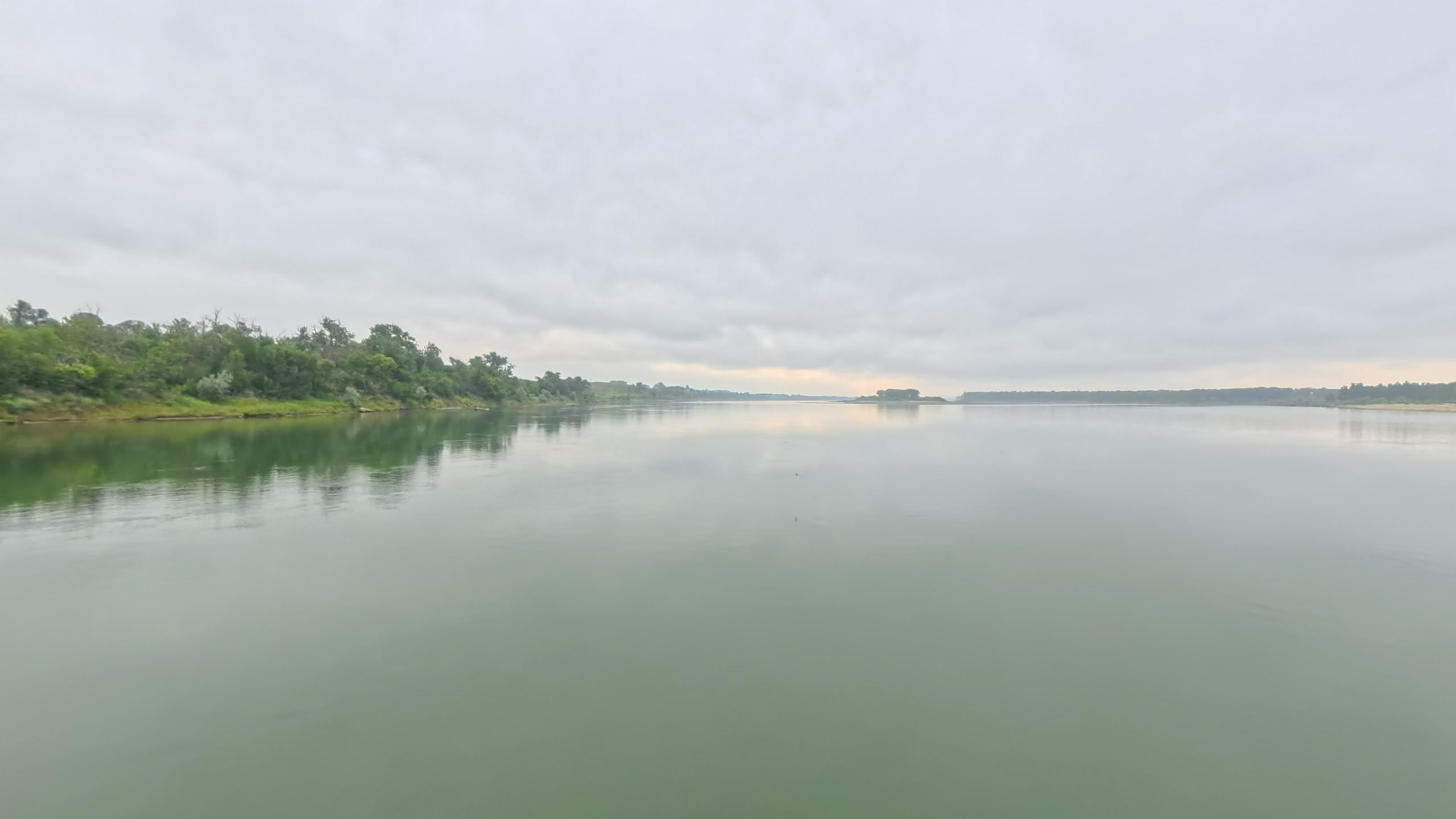
10 frames across 1.8 mi of the route around this location
Artwork
Help improve this record
See something that needs correcting, or know a source we are missing? The archive gets better through its readers.


