


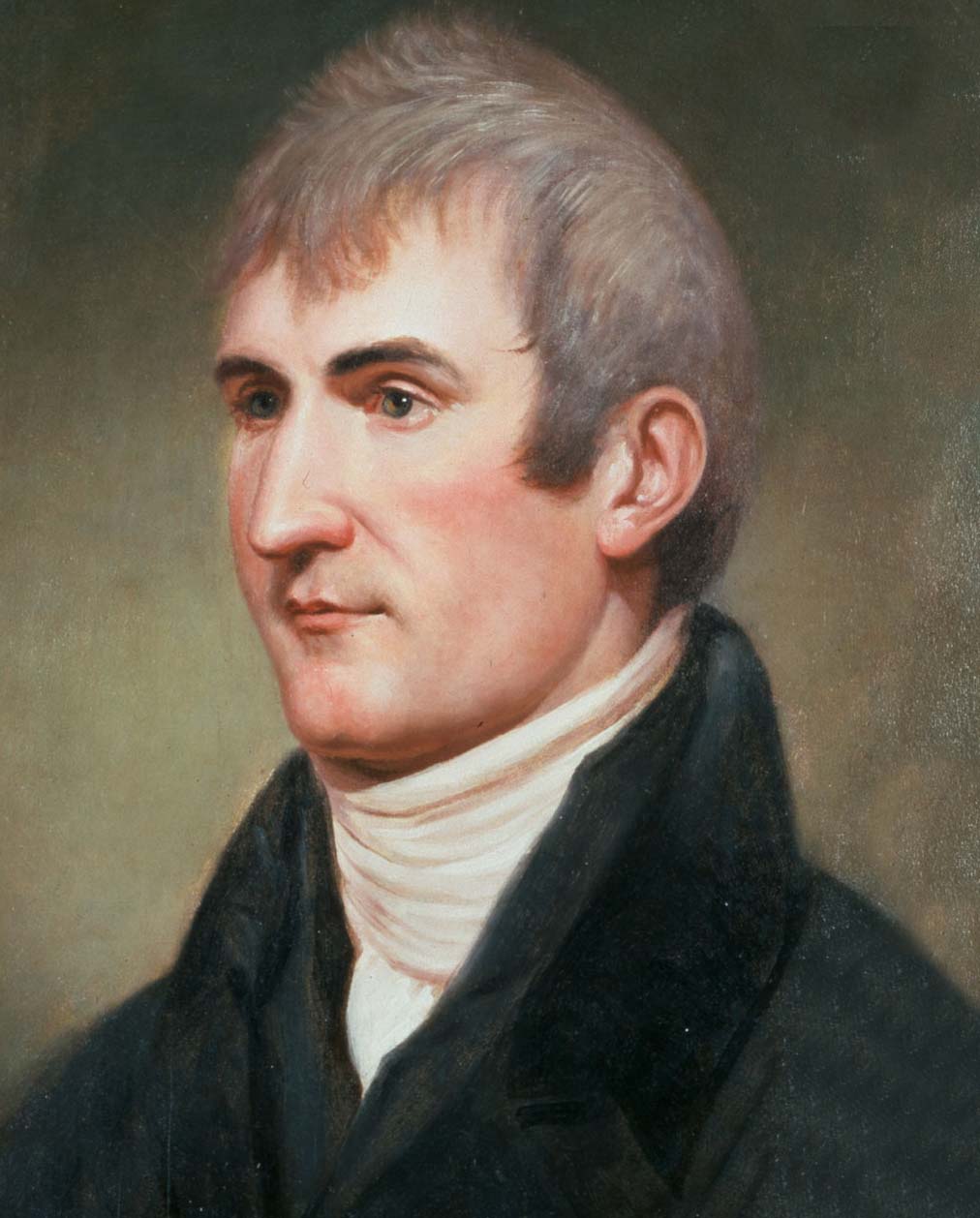
The journal entries for March 11, 1806 present an unusually clear specimen of how the Lewis and Clark expedition’s record-keeping stratified by rank and inclination. All four narrators — Patrick Gass, John Ordway, William Clark, and Meriwether Lewis — register the same nucleus of events: Sergeant Pryor’s return with fish traded from the Cathlahmahs, a search party dispatched for a missing canoe, and three hunters sent across the bay. Yet the four versions range from a few terse lines to multi-page natural-history essays.
The Same Day, Four Registers
Gass, the carpenter-sergeant, is characteristically compressed. He notes only that "Three men went across the bay in a canoe to hunt" and that "our fishermen returned with some ulken and sturgeon." His "ulken" — eulachon, the small oily smelt the captains usually call anchovies — is a vernacular spelling that neither captain adopts. Gass already looks ahead to the morning of the 12th in the same paragraph, treating March 11 as a transitional day rather than an event.
Ordway, writing as orderly sergeant, foregrounds personnel and quantities: "Sergt Pryor returned with a considerable quantity of small fish and Sturgeon and a fiew wa-pa-toes." He alone specifies that "4 men went to look for the lost canoe but could not find it," supplying a head-count the captains omit. Ordway also records the wapato detail that Gass misses entirely.
Clark and Lewis, by contrast, produce nearly identical narrative paragraphs — a familiar pattern in the Fort Clatsop journals, where the captains plainly worked from a shared draft or copied one another closely. Compare Clark’s opening:
Early this morning Sergt. Pryor arrived with a Small Canoe loaded with fish which he had obtained from the Cath-lah-mah’s for a very Small part of the articles he had taken with him.
with Lewis’s:
Early this morning Sergt. Pryor arrived with a small canoe loaded with fish which he had obtained from the Cathlahmah’s for a very small part of the articles he had taken with him.
The phrasing is virtually word-for-word, down to the clause about the wind that "prevented his return as early as he otherwise would have been back." Where the two captains diverge is orthographic — Clark’s "Waukiecum’s" against Lewis’s "Wackiacums," Clark’s "Caried off by the tide" against Lewis’s "carried off" — and in the small physical detail of the canoe’s fastening: Clark says the Cathlahmah dogs "had bitten the throng assunder," Lewis "the trong assunder." Both spellings preserve the same misheard or dialectal form of thong.
Where the Captains Part Company
The shared narrative ends with the cheerful line — present in both — that "we once more live in clover; Anchovies fresh Sturgeon and Wappetoe." After that, each captain pivots to natural history, and here their interests visibly diverge.
Clark turns to the deer of the coast, contrasting the mule deer with the common and fallow deer. He is precise about measurement: of a mule-deer buck’s ears, "I measured those of a large Buck which I found to be eleven inches long and 3 1/2 in width at the widest part." He observes the winter undercoat — "a Considerable quantity of very fine wool intermixed with the hair and lying next to the Skin as the Antelope has" — a comparative detail that suggests sustained handling of skins at the fort.
Lewis, the same afternoon, takes up reptiles and amphibians instead. He catalogues rattlesnakes, garter snakes, the "common brown Lizzard," the oversized coastal snail ("in shape like those of the United States, but are at least five times their bulk"), and a water lizard seen above the grand rapids of the Columbia:
it is about 9 inches long the body is reather flat and about the size of a mans finger covered with a soft skin of a dark brown colour with an uneven surface covered with little pimples
The description — almost certainly of a Pacific giant salamander or a rough-skinned newt — is one Lewis builds entirely from memory of an earlier sighting, since none of the four narrators reports collecting such an animal at Fort Clatsop.
Patterns of Dependence and Difference
Three patterns emerge. First, the captains’ shared draft governs the day’s narrative core: Lewis and Clark function as a single editorial voice for events, with only spelling betraying the separate hands. Second, the sergeants are not redundant — Ordway’s "4 men" and wapato, Gass’s "ulken," supply facts the captains compress out. Third, the natural-history essays are where the captains individuate. Confined to the fort by weather and waiting for spring, Lewis and Clark divide the territory of observation between them — Clark to mammals, Lewis to herpetofauna and invertebrates — building the systematic descriptions that Pryor’s fish-trading errand could not, on its own, sustain as a day’s writing.


