

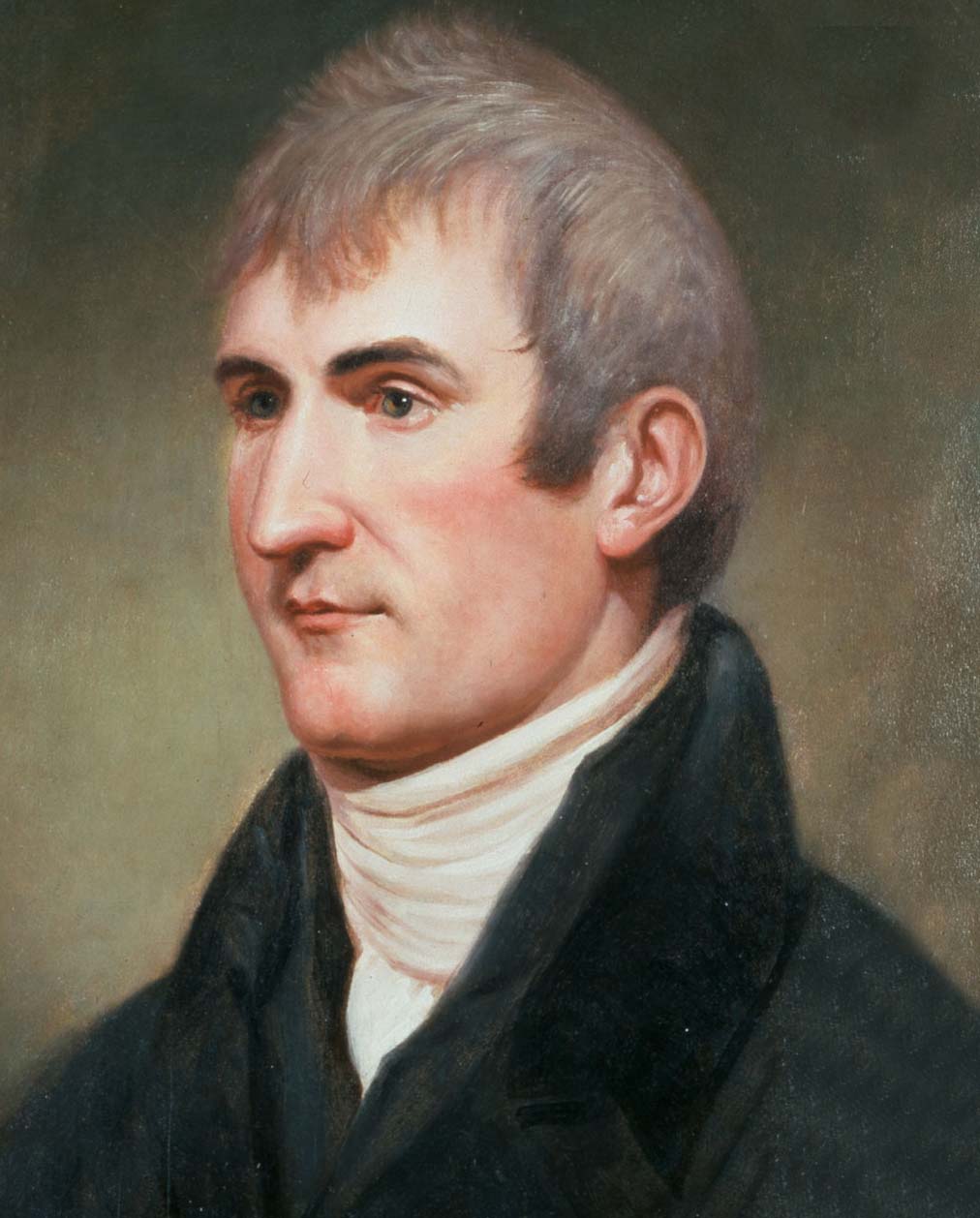

The journal entries for July 10th, 1805 capture a pivotal logistical pivot at the Great Falls portage. With the iron-frame boat — Lewis’s prized experimental vessel — abandoned as unworkable, the captains divide their command. Clark moves upriver in search of cottonwoods large enough to be hollowed into replacement canoes, while Lewis remains behind to dismantle and bury the iron frame. Patrick Gass, Meriwether Lewis, and William Clark each record the day, and the overlapping accounts reveal both the corps’s tight coordination and the distinctive textures of each writer’s hand.
Burying the Frame: Lewis’s Quiet Concession
Lewis’s entry treats the burial of his iron boat with conspicuous understatement. After dispatching Ordway with four canoes and eight men, he turns to the frame himself:
had a cash dug and deposited the Fraim of the boat, some papers and a few other trivial articles of but little importance.
The phrase “trivial articles of but little importance” is striking given how much labor and hope Lewis had invested in the experimental craft. He buries the truck wheels in the same pit dug earlier to render tar, and then — in a telling coda — passes the rest of the day fishing. Gass corroborates the cache succinctly: “Captain Lewis, myself and nine men staid to take the boat asunder and bury her; and deposited her safely underground.” Gass’s plain verb “buried her” treats the frame almost as a casualty. Clark, notably, does not mention the burial at all in his own entry — he is already eight miles upriver and focused on the next problem.
Clark and Lewis: Parallel Accounts of the Cottonwood Search
The most revealing cross-narrator pattern of the day lies in the near-identical passages Lewis and Clark produce about the cottonwood search. Clark, who actually led the party, writes:
found two Trees which I thought would make Canoes, had them fallen, one of them proved to be hollow & Split at one End & verry much win Shaken at the other, the other much win Shaken
Lewis’s account, written from camp and based on later report, closely tracks the same details:
found 2 trees of Cottonwood and cut them down; one proved to be hollow and split in falling at the upper part and was somewhat windshaken at bottom; the other proved to be much windshaken.
The verbal echoes — “hollow,” “split,” “windshaken” — suggest Lewis is either drawing on Clark’s notes directly or recording Clark’s verbal report with care. Both narrators describe the same compromise: contracting the canoes’ length to clear the cracks and widening them as much as the trunks allow. Lewis’s version is slightly more polished syntactically; Clark’s retains the immediacy of the field decision (“I deturmined to make Canoes out of the two first trees”). The pattern of Lewis amplifying and smoothing Clark’s terser field notes recurs throughout the journals, and this entry offers a clean example.
The Axe-Handle Crisis and What Each Narrator Notices
A vivid shared detail is the breakage of axe handles. Both captains record that thirteen handles were made and broken “in this piece of a day” by the four choppers. Clark catalogs the available substitute woods — “Cotton Box elder Choke Cherry and red arrow wood” — and explains the practical workaround: “we Substitute the Cherry in place of Hickory for ax hilthes ram rods, &c.” Lewis, with characteristic technical curiosity, adds a design observation Clark omits: “had the eyes of our axes been round they would have answered this country much better.” This is Lewis the equipment theorist, identifying a tool-design flaw the way he might catalog a new species.
Gass, meanwhile, notices what neither captain records. While Lewis fishes and Clark fells trees, Gass walks out alone to look for buffalo and finds them gone — “they appear to have all left the river” — and discovers a ripe stand of sweet gooseberries on a rocky run. The sergeant’s entry preserves the ground-level texture of the day: the disappearance of game, the small bounty of fruit. Lewis records the latitude observation (47°3’10” N); Gass records the gooseberries. Each narrator’s selective eye, set against the others, builds a fuller portrait of July 10th than any single journal could.


