
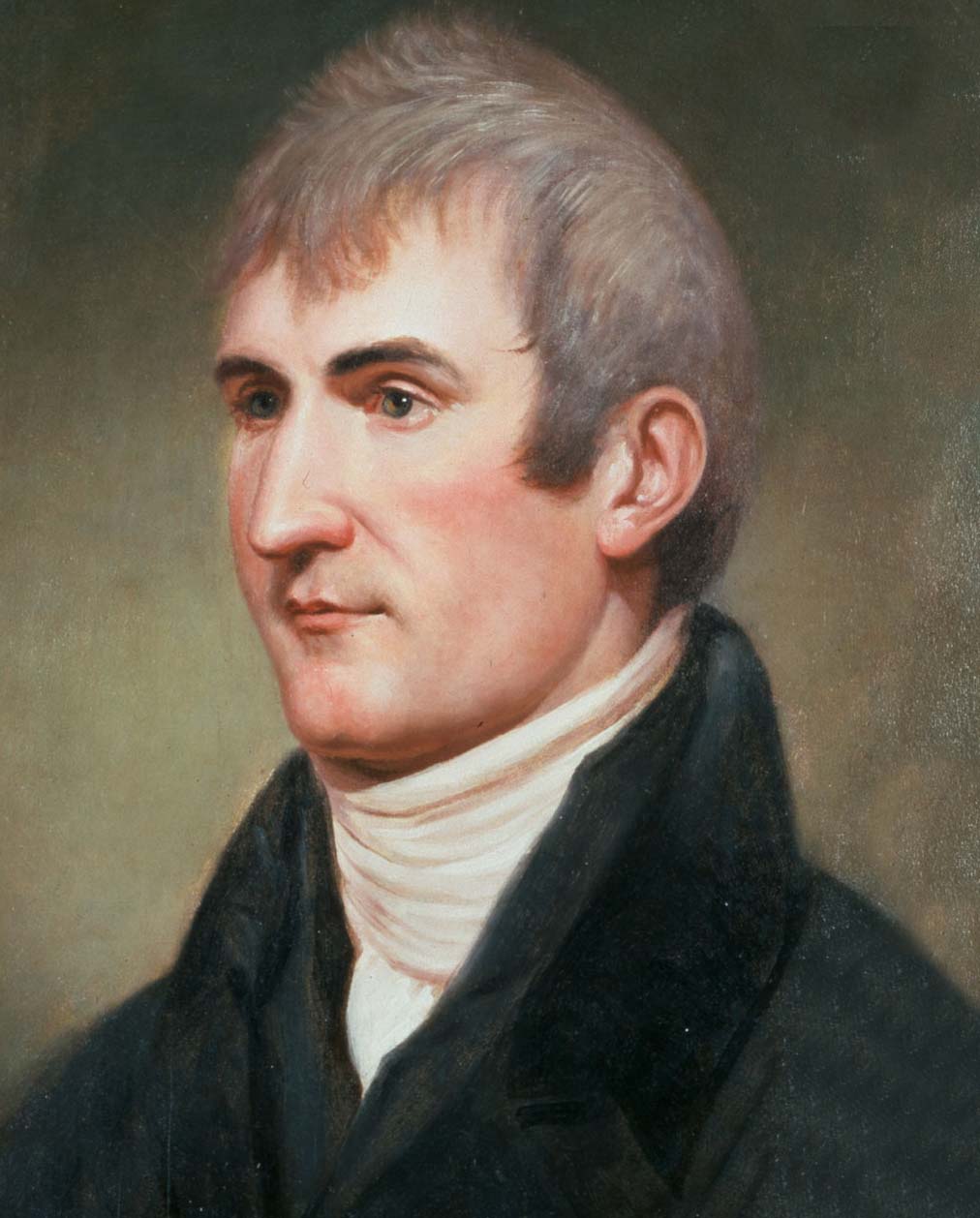

The journals of September 18, 1804 present a striking divergence in attention. Three of the four narrators — Gass, Clark, and Lewis — focus on the natural history of the upper Missouri, while Whitehouse’s entry occupies an entirely different narrative thread, recording the return of the deserter Moses Reed and a council with Oto chiefs. The split illustrates how individual journalists shaped the expedition’s documentary record according to their own interests and, in Whitehouse’s case, possibly a confused chronology.
Identifying the Prairie Wolf
The day’s most consequential observation belongs to Clark, who provides the expedition’s first sustained description of what he calls the “prarie wolf” — the animal later known as the coyote. Clark records killing one and offers a careful comparative anatomy:
I Killed a Prarie Wollf, about the Size of a gray fox bushey tail head & ear like a wolf, Some fur Burrows in the ground and barks like a Small Dog.
More importantly, Clark uses the encounter to revise the expedition’s earlier records, noting that “what has been taken heretofore for the Fox was those wolves, and no Foxes has been Seen.” This is taxonomic self-correction in real time — an acknowledgment that prior journal entries identifying foxes need to be reread as references to coyotes. Clark distinguishes the prairie wolf from the larger gray wolves of the plains, which he describes as “verry numourous… of a light Colr. large & has long hair with Corrs fur.”
Gass echoes Clark’s natural-history attention but compresses it. He mentions that “we killed… a wolf,” without elaborating on the species distinction, and instead devotes his entry to a bird Lewis had killed the previous day — “like a magpie and is a bird of prey,” almost certainly the black-billed magpie or possibly Clark’s nutcracker. Gass typically writes in a tighter, more utilitarian register than Clark, and his entry here is characteristic: weather, terrain, hunting tally, and a single notable specimen.
Lewis’s surviving entry for the date is fragmentary, a single line noting “the first brant on their return from the north.” Where Clark catalogs mammals, Lewis registers a phenological marker — southbound migration — that points toward the coming season. The two captains’ complementary instincts, often visible across the journals, are visible in miniature here.
Whitehouse’s Anomalous Entry
Whitehouse’s September 18 entry stands apart. Rather than describing the river, the wind, or the hunt, he writes:
G. Drewyer & the other 2 men Returned & Brought with them M. Reed the Deserter, likewise the pettevolior [Little Thief] the Big chief of the Zattous & another called the Big horse… M. Reed tried & towards evening he Rec! his punishment, the chiefs Sorry to have him punished.
The events Whitehouse describes — the recapture of Moses Reed, the arrival of the Oto chief Little Thief and the warrior Big Horse, and Reed’s running of the gauntlet — actually occurred several weeks earlier, in mid-August near the Council Bluff. The other journalists by September 18 are well past those events and far up the Missouri near the Big Bend. Whitehouse’s entry appears to be either a retrospective summary copied into the wrong date slot or a compressed recollection inserted out of sequence, a known feature of his journal, which exists in part as a later fair copy. His mention that “La Liberty has not returned. it is expected that he has deserted” further confirms the displacement, since La Liberté’s disappearance was an August concern.
Camp Routines and Cross-Narrator Patterns
Both Gass and Clark record the practical work of the day: a successful hunt — Gass tallies eleven deer, Clark ten — followed by jerking the meat and stretching skins. Clark adds an evening walk during which he observes pronghorn (“Goats”), elk, buffalo, black-tailed deer, and common deer, alongside porcupines, rabbits, and “Barking Squirils” (prairie dogs). The repeated co-occurrence of a deer count and a wolf killed in both Gass and Clark suggests Gass either drew on Clark’s running record or shared in the same campfire reports — a common pattern in their parallel entries.
Taken together, the four entries demonstrate how the expedition’s documentary practice distributed labor: Clark as principal natural historian and corrector of earlier identifications; Lewis as observer of seasonal and ornithological detail; Gass as concise diarist of camp activity; and Whitehouse as a more uneven recorder whose chronology cannot always be trusted at face value.


