

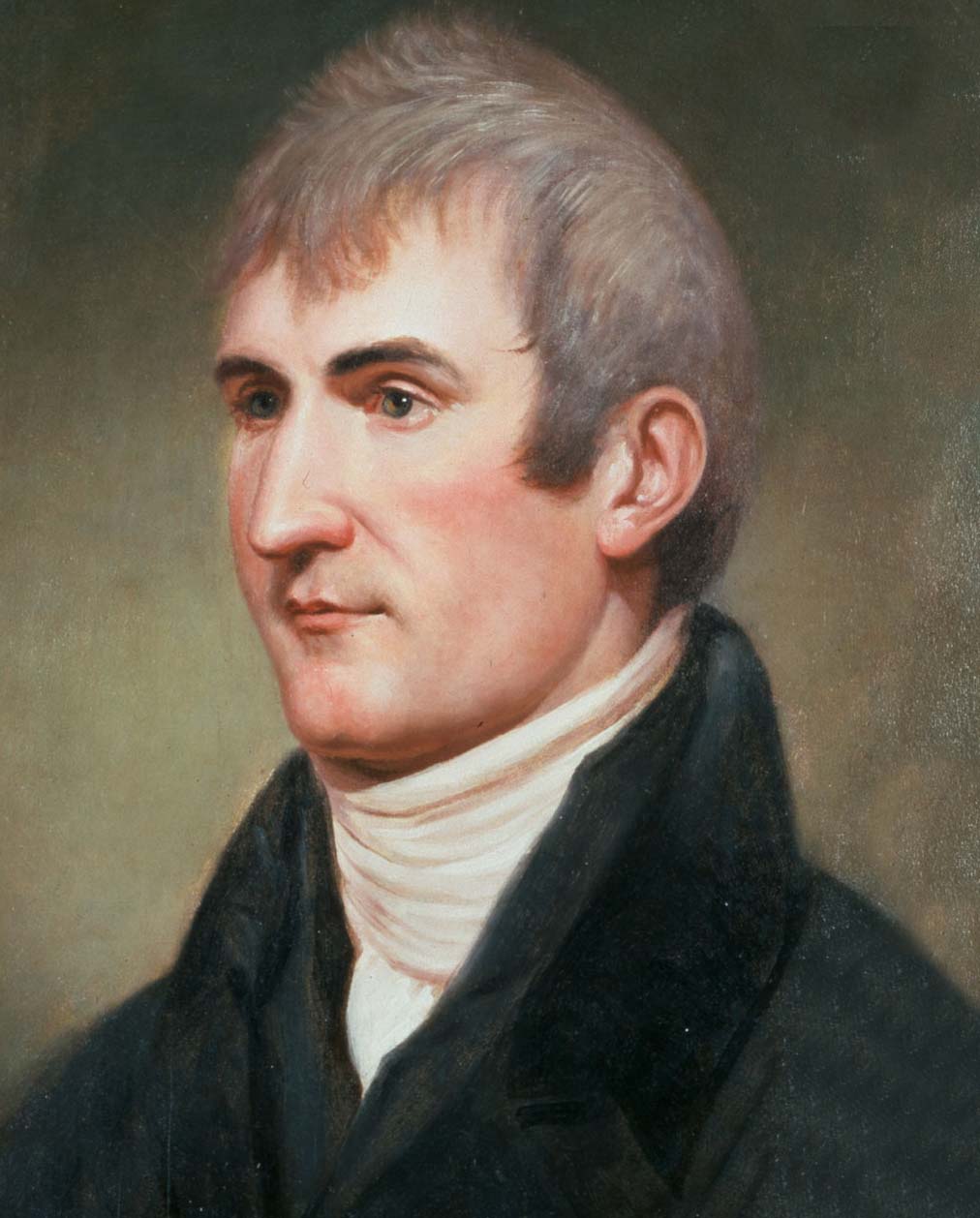

The Fourth of July 1805 found the Corps of Discovery encamped at the Great Falls Portage in present-day Montana, completing work on the iron-frame boat Lewis had carried from Harpers Ferry. Three narrators — Patrick Gass, Meriwether Lewis, and William Clark — left accounts of the day. Read together, they reveal how dramatically register, length, and observational priority varied among the expedition’s writers, even when describing identical events.
The Same Celebration, Three Registers
All three journalists record the central social fact of the day: the men drank the last of their spirits and danced until a rain shower drove them to bed. Gass, ever economical, compresses the entire day into a single sentence:
engaged at the boat, and others in dressing skins for clothing, until about 4 o’clock in the afternoon, when we drank the last of our spirits in celebrating the day, and amused ourselves with dancing till 9 o’clock at night, when a shower of rain fell and we retired to rest.
Clark expands slightly, supplying texture Gass omits — the dram “made Several verry lively,” the cloud came “from the S. W,” and the party remained “all lively and Chearfull” despite the interruption. He also notes the day’s hunt: “one Elk and a beaver kill’d to day.” Lewis, by contrast, scarcely mentions the celebration at all. His July 4 entry is dominated instead by the boat’s progress, the failure of the tar kiln, and a long meditation on weather and topography.
The pattern is consistent with what scholars have long observed across the journals: Gass writes as a sergeant filing a report, Clark as a working captain tracking labor and provisions, and Lewis as a naturalist-philosopher whose entries swell whenever a scientific or strategic question presents itself.
Shared Observations, Independent Phrasing
Two passages in particular invite comparison between Lewis and Clark, who clearly discussed the day’s observations but did not simply copy one another. Both men describe the peculiar climate at the falls. Lewis writes:
the clouds near these mountains rise suddonly and discharge their contents partially on the neighbouring plains; the same cloud will discharge hail alone in one part hail and rain in another and rain only in a third all within the space of a few miles; and on the Mountains to the S. E. of us sometimes snow.
Clark records the same phenomenon in compressed form:
The climate about the falls of Missouri appears to be Singular Cloudy every day (Since our arrival near them) which rise from defferent directions and discharge themselves partially in the plains & mountains, in Some places rain others rain & hail, hail alone, and on the mountains in Some parts Snow.
The parallelism is unmistakable — the catalog of rain, hail, and mountain snow appears in both — but the syntax and word choice are independent. This suggests the captains compared notes orally rather than one transcribing from the other’s draft. The same dynamic governs their accounts of the mysterious western noise. Lewis describes it as “loud and resembling precisely the discharge of a piece of ordinance of 6 pounds at the distance of three miles,” while Clark renders it more plainly as “a rumbling like Cannon at a great distance.” Gass does not mention the sound at all.
What Only Lewis Records
Lewis’s entry preserves material absent from both other narrators and crucial to understanding the expedition’s strategic state. He reveals that the captains had originally planned to send a canoe with part of the men back to St. Louis from this point, but had abandoned the idea:
we have never once hinted to any one of the party that we had such a scheme in contemplation, and all appear perfectly to have made up their minds to suceed in the expedition or purish in the attempt.
This is a decision that shaped the rest of the journey, and it survives in Lewis’s hand alone. Clark, who as co-commander surely participated in the deliberation, leaves no trace of it in his July 4 entry — a reminder that the captains’ journals are complementary rather than redundant, and that limiting one’s reading to a single narrator can obscure decisions of the highest importance.
Lewis also alone speculates on the etymology of the “Shining Mountains,” attributing the name to the glitter of sunlight on persistent snow, and observes that the prevailing summer clouds appear not to reach the highest summits. These are characteristic Lewis touches: the scientific aside, the etymological hypothesis, the careful qualification.
Taken together, the three July 4 entries form a useful case study in cross-narrator reading. Gass establishes that an event occurred; Clark situates it within the day’s labor and weather; Lewis embeds it in a broader argument about geography, climate, and the morale of the corps as it prepared to enter what he called “the most perilous and difficult part of our voyage.”


