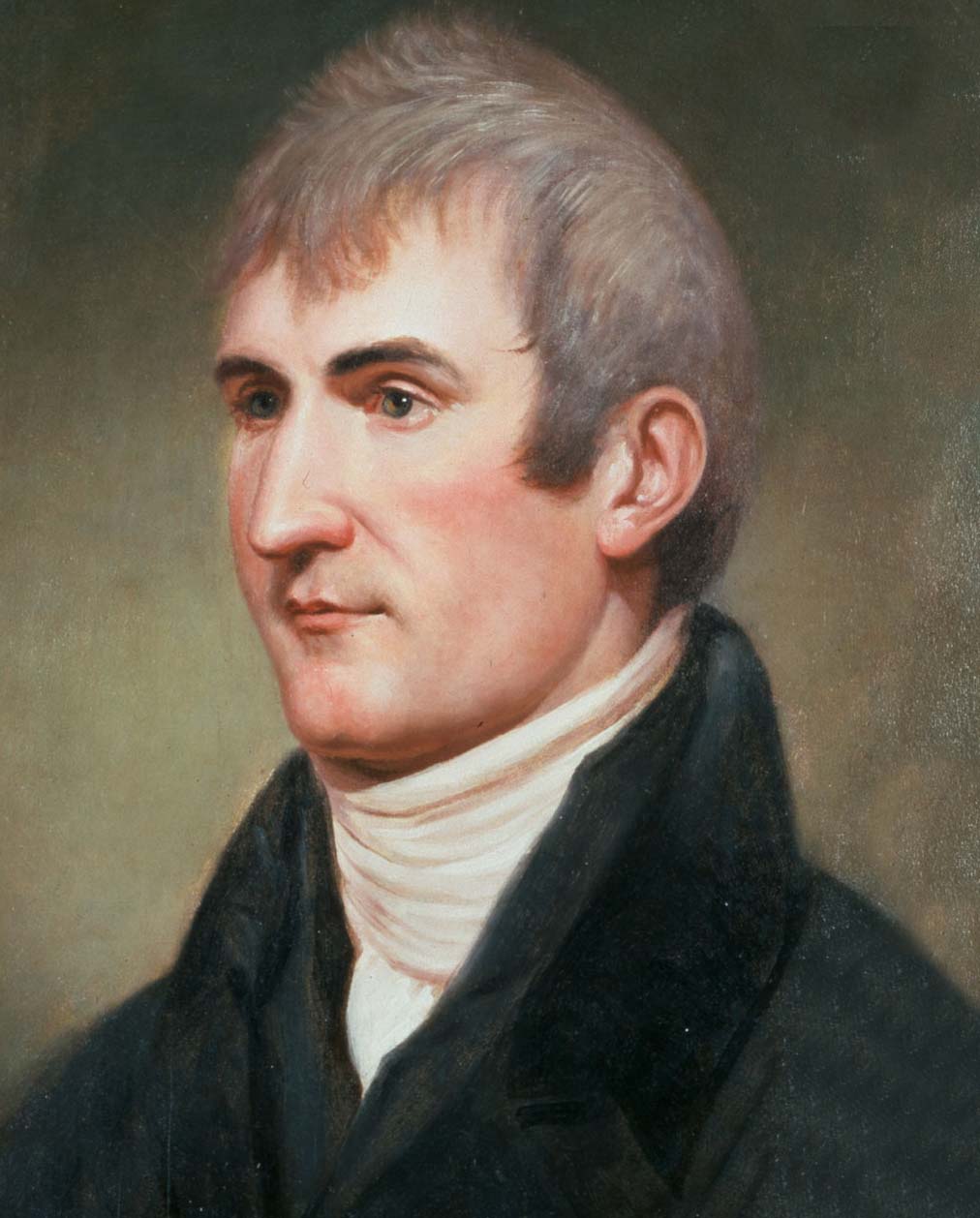


The first of August 1805 found the Corps of Discovery laboring up the Jefferson River toward the Continental Divide, their canoes fighting swift shoal water while a small reconnaissance party struck overland in search of the Shoshone. The day produced four overlapping but tonally distinct accounts. Captain Meriwether Lewis, Sergeant Patrick Gass, Private Joseph Whitehouse, and Captain William Clark each emphasize different aspects of a shared experience, and the cross-narrator picture reveals how rank, role, and physical position shaped what each man recorded.
The Overland Reconnaissance: Lewis and Gass
Lewis and Gass were together on the same eleven-mile march across the rugged north-side mountains, yet their entries diverge sharply in register and detail. Lewis offers a candid, almost confessional account of his physical state, admitting:
to add to my fatiegue in this walk of about 11 miles I had taken a doze of glauber salts in the morning in consequence of a slight desentary with which I had been afflicted for several days; being weakened by the disorder and the opperation of the medecine I found myself almost exhausted before we reached the river.
Lewis also explains the strategic reasoning behind the route — Clark had recommended it, having earlier ascended a peak from which he believed he saw the river bearing northwest. That sighting, Lewis concedes, “poved to be the inlet of a large creek” rather than the river’s channel, throwing the scouting party several miles off course.
Gass, marching the same ground, compresses the entire ordeal into utilitarian prose: “Our course lay across a large mountain on the north side, over which we had a very fatiguing trip of about 11 miles.” He says nothing of Lewis’s dysentery, nothing of the navigational error, nothing of the heat exhaustion. What Gass does record — the width of the valley (“from 6 to 8 miles wide”), the killing of two elk, and the deliberate decision to leave the meat for the canoe party because “the men stood much in need of it” — reflects the sergeant’s habitual concern with provisioning and terrain measurement. Lewis confirms the same elk kill but frames it personally: “I felt my sperits much revived on our near approach to the river at the sight of a herd of Elk of which Drewyer and myself killed two.”
Notably, Lewis explains why Gass was selected for the overland party: the sergeant “by an accedental fall had so disabled himself that it was with much pain he could work in the canoes tho he could march with convenience.” Gass himself never mentions the injury.
The River Party: Clark and Whitehouse
Aboard the canoes, Clark and Whitehouse witnessed a different drama: the passage through a nine-mile gorge of “tremedious Clifts.” Clark writes with a captain’s geological eye, distinguishing rock types — “Some verry dark & other part verry light rock the light rocks is Sand Stone” — and noting the river’s behavior as it emerged into the valley, where it “widens & spreds into Small Chanels.”
Whitehouse, writing from the ranks, sees the same cliffs but renders their scale in vivid measurement: “we passed high clifts about 500 feet high in many places.” He also captures incidents Clark omits entirely. The toe rope of the captain’s pirogue “broke… and it was in danger of upsetting” at a bad rapid — a near-disaster absent from Clark’s terser entry. Whitehouse alone records his own small grief: he had left his tomahawk on the previous night’s island camp, “which makes me verry Sorry that I forgot it as I had used it common to Smoak in.”
The two narrators agree on the central event of the river party’s day — Clark’s killing of a mountain sheep — but differ on its species name and its significance. Clark writes simply, “I killed a Ibix on which the whole party Dined.” Whitehouse adds dramatic detail: the animal “roled down Some distance So we got it,” while “the remainder of the flock ran up the Steep clifts.” Whitehouse alone preserves the social occasion: “it being Cap! Clarks buthday he ordered Some flour gave out to the party.” Clark, characteristically, says nothing of his own thirty-fifth birthday.
What the Comparison Reveals
The four entries together demonstrate how the expedition’s documentary record depended on multiple observers occupying different physical and social positions. Lewis supplies interior experience and strategic context; Clark records geology and command decisions in compressed form; Gass abstracts the day into measured distances and provisioning; Whitehouse, with no command responsibility, has narrative room for accidents, shadows of “delightfull” cedar, a lost tomahawk, and a captain’s birthday flour ration. Where Clark notes a bear “eateing Currents,” Whitehouse notes a “white bear” and snow on southern mountains. No single journal captures August 1; only the chorus does.


