
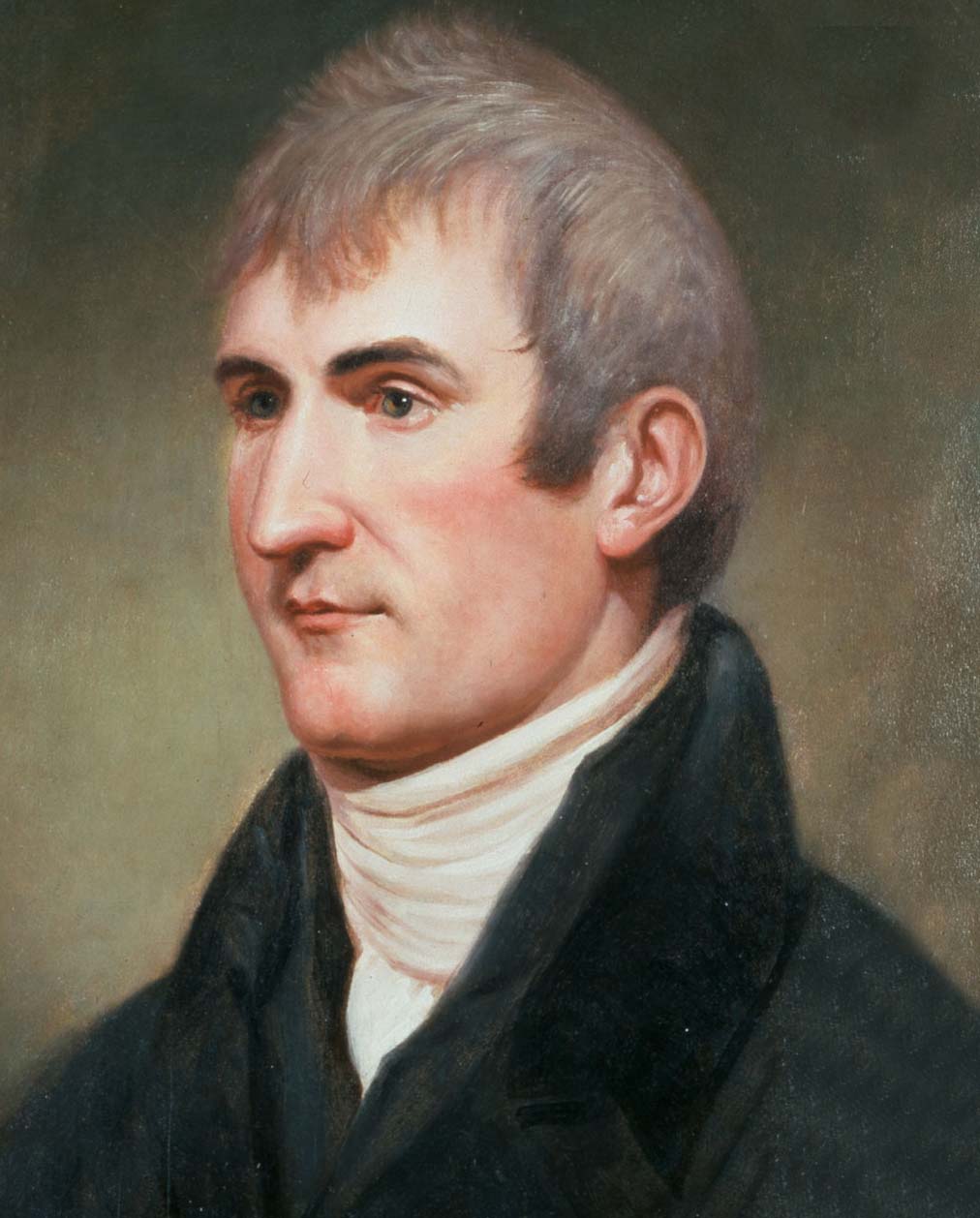


The August 19, 1805 entries illustrate a structural feature of the expedition’s record that the captains’ physical separation produced: parallel journals describing fundamentally different days. Lewis remained at Camp Fortunate at the upper forks of the Jefferson, supervising preparations for the portage to navigable Columbia waters. Clark was already moving westward with Cameahwait’s band, crossing the divide. The sergeants — Ordway, Whitehouse, and Gass — split between the two parties, and their entries cluster accordingly.
Camp Fortunate: Frost, Fish, and Ethnography
Ordway and Whitehouse, both at Camp Fortunate, produce nearly identical accounts — a well-documented pattern in which Whitehouse appears to follow Ordway closely. Both open with the fish net set across the river the previous night, both note one beaver in a trap and no fish in the net, both describe the white frost and the men employed dressing skins and making pack saddles. Whitehouse’s phrasing —
this being the upper fork of Jeffersons River & the extream navigable part of the Missourie close under the dividing ridge of the western Country
— echoes Ordway’s
this is the place we call the upper forks of Jeffersons River & the extream navigable point of the Missourie close under the dividing ridge of the Western Country
almost verbatim. The borrowing is transparent.
Lewis, working from the same camp and the same events, produces something entirely different. He confirms the sergeants’ practical record — the failed net, the single beaver, the hunters returning with two deer — but then expands. He describes constructing a willow-brush seine that caught trout and an unfamiliar fish he tentatively classes as a mullet, recording its scales, jaw structure, coloration, and the absence of teeth. He notes the trout match those he first encountered at the Great Falls. None of the sergeants attempt this kind of natural-history detail; Whitehouse mentions “large Trout black Spots all over them” and stops there.
Lewis then pivots to the Shoshone themselves, producing one of the expedition’s most substantial ethnographic passages. He estimates the band at roughly 100 warriors and three times that number of women and children, describes their poverty alongside their cheerfulness, and lays out a theory of Shoshone political authority:
each individual is his own sovereign master, and acts from the dictates of his own mind; the authority of the Cheif being nothing more than mere admonition supported by the influence which the propiety of his own examplery conduct may have acquired him in the minds of the individuals who compose the band.
He addresses chieftainship as non-hereditary, the prevalence of plural marriage, and the proprietary status of women and daughters. The sergeants record none of this. The asymmetry is the point: at Camp Fortunate, Lewis is the sole ethnographic eye.
Across the Divide: Clark and Gass
Clark and Gass, traveling with Cameahwait’s group, produce a different kind of entry — terrain, distance, and incident. Gass is unusually precise about the geography of the crossing, noting that the principal branch forks twice, that the party dined
at the head spring of the Missouri and Jefferson river, about 25 miles from the place, where we had left the canoes
, and that
It is not more than a mile from the head spring of the Missouri to the head of one of the branches of the Columbia.
This is the continental-divide observation in its plainest form. He also records the Shoshone greeting custom — embracing rather than handshaking — which neither captain notes on this date.
Clark’s entry is shorter and more episodic. He registers a site Cameahwait identified as the location of a Shoshone defeat roughly a year earlier, the extensive beaver damming through the valley, and a meeting with a man riding
a mule & Spanish Saddle
— Clark traded a waistcoat for it, observing that mules carry great value among the Shoshone. The detail places the band within a southwestern trade network reaching back to Spanish settlements, a connection Lewis’s longer ethnography at camp does not address.
What Only Comparison Reveals
Read alone, Lewis’s entry suggests a static day of camp work and observation. Read alone, Clark’s entry suggests a hard march through unfamiliar mountains. Only the combined record shows that the Corps had effectively bifurcated: one half processing the Shoshone as a subject of study, the other moving through Shoshone country as travelers dependent on Shoshone guidance. Gass’s notice of the embrace-greeting and Clark’s notice of the Spanish saddle are details that the more prolific Lewis, fixed at camp, could not have produced. The sergeants’ redundancy at Camp Fortunate, by contrast, demonstrates how thin the day was for those without Lewis’s interpretive ambitions — the same frost, the same beaver, the same pack saddles, recorded three times.


