Clark: July 26, 1806
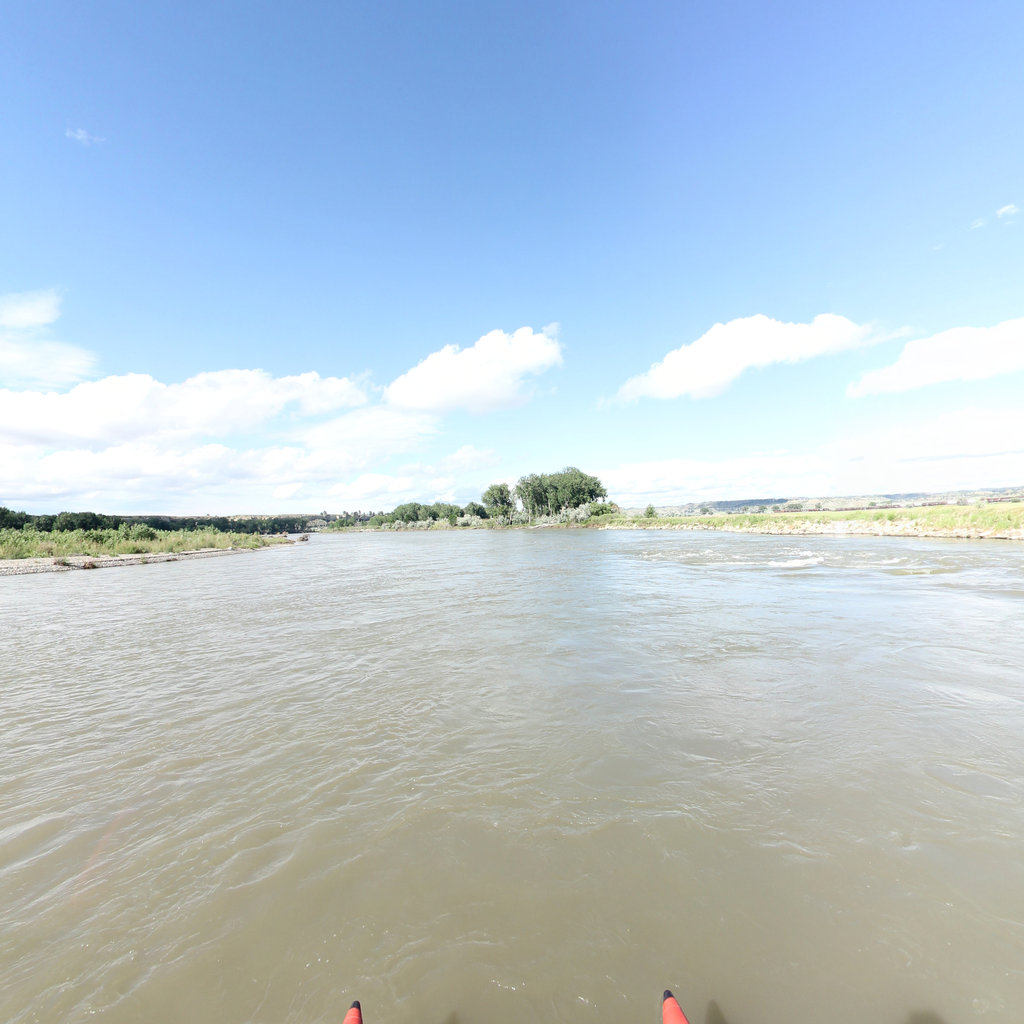
Setting out very early, Clark's party traveled down a swift, island-divided river bordered by white rock cliffs suitable for grindstones, with extensive cottonwood bottoms. They safely navigated a rocky stretch by taking a channel right of a stony island, then reached the mouth of the Bighorn River and made camp on a high point. Clark and Labiche walked seven miles up the Bighorn's northeast side to a 28-yard-wide tributary he named Muddy Creek. He measured and described the Bighorn, recording Indian information about its course, wildlife, and inhabitants. Clark shot two deer; Shields killed two buffalo and three elk.
Saturday 26th July 1806. Set out this morning very early proceeded on
Passed Creeks very well. the Current of the river reagulilarly Swift much
divided by Stoney islands and bars also handsome Islands Covered with
Cotton wood the bottoms extensive on the Stard. Side on the Lard. the
Clifts of high land border the river, those clifts are composed of a
whitish rock of an excellent grit for Grindstones. The Country back on
each Side is wavering lands with Scattering pine. passed 2 Small Brooks on
the Stard. Side and two large ones on the Lard. Side. I shot a Buck from
the Canoe and killed one other on a Small Island. and late in the evening
passed a part of the river which was rock under the Lard. Clifts
fortunately for us we found an excellent Chanel to pass down on the right
of a Stony Island half a mile below this bad place, we arived at the
enterance of Big Horn River on the Stard. Side here I landed imediately in
the point which is a Sof mud mixed with the Sand and Subject to overflow
for Some distance back in between the two rivers. I walked up the big horn
1/2 a mile and crossed over to the lower Side, and formed a Camp on a high
point. I with one of my men Labeech walked up the N E Side of Big horn
river 7 miles to th enterance of a Creek which falls in on the N E. Side
and is 28 yds wide Some running water which is very muddy this Creek I
call Muddy Creek Some fiew miles above this Creek the river bent around to
the East of South. The Courses as I assended it as follows Viz:
The bottoms of the Big Horn river are extencive and Covered with timber
principally Cotton. it’s Current is regularly Swift, like the Missouri, it
washes away its banks on one Side while it forms extensive Sand bars on
the other. Contains much less portion of large gravel than the R.
Rochjhone and its water more mudy and of a brownish colour, while that of
the rochejhone is of a lightish Colour. the width of those two rivers are
very nearly the Same imediately at their enterances the river Rochejhone
much the deepest and contain most water. I measured the debth of the
bighorn quit across a 1/2 a mile above its junction and found it from 5 to
7 feet only while that of the River is in the deepest part 10 or 12 feet
water on the lower Side of the bighorn is extencive boutifull and leavil
bottom thinly covered with Cotton wood under which there grows great
quantities of rose bushes. I am informed by the Menetarres Indians and
others that this River takes its rise in the Rocky mountains with the
heads of the river plate and at no great distance from the river
Rochejhone and passes between the Coat Nor or Black Mountains and the most
Easterly range of Rocky Mountains. it is very long and Contains a great
perpotion of timber on which there is a variety of wild animals,
perticularly the big horn which are to be found in great numbers on this
river. Buffalow, Elk, Deer and Antelopes are plenty and the river is Said
to abound in beaver. it is inhabited by a great number of roveing Indians
of the Crow Nation, the paunch Nation and the Castahanas all of those
nations who are Subdivided rove and prosue the Buffalow of which they make
their principal food, their Skins together with those of the Big horn and
Antilope Serve them for Clothes. This river is Said to be navagable a long
way for perogus without falls and waters a fine rich open Country. it is
200 yds water & 1/4 of a Me. wd. I returned to Camp a little after
dark, haveing killed one deer, finding my Self fatigued went to bead
without my Supper. Shields killed 2 Bull & 3 Elk.
Read this entry in modern English AI-translated
Saturday 26th July 1806. Set out this morning very early and proceeded on. Passed creeks very well. The current of the river is regularly swift, much divided by stony islands and bars and also handsome islands covered with cottonwood. The bottoms are extensive on the starboard side; on the larboard, the cliffs of high land border the river. Those cliffs are composed of a whitish rock of an excellent grit for grindstones. The country back on each side is rolling land with scattered pine. Passed 2 small brooks on the starboard side and two large ones on the larboard side. I shot a buck from the canoe and killed another on a small island. Late in the evening we passed a part of the river that was rock under the larboard cliffs. Fortunately for us we found an excellent channel to pass down on the right of a stony island. Half a mile below this bad place, we arrived at the entrance of Big Horn River on the starboard side. Here I landed immediately on the point, which is a soft mud mixed with sand and subject to overflow for some distance back between the two rivers. I walked up the Big Horn 1/2 a mile and crossed over to the lower side, and formed a camp on a high point. I, with one of my men Labeech (Labiche), walked up the NE side of Big Horn River 7 miles to the entrance of a creek which falls in on the NE side and is 28 yards wide, with some running water that is very muddy. This creek I call Muddy Creek. Some few miles above this creek the river bent around to the east of south. The courses as I ascended it are as follows, viz:
The bottoms of the Big Horn River are extensive and covered with timber, principally cottonwood. Its current is regularly swift; like the Missouri, it washes away its banks on one side while forming extensive sandbars on the other. It contains a much smaller portion of large gravel than the River Rochejhone, and its water is more muddy and of a brownish color, while that of the Rochejhone is of a lighter color. The widths of those two rivers are very nearly the same immediately at their entrances, but the River Rochejhone is much the deepest and contains the most water. I measured the depth of the Big Horn quite across, 1/2 a mile above its junction, and found it from 5 to 7 feet only, while that of the river is, in the deepest part, 10 or 12 feet. The land on the lower side of the Big Horn is an extensive, beautiful, and level bottom, thinly covered with cottonwood, under which there grows a great quantity of rose bushes. I am informed by the Menetarres (Minitari) Indians and others that this river takes its rise in the Rocky Mountains with the headwaters of the River Plate (Platte) and at no great distance from the River Rochejhone, and passes between the Coat Nor or Black Mountains and the most easterly range of the Rocky Mountains. It is very long and contains a great proportion of timber, in which there is a variety of wild animals, particularly the bighorn, which are to be found in great numbers on this river. Buffalo, elk, deer, and antelopes are plenty, and the river is said to abound in beaver. It is inhabited by a great number of roving Indians of the Crow Nation, the Paunch Nation, and the Castahanas. All of those nations, who are subdivided, rove and pursue the buffalo, of which they make their principal food; their skins, together with those of the bighorn and antelope, serve them for clothes. This river is said to be navigable a long way for pirogues without falls, and it waters a fine, rich, open country. It is 200 yards of water and 1/4 of a mile wide. I returned to camp a little after dark, having killed one deer, and finding myself fatigued, went to bed without my supper. Shields killed 2 bulls and 3 elk.
This modernization is AI-generated for accessibility. The original above is the authoritative version.
Entities mentioned in this entry
Auto-extracted from the entry text. Hover any entity for context.