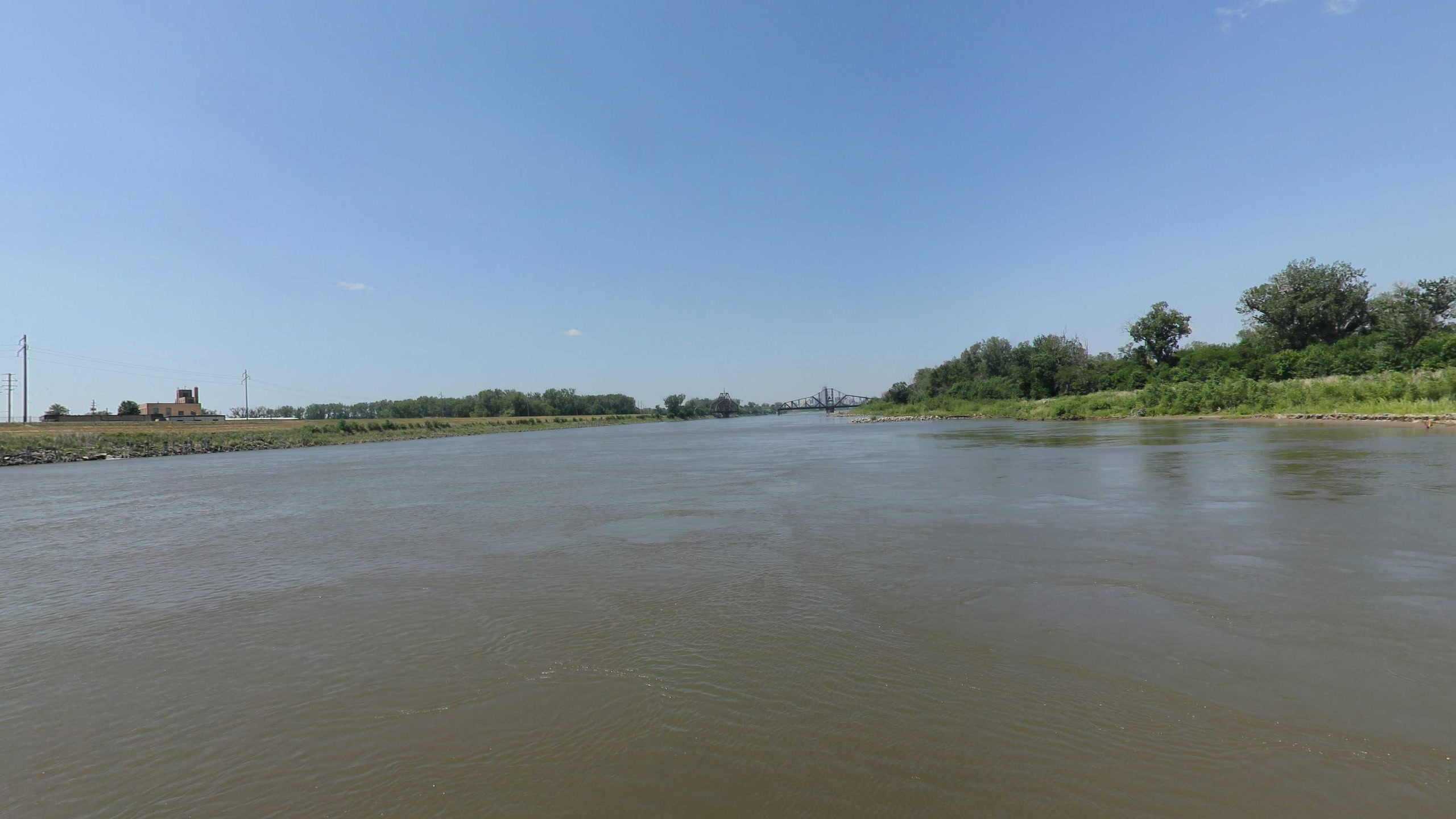
Clark: July 28, 1804
The expedition set out early on a dark, smoky morning with rain and a northwest wind. They passed the first high bluff above the Nodaway River on the south side, along with an island and a 15-yard-wide creek that Clark named Indian Knob Creek. Hunters reported hearing distant gunfire to the southwest. Drouillard brought in a Missouri Indian found hunting on the prairie; he lived among the Otoes and reported his nation was hunting buffalo on the plains. The party camped on the south side below an island.
July 28th Satturday Set out this morning early, the wind blou from the N.
W. by N. a Dark Smokey Morning, Some rain at 1 me. passed a Bluff on the
S. S. it being the first high land approachig the river above the Nodaway,
a Island and Creek S. S. just abov this creek I call Indian Knob G.
Drewyer Came with a Deer &informs he heard fireing to the S. W. I
walked on Shore on the S. S. found some good Prarie out from the S. pt.
The High Lands approach the river 1st bend to left The party on Shore
brought in a Missouri Indian who resides with the Otteauz, this Indian
& 2 others were Hunting in the Prarie their Camp is about 4 miles off.
This Indian informs that his nation is in the Plains hunting the Buffalow,
the party with which he is encamped is about 20 familey Hunting the Elk,
we landed on S. S. below an Island
—
July the 28th, Satturday 1804 Set out this morning early, the wind from
the N W. by N. a Dark Smokey morning Some rain passed at 1 me. a Bluff on
the S. S. the first high land above the Nodaway aproaching the river on
that Side a Island and Creek 15 yds. wide on the S. S. above this Bluff,
as this Creek has no name call it Indian Knob Creek our party on Shore
Came to the river and informs that they heard fireing to the S W. below
this High Land on the S. S. the Aiawuay Indians formerly lived, The flank
came in & informed they heard two Guns to the S. W. the highland
approaches in the 1st bend to the left, we camped on the S. S. below the
point of an Island, G Drewyer brought in a Missourie Indian which he met
with hunting in the Prarie This Indian is one of the fiew remaining of
that nation, & lives with the Otteauz, his Camp about 4 miles from the
river, he informs that the great gangue of the nation were hunting the
Buffalow in the Plains. hs party was Small Consisting only of about 20
Lodges, ____ miles furthr a nother Camp where there was a french man, who
lived in the nation, This Indian appeard spritely, and appeared to make
use of the Same pronouncation of the Osarge, Calling a Chief Inca July
29th SundayWe Sent one frenchman le Liberty & the Indian to the Camp
to envite the party to meet us at the next bend of High Land on the L. S.
a Dark morning wind from the W. N. W. rained all last night Set out at 5
oClock &, proceeded on passed the Island, opposit this Island on the
S. S. the Creek called Indian Knob Creek which mouths Several miles on a
Direct line below, is within 20 feet of the Missouri & about 5 feet
higher
Cought three large Cat fish to day verry fat one of them nearly white
those Cat are So plenty that they may be Cought in any part of this river
but fiew fish of any other Kind.
(4) at the commencement of this course passed much fallen timber
apparently the ravages of a dreadful haricane which had passed obliquely
across the river from N. W. to S. E. about twelve months since. many trees
were broken off near the ground the trunks of which were sound and four
feet in diameter.
Willard lost his gun in Bowyers R. R. Fields Dive & brought it up All
the Wood Land on this part of the Missouries Appear to be Confined to the
Points & Islands.
Boyers River is provably 25 yds. Wide, Willard near loseing his Gun in
this river, two men Sick & Sevral with Boils, a Cold Day Wind from the
N W. Som rain the fore part of the Day.
Read this entry in modern English AI-translated
July 28th, Saturday. Set out this morning early. The wind blew from the N.W. by N. A dark, smoky morning, with some rain. At 1 mile we passed a bluff on the south side, it being the first high land approaching the river above the Nodaway. There is an island and a creek on the south side just above this creek, which I call Indian Knob. G. Drewyer came in with a deer and informs us he heard firing to the S.W. I walked on shore on the south side and found some good prairie out from the south point. The high lands approach the river at the first bend to the left. The party on shore brought in a Missouri Indian who resides with the Otteauz (Otoes). This Indian and two others were hunting in the prairie; their camp is about 4 miles off. This Indian informs us that his nation is in the plains hunting the buffalo. The party with which he is camped is about 20 families hunting elk. We landed on the south side below an island.
July the 28th, Saturday 1804. Set out this morning early. The wind from the N.W. by N. A dark, smoky morning with some rain. At 1 mile we passed a bluff on the south side, the first high land above the Nodaway approaching the river on that side. There is an island and a creek 15 yards wide on the south side above this bluff. As this creek has no name, I call it Indian Knob Creek. Our party on shore came to the river and informs us that they heard firing to the S.W. Below this high land on the south side, the Aiawuay (Iowa) Indians formerly lived. The flank came in and informed us they heard two guns to the S.W. The high land approaches in the first bend to the left. We camped on the south side below the point of an island. G. Drewyer brought in a Missouri Indian whom he met with hunting in the prairie. This Indian is one of the few remaining of that nation and lives with the Otteauz (Otoes). His camp is about 4 miles from the river. He informs us that the great body of the nation were hunting buffalo in the plains. His party was small, consisting only of about 20 lodges. ____ miles further is another camp where there was a Frenchman who lived in the nation. This Indian appeared sprightly, and appeared to use the same pronunciation as the Osage, calling a chief "Inca."
July 29th, Sunday. We sent one Frenchman, le Liberty, and the Indian to the camp to invite the party to meet us at the next bend of high land on the larboard side. A dark morning, wind from the W.N.W. It rained all last night. Set out at 5 o'clock and proceeded on, passing the island. Opposite this island on the south side is the creek called Indian Knob Creek, which empties several miles on a direct line below. It is within 20 feet of the Missouri and about 5 feet higher.
Caught three large catfish today, very fat, one of them nearly white. These catfish are so plentiful that they may be caught in any part of this river, but few fish of any other kind.
(4) At the commencement of this course we passed much fallen timber, apparently the ravages of a dreadful hurricane which had passed obliquely across the river from N.W. to S.E. about twelve months since. Many trees were broken off near the ground, the trunks of which were sound and four feet in diameter.
Willard lost his gun in Bowyer's River. R. Fields dove and brought it up. All the woodland on this part of the Missouri appears to be confined to the points and islands.
Boyer's River is probably 25 yards wide. Willard nearly lost his gun in this river. Two men sick and several with boils. A cold day, wind from the N.W. Some rain the fore part of the day.
This modernization is AI-generated for accessibility. The original above is the authoritative version.
Entities mentioned in this entry
Auto-extracted from the entry text. Hover any entity for context.