Clark: June 1, 1805
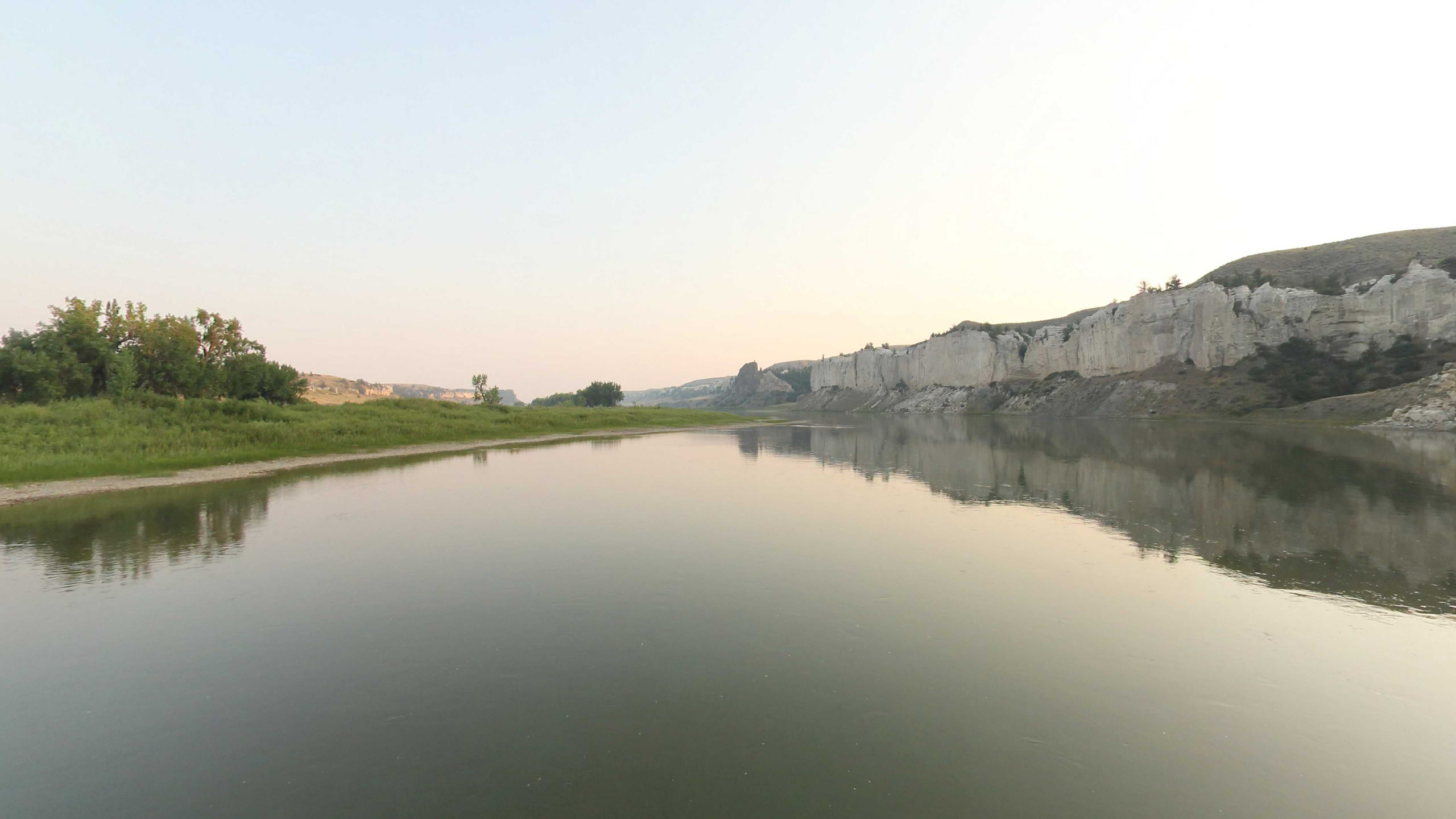
On a cloudy Saturday, the expedition set out early, towing the boats upriver along terrain where the cliffs were lower and the surrounding plains broader and fertile, dotted with sandy mounds and small stones. Clark spotted a high mountain to the southwest and another to the north. Game was scarcer, with only a ram and mule deer killed, though buffalo were visible near a distant lake. The party passed six islands and camped on a seventh. They observed abandoned Indian stick-and-bark camps, blooming roses, chokecherries, and prickly pears.
June 1st Satterday 1805 a Cloudy morning we Set out at an early hour and
proseeded on as usial with the toe rope The Countrey appears to be lower
and the Clifts not So high or Common, a mountain or a part of the north
Mountain about 8 or 10 miles N. of this place, I walked on Shore to day
found the Plains much lower than we have Seen them and on the top we
behold an extencive plain on both Sides, in this plain I observed maney
noles of fine Sand which appeared to have blown from the river bluffs and
collected at these points Those plains are fertile near the river a great
no. of Small Stone, I observed at Some distance to the S. W. a high
mountain which appears to bear westerly The Cole appear as usial, more
Cotton trees Scattered on the Shores & Islands than yesterdayno
timber on the high land, the river from 2 to 400 yards wide & current
more jentle than yesterday but fiew bad rapid points to daythe wild
animals not So plenty as below we only killed a ram & mule Deer to
day, we Saw Buffalow at a distance in the plains, particularly near a Lake
on the Lard. Side about 8 miles distant from the riverWe passed Six
Islands and encamped on the 7th all those Islands are Small but contain
Some timber on them The river riseing a little Wind to day from the S. W.
Som fiew drops of rain in the morning and also in the evening, flying
Clouds all day
Saw Several Indian camps made of Sticks & bark Set up on end and do
not appear to belong evacuatedThe roses are in full bloome, I
observe yellow berries, red berry bushes Great numbers of Wild or choke
Cheries, prickley pares are in blossom & in great numbers
Read this entry in modern English AI-translated
June 1st, Saturday 1805. A cloudy morning. We set out at an early hour and proceeded on as usual with the tow rope. The country appears to be lower and the cliffs not so high or common. A mountain, or a part of the north Mountain, lies about 8 or 10 miles north of this place. I walked on shore today and found the plains much lower than we have seen them, and on the top we beheld an extensive plain on both sides. In this plain I observed many knolls of fine sand which appeared to have blown from the river bluffs and collected at these points. Those plains are fertile near the river, with a great number of small stones. I observed at some distance to the southwest a high mountain which appears to bear westerly. The coal appears as usual. More cottonwood trees are scattered on the shores and islands than yesterday. No timber on the high land. The river is from 200 to 400 yards wide, and the current more gentle than yesterday, but a few bad rapid points today. The wild animals not so plenty as below; we only killed a ram and a mule deer today. We saw buffalo at a distance in the plains, particularly near a lake on the larboard side about 8 miles distant from the river. We passed six islands and camped on the 7th. All those islands are small but contain some timber on them. The river is rising a little. Wind today from the southwest. A few drops of rain in the morning and also in the evening, with flying clouds all day.
Saw several Indian camps made of sticks and bark set up on end, and they do not appear to have been evacuated. The roses are in full bloom. I observed yellow berries, red berry bushes, great numbers of wild or choke cherries, and prickly pears in blossom and in great numbers.
This modernization is AI-generated for accessibility. The original above is the authoritative version.
Entities mentioned in this entry
Auto-extracted from the entry text. Hover any entity for context.