Lewis: June 1, 1805
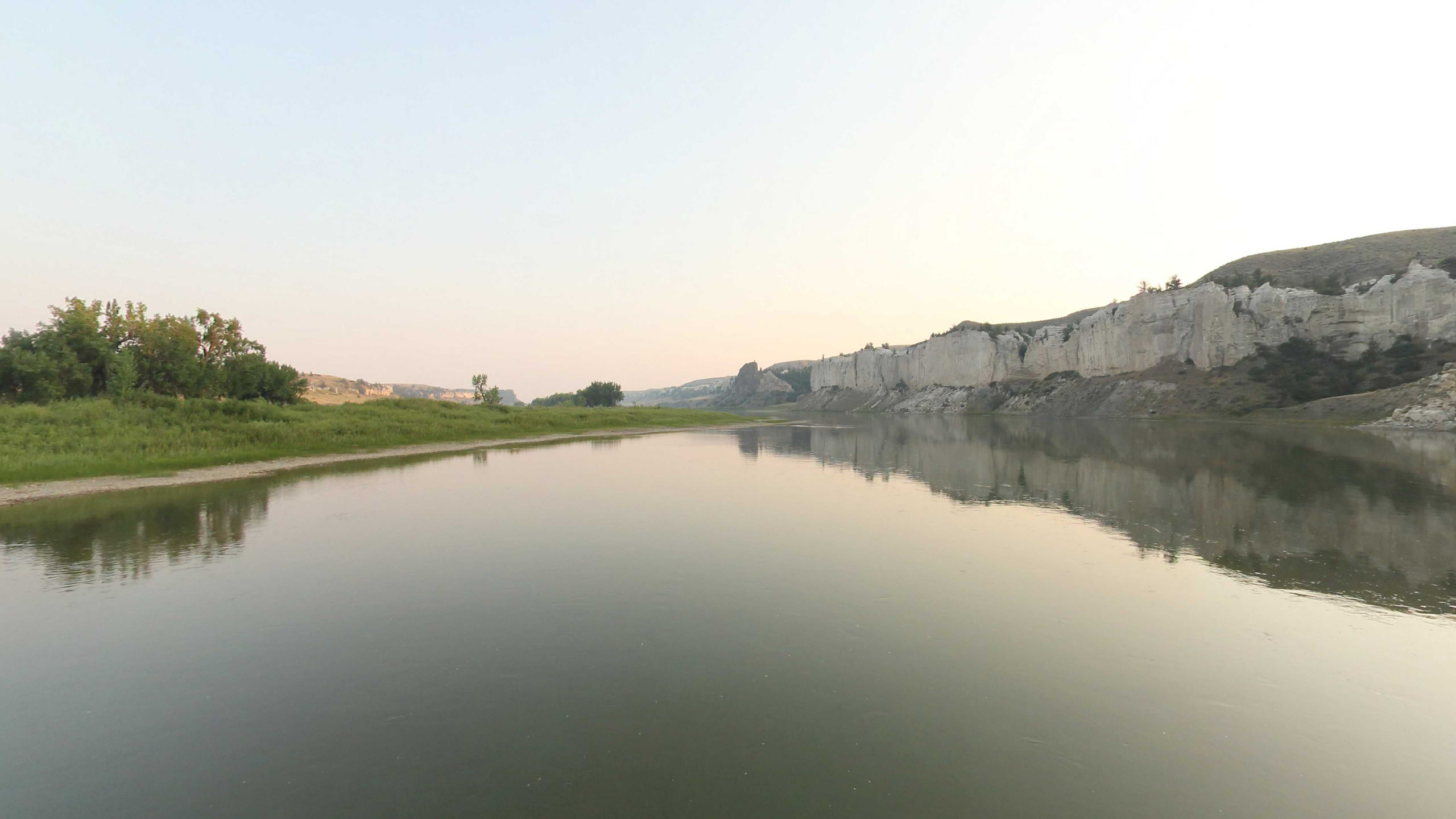
On a cloudy morning with light rain, the party set out early and pulled the boats upriver with cords against an opposing wind. The bluffs lowered and the country flattened, with Captain Clark walking ashore and reporting fertile plains, sand deposits, and pebble-strewn ground, plus snow-covered mountains visible to the southwest. The river widened, its current gentled, and water grew clearer. Game was scarcer, though they killed a bighorn and a mule deer and spotted distant buffalo. They passed six islands, camped on a seventh, and noted blooming wild roses, prickly pear, recently abandoned Indian lodges, and coal in the bluffs.
Saturday June 1st 1805 The moring was cloudy and a few drops of rain. Set
out at an early hour and proceeded as usual by the help of our chords. the
river Clifts and bluffs not so high as yesterday and the country becomes
more level. a mountain or a part of the N. Mountain appears to approach
the river within 8 or 10 ms. bearing N. from our encampment of the last
evening. Capt C. who walked on shore today informed me that the river
hills were much lower than usual and that from the tops of those hills he
had a delightfull view of rich level and extensive plains on both sides of
the river; in those plains, which in many places reach the river clifts,
he observed large banks of pure sand which appeared to have been driven by
the S W. winds from the river bluffs and there deposited. the plains are
more fertile at some distance from the river than near the bluffs where
the surface of the earth is very generally covered with small smothe
pebbles which have the appearance of having been woarn by the agitation of
the waters in which they were no doubt once immerced. A range of high
Mountains appear to the S. W. at a considerable distance covered with
snow, they appear to run Westerly. no timber appears on the highlands; but
much more than yesterday on the river and Islands. rockey points and
shoals less freequent than yesterday but some of them quite as bad when
they did occur. the river from 2 to 400 yards wide, courant more gentle
and still becoming clearer. game is by no means as abundant as below; we
killed one male bighorn and a mule deer today; saw buffalow at a distance
in the plains particularly near a small Lake on Lard. side about 8 ms.
distant. some few drops of rain again fell this evening. we passed six
Islands and encamped on the 7th; they are all small but contain some
timber. the wind has been against us all day.I saw the choke cherry
the yellow and red courant bushes; the wild rose appears now to be in full
bloom as are also the prickley pear which are numerous in these plains.We
also saw some Indian Lodges of sticks today which did not appear to have
been long evacuated.some coal appear in the bluffs.
Read this entry in modern English AI-translated
Saturday, June 1st, 1805. The morning was cloudy with a few drops of rain. We set out at an early hour and proceeded as usual with the help of our cords. The river cliffs and bluffs are not as high as yesterday, and the country becomes more level. A mountain, or a part of the North Mountain, appears to approach the river within 8 or 10 miles, bearing north from our encampment of last evening. Capt C. (Capt. Clark), who walked on shore today, informed me that the river hills were much lower than usual, and that from the tops of those hills he had a delightful view of rich, level, and extensive plains on both sides of the river. In those plains, which in many places reach the river cliffs, he observed large banks of pure sand which appeared to have been driven by the southwest winds from the river bluffs and there deposited. The plains are more fertile at some distance from the river than near the bluffs, where the surface of the earth is very generally covered with small smooth pebbles which have the appearance of having been worn by the agitation of the waters in which they were no doubt once immersed.
A range of high mountains appears to the southwest at a considerable distance, covered with snow; they appear to run westerly. No timber appears on the highlands, but much more than yesterday on the river and islands. Rocky points and shoals are less frequent than yesterday, but some of them were quite as bad when they did occur. The river is from 200 to 400 yards wide, the current more gentle, and still becoming clearer. Game is by no means as abundant as below; we killed one male bighorn and a mule deer today, and saw buffalo at a distance in the plains, particularly near a small lake on the larboard side about 8 miles distant. A few drops of rain again fell this evening. We passed six islands and camped on the seventh; they are all small but contain some timber. The wind has been against us all day.
I saw the choke cherry, and the yellow and red currant bushes. The wild rose appears now to be in full bloom, as are also the prickly pears, which are numerous in these plains. We also saw some Indian lodges of sticks today, which did not appear to have been long abandoned. Some coal appears in the bluffs.
This modernization is AI-generated for accessibility. The original above is the authoritative version.
Entities mentioned in this entry
Auto-extracted from the entry text. Hover any entity for context.