Journal Entry

Clark: September 13, 1806

September 13, 1806
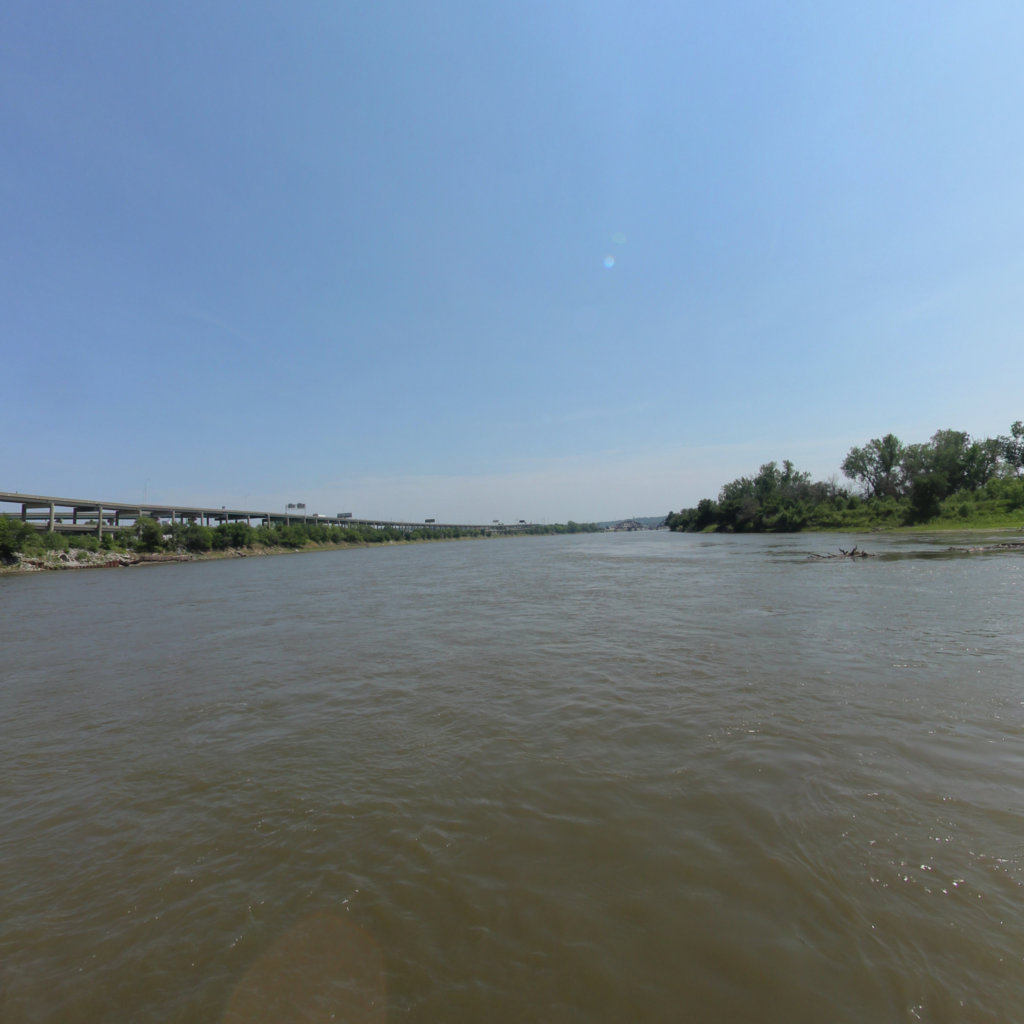
Missouri near Floyd's Bluff and Council Bluffs
AI Summary

The party set out early after Mr. McClellen gave each man a dram, but strong southeast headwinds and a dense field of snags below forced them to halt at the camp of five hunters sent ahead, who had taken no game. Feeling unwell, Clark drank chocolate provided by McClellen and found relief. Hunters eventually killed four deer and a turkey before the group continued, making only 18 miles before camping on the northeast bank of the Missouri. George Shannon lost his powder horn and pouch. Clark noted the bottomland's timber and birds.

Saturday 13th September 1806 rose early Mr. McClellen gave each man a Dram
and a little after Sunrise we Set out the wind hard a head from the S E at
8 A M we landed at the Camp of the 5 hunters whome we had Sent a head,
they had killed nothing, the wind being too high for us to proceed in
Safty through the emecity of Snags which was imediately below we concluded
to lye by and Sent on the Small Canoes a Short distance to hunt and kill
Some meat, we Sent out 2 men in the bottom they Soon returned with one
turky and informed that the rushes was so high and thick that it was
impossible to kill any deer. I felt my Self very unwell and derected a
little Chocolate which Mr. McClellen gave us, prepared of which I drank
about a pint and found great relief at 11 A.M. we proceeded on about 1
mile and come up with the hunters who had killed 4 deer, here we delayed
untill 5 P. M when the hunters all joined us and we again proceded on down
a fiew miles and encamped on the N E Side of the Missouri haveing decended
18 Miles only to day. the day disagreeably worm. one man George Shannon
left his horn and pouch with his powder ball and knife and did not think
of it untill night. I walked in the bottom in the thick rushes and the
Growth of timber Common to the Illinois Such as cotton wood, Sycamore, ash
mulberry, Elm of different Species, walnut, hickory, horn beem, pappaw
arrow wood willow, prickly ash, &c and Grape vines, pees of 3 species
&c &c. Birds most Common the buzzard Crow the hooting owl and
hawks, &c. &c.-

Read this entry in modern English AI-translated

Saturday, 13th September 1806. We rose early. Mr. McClellen gave each man a dram, and a little after sunrise we set out. The wind was hard ahead from the southeast. At 8 A.M. we landed at the camp of the five hunters whom we had sent ahead; they had killed nothing. The wind being too high for us to proceed safely through the immense number of snags which lay immediately below, we decided to lay by and sent on the small canoes a short distance to hunt and kill some meat. We sent out two men into the bottom, and they soon returned with one turkey and reported that the rushes were so high and thick that it was impossible to kill any deer.

I felt very unwell, and prepared a little chocolate which Mr. McClellen had given us, of which I drank about a pint and found great relief. At 11 A.M. we proceeded on about one mile and came up with the hunters, who had killed four deer. Here we delayed until 5 P.M., when the hunters all joined us, and we again proceeded on down a few miles and camped on the northeast side of the Missouri, having descended only 18 miles today. The day was disagreeably warm. One man, George Shannon, left his horn and pouch with his powder, ball, and knife, and did not think of it until night.

I walked in the bottom among the thick rushes and the growth of timber common to the Illinois, such as cottonwood, sycamore, ash, mulberry, elm of different species, walnut, hickory, hornbeam, pawpaw, arrowwood, willow, prickly ash, etc., and grapevines, peas of three species, etc., etc. The birds most common were the buzzard, crow, the hooting owl, and hawks, etc., etc.

This modernization is AI-generated for accessibility. The original above is the authoritative version.

Our Partners