Lewis: April 17, 1806
Thursday April 17th 1806. This morning early I sent out the hunters, and
set several additional hands about the packsaddles. I find that the
sturgeon is not taken by any of the natives above the Columbean vally. the
inhabitants of the rapids at this time take a few of the white salmon
trout and considerable quantities of a small indifferent mullet on which
they principally subsist. I have seen none except dryed fish of the last
season in the possession of the people above that place, they subsist on
roots principally with some dryed and pounded fish. the salmon not having
made their appearance proves a serious inconvenience to us. but few of the
natives visited my camp today and those only remained a few hours. even at
this place which is merely on the border of the plains of Columbia the
climate seems to have changed the air feels dryer and more pure. the earth
is dry and seems as if there had been no rain for a week or ten days. the
plain is covered with a rich virdure of grass and herbs from four to nine
inches high and exhibits a beautiful) seen particularly pleasing after
having been so long imprisoned in mountains and those almost impenetrably
thick forrests of the seacoast. Joseph Feilds brought me today three eggs
of the party coloured corvus, they are about the size and shape of those
of the pigeon. they are bluish white much freckled with dark redish brown
irregular spots, in short it is reather a mixture of those colours in
which the redish brown predominates, particularly towards the larger end.This
evening Willard and Cruzatte returned from Capt. Clark and brought me a
note in which Capt. C. informed me that he had sill been unsuccessful)
having not obtained a single horse as yet from the natives and the state
of our stores are so low that I begin to fear we shall not be enabled to
obtain as many horses at this place as will convey our baggage and unless
we do obtain a sufficient number for that purpose we shall not hasten our
progress as a part of our baggage must still be conveyed by water. Capt.
C. informed me that he should proceed as far as the Eneshur village today
and would return tomorrow and join me at the Skillute village to which
place I mean to proceed with the party tomorrow. I dispatched Shannon with
a note to Capt. Clark in which I requested him to double the price we have
heretofore offered for horses and if possible obtain as many as five, by
this means we shall be enabled to proceed immediately with our small
canoes and those horses to the villages in the neighbourhood of the mussel
shell rapid where horses are more abundant and cheaper; with the remainder
of our merchandize in addition to the canoes we can no doubt obtain as
many horses there as will answer our purposes. delay in the villages at
the narrows and falls will be expensive to us inasmuch as we will be
compelled to purchase both fuel and food of the indians, and might the
better enable them to execute any hostile desighn should they meditate any
against us.all the hunters returned in the evening. Sheilds had
killed one deer which he brought with him. the packsaddles were completed
this evening. I had some Elkskins put in the water today make harnes for
the packhorses but shall not cut them untill I know the number we can
obtain.there is a species of hiasinth in these plains the bulb of
which the natives eat either boiled baked or dryed in the sun. this bulb
is white, not entirely solid, and of a flat form; the bulb of the present
year overlays, or crowns that of the last, and seems to be pressed close
to it, the old bulb is withered much thiner equally wide with that of the
present year and sends fourth from it’s sides a number of small radicles.this
hiasinth is of a pale blue colour and is a very pretty flower. I preserved
a specemine of it.
Entities mentioned in this entry
Auto-extracted from the entry text. Hover any entity for context.
Terrain360 · the place today
Celilo Falls and The Dalles portage in 360°
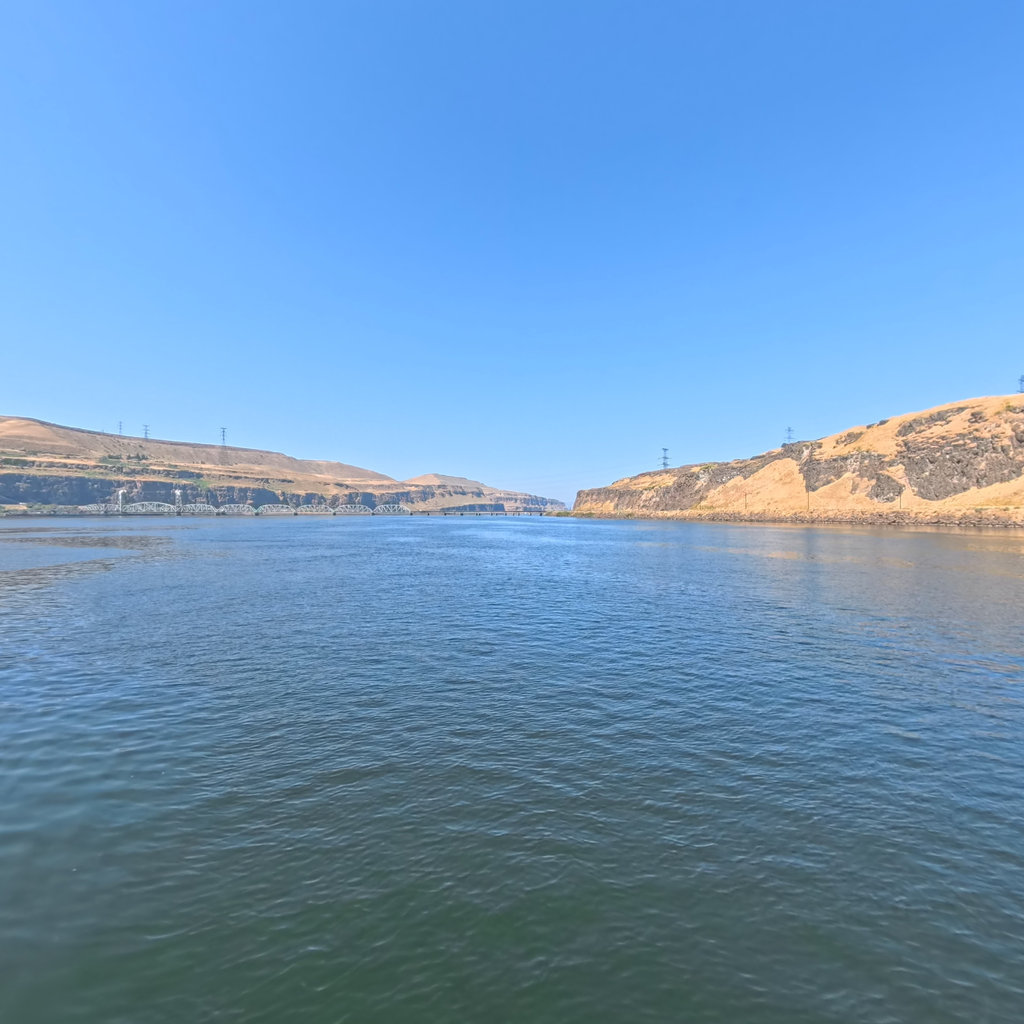
10 frames across 1.8 mi of the route around this location
Analyses
- Four Pens at the Long Narrows: A Day of Failed Bargains and Quiet Observation
- Pierre Cruzatte: Fiddler, Waterman, and the Man Who Shot Meriwether Lewis
- George Shannon: The Youngest Soldier of the Corps of Discovery
- The Captain’s Eye: Meriwether Lewis as Naturalist, Quartermaster, and Reluctant Diarist
Artwork
Help improve this record
See something that needs correcting, or know a source we are missing? The archive gets better through its readers.


