Lewis: April 22, 1806
Tuesday April 22cd 1806. Last night two of our horses broke loos from the
picquits and straggled off some little distance, the men who had charge of
them fortunately recovered them early. at 7 A.M. we set out having
previously sent on our small Canoe with Colter and Potts. we had not
arrived at the top of a hill over which the road leads opposite the
village before Charbono’s horse threw his load, and taking fright at the
saddle and robe which still adhered, ran at full speed down the hill, near
the village he disengaged himself from the saddle and robe, an indian hid
the robe in his lodge. I sent our guide and one man who was with me in the
rear to assist Charbono in retaking his horse which having done they
returned to the village on the track of the horse in surch of the lost
articles they found the saddle but could see nothing of the robe the
indians denyed having seen it; they then continued on the track of the
horse to the place from whence he had set out with the same success. being
now confident that the Indians had taken it I sent the Indian woman on to
request Capt. C. to halt the party and send back some of the men to my
assistance being determined either to make the indians deliver the robe or
birn their houses. they have vexed me in such a manner by such repeated
acts of villany that I am quite disposed to treat them with every
severyty, their defenseless state pleads forgivness so far as rispects
their lives. with this resolution I returned to their village which I had
just reached as Labuish met me with the robe which he informed me he found
in an Indian lodg hid behind their baggage. I now returned and joined Capt
Clark who was waiting my arrival with the party. the Indian woman had not
reached Capt C. untill about the time I arrived and he returned from a
position on the top of a hill not far from where he had halted the party.
from the top of this emmenense Capt. C. had an extensive view of the
country. he observed the range of mountains in which Mount Hood stands to
continue nearly south as far as the eye could reach. he also observed the
snow clad top of Mount Jefferson which boar S. 10 W. Mount Hood from the
same point boar S. 30 W. the tops of the range of western mountains are
covered with snow. Capt C. also discovered some timbered country in a
Southern direction from him at no great distance. Clarks river which
mouths immediately opposite this point of view forks at the distance of 18
or 20 miles from hence, the wright hand fork takes it rise in mount Hood,
and the main branch continues it’s course to the S. E.
we now made the following regulations as to our future order of march
(viz) that Capt. C. & myself should devide the men who were
disencumbered by horses and march alternately each day the one in front
and the other in rear. haveing divided the party agreeably to this
arrangement, we proceeded on through an open plain country about 8 miles
to a village of 6 houses of the Eneshur nation, here we observed our 2
canoes passing up on the opposite side; the wind being too high for them
to pass the river they continued on. we halted at a small run just above
the village where we dined on some dogs which we purchased of the
inhabitants and suffered our horses to graize about three hours. there is
no timber in this country we are obliged to purchase our fuel of the
natives, who bling it from a great distance. while we halted for dinner we
purch a horse. after dinner we proceeded on up the river about 4 miles to
a village of 7 mat lodges of the last mentioned nation. here our
Chopunnish guide informed us that the next village was at a considerable
distance and that we could not reach it tonight. the people at this place
offered to sell us wood and dogs, and we therefore thought it better to
remain all night. a man blonging to the next village abovd proposed
exchanging a horse for one of our canoes, just at this moment one of our
canoes was passing. we hailed them and ordered them to come over but the
wind continued so high that they could not join us untill after sunset and
the Indian who wished to exchange his horse for the canoe had gone on.
Charbonoe purchased a horse this evening. we obtained 4 dogs and as much
wood as answered our purposes on moderate terms. we can only afford
ourselves one fire, and are obliged to lie without shelter, the nights are
cold and days warm.- Colter and Pots had passed on with their canoe.
Entities mentioned in this entry
Auto-extracted from the entry text. Hover any entity for context.
Terrain360 · the place today
Columbia River above Celilo in 360°
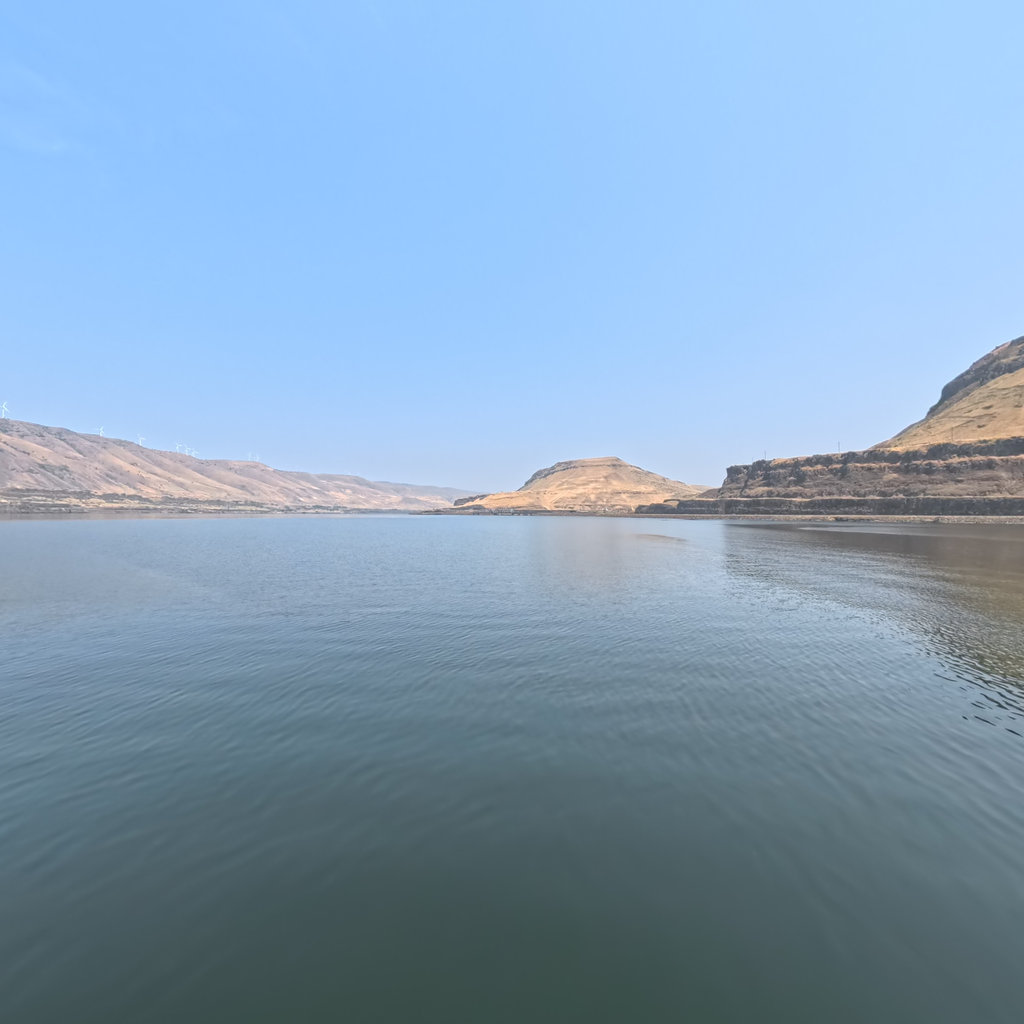
10 frames across 1.6 mi of the route around this location
Analyses
- The Stolen Robe and the Distant Peaks: Four Accounts of a Walla Walla Day
- Thomas Jefferson: The Distant Architect of the Voyage of Discovery
- John Colter: The Hunter Who Walked Away From Home
- Toussaint Charbonneau: The Interpreter Who Brought Sacagawea
- The Nez Perce (Chopunnish): Allies of the Bitterroot and Kooskooske
- Sacagawea: The Shoshone Interpreter of the Corps of Discovery
Artwork
Help improve this record
See something that needs correcting, or know a source we are missing? The archive gets better through its readers.


