Lewis: April 26, 1806
The expedition set out early and traveled through extensive low, level plains beginning about three miles into the day's march. After twelve miles they stopped near willows for a dinner of leftover dog meat and jerked elk. Several Native families joined their march with horses, crowding the line and creating frustration in the warm, dusty conditions. After sixteen more miles, they camped below three Walla Walla lodges. An Indian boy caught chubs using a bone hook, which Lewis described in detail. Rain fell, and they sheltered under an old tent.
Saturday April 26th 1806. This morning early we set forward and at the
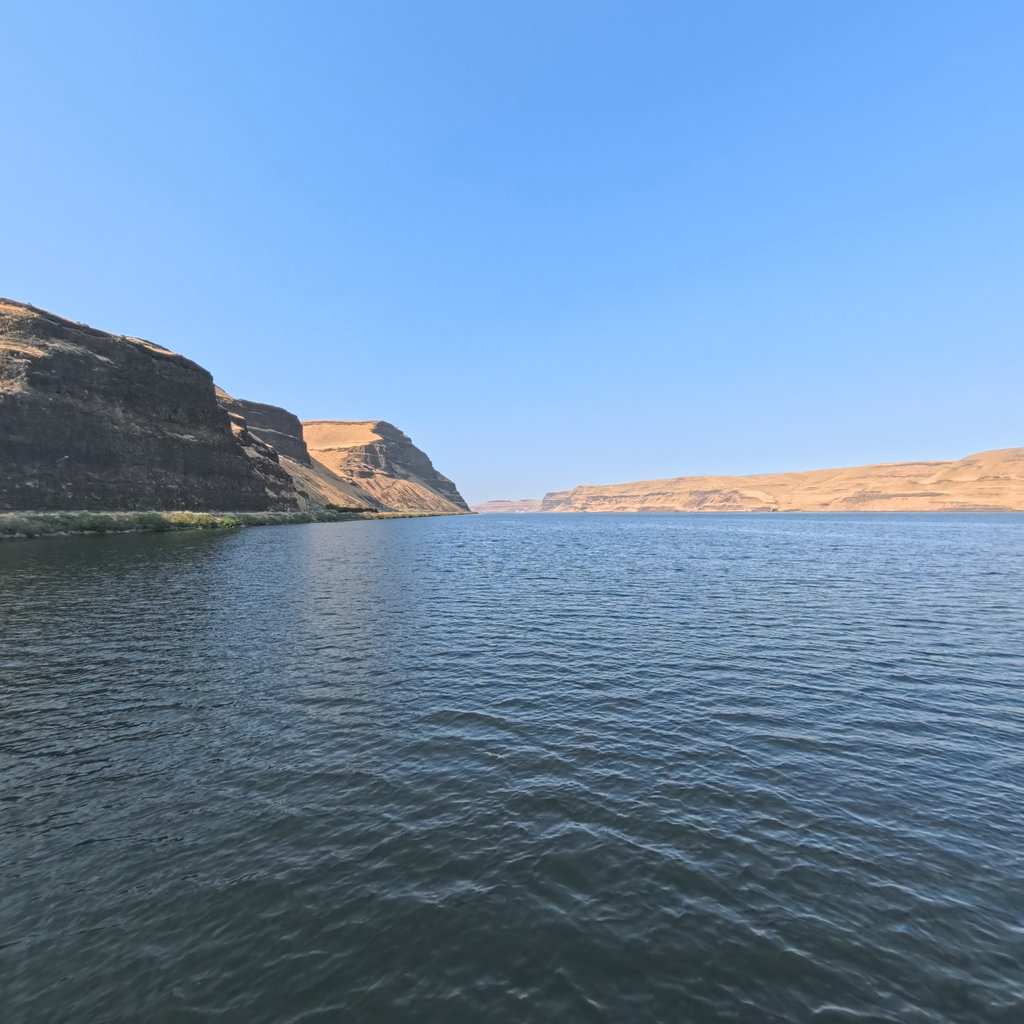
distance of three miles entered a low level plain country of great extent.
here the river hills are low and receede a great distance from the river
this low country commenced on the S. side of the river about 10 miles
below our encampment of last evening. these plains are covered with a
variety of herbatious plants, grass, and three speceis of shrubs
specimines of which I have preserved. at the distance of twelve miles we
halted near a few willows which afforded us a sufficient quantity of fuel
to cook our dinner which consisted of the ballance of the dogs we had
purchased yesterday evening and some jirked Elk. we were overtaken today
by several families of the natives who were traveling up the river with a
number of horses; they continued with us much to our annoyance as the day
was worm the roads dusty and we could not prevent their horses from
crouding in and breaking our order of mach without using some acts of
severity which we did not wish to commit. after dinner we continued our
march through the level plain near the river 16 Ms. and encamped about a
mile below three lodges of the Wollah wollah nation, and about 7 Ms. above
our encampment of the 19 of October last. after we encamped a little
Indian boy caught several chubbs with a bone in this form which he
substituted for a hook. these fish were of about 9 inches long small head
large abdomen, small where the tail joined the body, the tail wide long in
proportion and forked. the back and ventral fins were equadistant from the
head and had each 10 bony rays, the fns next the gills nine each and that
near the tail 12. the upper exceeded the under jaw, the latter is truncate
at the extremity and the tonge and pallet are smooth. the colour is white
on the sides and belley and a blewish brown on the back. the iris of the
eye is of a silvery colour and puple black.we covered ourselves
partially this evening from the rain by means of an old tent.
Read this entry in modern English AI-translated
Saturday, April 26th, 1806. This morning, early, we set forward, and at the distance of three miles entered a low, level plain country of great extent. Here the river hills are low and recede a great distance from the river. This low country commenced on the south side of the river about 10 miles below our encampment of last evening. These plains are covered with a variety of herbaceous plants, grass, and three species of shrubs, specimens of which I have preserved.
At the distance of twelve miles, we halted near a few willows, which afforded us a sufficient quantity of fuel to cook our dinner, which consisted of the balance of the dogs we had purchased yesterday evening and some jerked elk. We were overtaken today by several families of the natives who were traveling up the river with a number of horses. They continued with us much to our annoyance, as the day was warm, the roads dusty, and we could not prevent their horses from crowding in and breaking our order of march without using some acts of severity, which we did not wish to commit.
After dinner, we continued our march through the level plain near the river 16 miles, and camped about a mile below three lodges of the Wollah wollah (Walla Walla) nation, and about 7 miles above our encampment of the 19th of October last. After we camped, a little Indian boy caught several chubs with a bone in this form, which he substituted for a hook. These fish were about 9 inches long, with a small head, large abdomen, small where the tail joined the body, and the tail wide and long in proportion and forked. The back and ventral fins were equidistant from the head and had each 10 bony rays; the fins next to the gills had nine each, and that near the tail had 12. The upper jaw exceeded the lower; the latter is truncate at the extremity, and the tongue and palate are smooth. The color is white on the sides and belly and a bluish brown on the back. The iris of the eye is of a silvery color and the pupil black.
We covered ourselves partially this evening from the rain by means of an old tent.
This modernization is AI-generated for accessibility. The original above is the authoritative version.
Entities mentioned in this entry
Auto-extracted from the entry text. Hover any entity for context.