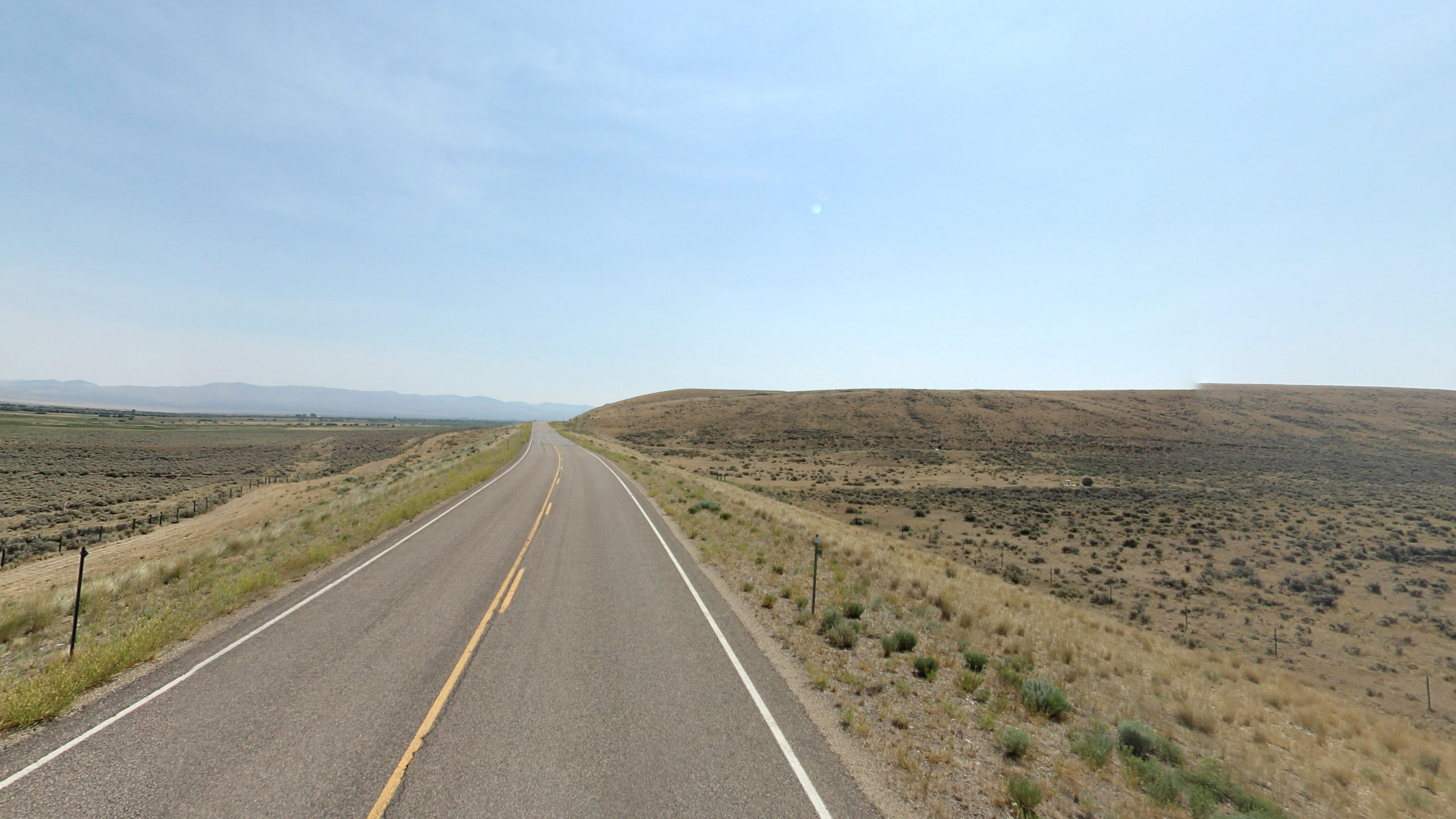
Lewis: August 16, 1805
Lewis sent hunters Drewyer and Shields ahead to find food for his hungry party and Shoshone escort. The Indians, suspicious of an ambush, sent spies to watch. When a deer was killed, the starving Shoshones rushed to devour the raw entrails, shocking Lewis. Two more deer and an antelope were taken and shared. Approaching the forks to meet Clark, Lewis found him absent; to calm rising Shoshone fears, he donned native dress, gave the chief his gun, and used left notes as a ruse. He spent an anxious night, while Clark struggled upstream with shallow rapids.
Friday August 16th 1805. I sent Drewyer and Shields before this morning in
order to kill some meat as neither the Indians nor ourselves had any thing
to eat. I informed the Ceif of my view in this measure, and requested that
he would keep his young men with us lest by their hooping and noise they
should allarm the game and we should get nothing to eat, but so strongly
were there suspicions exited by this measure that two parties of discovery
immediately set out one on ech side of the valley to watch the hunters as
I beleive to see whether they had not been sent to give information of
their approach to an enemy that they still preswaided themselves were
lying in wait for them. I saw that any further effort to prevent their
going would only add strength to their suspicions and therefore said no
more. after the hunters had been gone about an hour we set out. we had
just passed through the narrows when we saw one of the spies comeing up
the level plain under whip, the chief pawsed a little and seemed somewhat
concerned. I felt a good deel so myself and began to suspect that by some
unfortunate accedent that perhaps some of there enimies had straggled
hither at this unlucky moment; but we were all agreeably disappointed on
the arrival of the young man to learn that he had come to inform us that
one of the whitemen had killed a deer. in an instant they all gave their
horses the whip and I was taken nearly a mile before I could learn what
were the tidings; as I was without tirrups and an Indian behind me the
jostling was disagreeable I therefore reigned up my horse and forbid the
indian to whip him who had given him the lash at every jum for a mile
fearing he should loose a part of the feast. the fellow was so uneasy that
he left me the horse dismounted and ran on foot at full speed, I am
confident a mile. when they arrived where the deer was which was in view
of me they dismounted and ran in tumbling over each other like a parcel of
famished dogs each seizing and tearing away a part of the intestens which
had been previously thrown out by Drewyer who killed it; the seen was such
when I arrived that had I not have had a pretty keen appetite myself I am
confident I should not have taisted any part of the venison shortly. each
one had a peice of some discription and all eating most ravenously. some
were eating the kidnies the melt and liver and the blood runing from the
corners of their mouths, others were in a similar situation with the
paunch and guts but the exuding substance in this case from their lips was
of a different discription. one of the last who attacted my attention
particularly had been fortunate in his allotment or reather active in the
division, he had provided himself with about nine feet of the small guts
one end of which he was chewing on while with his hands he was squezzing
the contents out at the other. I really did not untill now think that
human nature ever presented itself in a shape so nearly allyed to the
brute creation. I viewed these poor starved divils with pity and
compassion I directed McNeal to skin the deer and reserved a quarter, the
ballance I gave the Chief to be divided among his people; they devoured
the whole of it nearly without cooking. I now boar obliquely to the left
in order to interscept the creek where there was some brush to make a
fire, and arrived at this stream where Drewyer had killed a second deer;
here nearly the same seene was encored. a fire being kindled we cooked and
eat and gave the ballance of the two deer to the Indians who eat the whole
of them even to the soft parts of the hoofs. Drewyer joined us at
breakfast with a third deer. of this I reserved a quarter and gave the
ballance to the Indians. they all appeared now to have filled themselves
and were in a good humour. this morning early soon after the hunters set
out a considerable part of our escort became allarmed and returned 28 men
and three women only continued with us. after eating and suffering the
horses to graize about 2 hours we renued our march and towads evening
arrived at the lower part of the cove Shields killed an Antelope on the
way a part of which we took and gave the remainder to the Indians. being
now informed of the place at which I expected to meat Capt C. and the
party they insisted on making a halt, which was complyed with. we now
dismounted and the Chief with much cerimony put tippets about our necks
such as they temselves woar I redily perceived that this was to disguise
us and owed it’s origine to the same cause already mentioned. to give them
further confidence I put my cocked hat with feather on the chief and my
over shirt being of the Indian form my hair deshivled and skin well
browned with the sun I wanted no further addition to make me a complete
Indian in appearance the men followed my example and we were son
completely metamorphosed. I again repeated to them the possibility of the
party not having arrived at the place which I expected they were, but
assured them they could not be far below, lest by not finding them at the
forks their suspicions might arrise to such hight as to induce them to
return precipitately. we now set out and rode briskly within sight of the
forks making one of the Indians carry the flag that our own party should
know who we were. when we arrived in sight at the distance of about 2
miles I discovered to my mortification that the party had not arrived, and
the Indians slackened their pace. I now scarcely new what to do and feared
every moment when they would halt altogether, I now determined to restore
their confidence cost what it might and therefore gave the Chief my gun
and told him that if his enimies were in those bushes before him that he
could defend himself with that gun, that for my own part I was not affraid
to die and if I deceived him he might make what uce of the gun he thought
proper or in other words that he might shoot me. the men also gave their
guns to other indians which seemed to inspire them with more confidence;
they sent their spies before them at some distance and when I drew near
the place I thought of the notes which I had left and directed Drewyer to
go with an Indian man and bring them to me which he did. the indian seeing
him take the notes from the stake on which they had been plased I now had
recource to a stratagem in which I thought myself justifyed by the
occasion, but which I must confess set a little awkward. it had it’s
desired effect. after reading the notes which were the same I had left I
told the Chief that when I had left my brother Chief with the party below
where the river entered the mountain that we both agreed not to bring the
canoes higher up than the next forks of the river above us wherever this
might happen, that there he was to wait my return, should he arrive first,
and that in the event of his not being able to travel as fast as usual
from the difficulty of the water, that he was to send up to the first
forks above him and leave a note informing me where he was, that this note
was left here today and that he informed me that he was just below the
mountains and was coming on slowly up, and added that I should wait here
for him, but if they did not beleive me that I should send a man at any
rate to the Chief and they might also send one of their young men with
him, that myself and two others would remain with them at this place. this
plan was readily adopted and one of the young men offered his services; I
promised him a knife and some beads as a reward for his confidence in us.
most of them seemed satisfyed but there were several that complained of
the Chief’s exposing them to danger unnecessarily and said that we told
different stories, in short a few were much dissatisfyed. I wrote a note
to Capt. Clark by the light of some willow brush and directed Drewyer to
set out early being confident that there was not a moment to spare. the
chief and five or six others slept about my fire and the others hid
themselves in various parts of the willow brush to avoid the enimy whom
they were fearfull would attack them in the course of the night. I now
entertained various conjectures myself with rispect to the cause of Capt.
Clarks detention and was even fearful l that he had found the river so
difficult that he had halted below the Rattlesnake bluffs. I knew that if
these people left me that they would immediately disperse and secrete
themselves in the mountains where it would be impossible to find them or
at least in vain to pursue them and that they would spread the allarm to
all other bands within our reach & of course we should be disappointed
in obtaining horses, which would vastly retard and increase the labour of
our voyage and I feared might so discourage the men as to defeat the
expedition altogether. my mind was in reallity quite as gloomy all this
evening as the most affrighted indian but I affected cheerfullness to keep
the Indians so who were about me. we finally laid down and the Chief
placed himself by the side of my musquetoe bier. I slept but little as
might be well expected, my mind dwelling on the state of the expedition
which I have ever held in equal estimation with my own existence, and the
fait of which appeared at this moment to depend in a great measure upon
the caprice of a few savages who are ever as fickle as the wind. I had
mentioned to the chief several times that we had with us a woman of his
nation who had been taken prisoner by the Minnetares, and that by means of
her I hoped to explain myself more fully than I could do by signs. some of
the party had also told the Indians that we had a man with us who was
black and had short curling hair, this had excited their curiossity very
much. and they seemed quite as anxious to see this monster as they wer the
merchandize which we had to barter for their horses.
at 7 A M. Capt. C. set out after breakfast. he changed the hands in some
of the canoes; they proceeded with more ease than yesterday, yet they
found the river still rapid and shallow insomuch that they were obliged to
drag the large canoes the greater part of the day. the water excessively
cold. in the evening they passed several bad rapids. considerable
quantities of the buffaloe clover grows along the narrow bottoms through
which they passed. there was no timber except a few scatiring small pine
on the hills. willow service berry and currant bushes were the growth of
the river bottoms. they geatherd considerable quantities of service
berries, and caught some trout. one deer was killed by the hunters who
slept out last night. and did not join the party untill 10 A.M.
Capt. Clark sent the hunters this evening up to the forks of the river
which he discovered from an eminence; they mus have left this place but a
little time before we arrived. this evening they encamped on the Lard.
side only a few miles below us. and were obliged like ourselves to make
use of small willow brush for fuel. the men were much fatigued and
exhausted this evening.
Read this entry in modern English AI-translated
Friday August 16th 1805. I sent Drewyer (Drouillard) and Shields ahead this morning to kill some meat, since neither the Indians nor ourselves had anything to eat. I informed the Chief of my plan and asked that he keep his young men with us, lest their whooping and noise alarm the game and we get nothing to eat. But their suspicions were so strongly aroused by this measure that two scouting parties immediately set out, one on each side of the valley, to watch the hunters—I believe to see whether they had not in fact been sent to give information of our approach to an enemy that they still persuaded themselves was lying in wait for them. I saw that any further effort to prevent their going would only strengthen their suspicions, and so I said no more.
After the hunters had been gone about an hour, we set out. We had just passed through the narrows when we saw one of the spies coming up the level plain at full speed. The chief paused a little and seemed somewhat concerned. I felt much the same myself and began to suspect that by some unfortunate accident some of their enemies had perhaps wandered here at this unlucky moment. But we were all agreeably disappointed when the young man arrived to inform us that one of the white men had killed a deer. In an instant they all whipped their horses, and I was carried nearly a mile before I could learn what the news was. Since I was without stirrups and had an Indian behind me, the jostling was disagreeable, so I reined up my horse and forbade the Indian to whip him—he had been giving him the lash at every jump for a mile, fearing he should miss part of the feast. The fellow was so uneasy that he left me the horse, dismounted, and ran on foot at full speed, I am confident, for a mile.
When they arrived where the deer was, which was in view of me, they dismounted and ran in tumbling over each other like a pack of famished dogs, each seizing and tearing away a part of the intestines, which had already been thrown out by Drewyer (Drouillard), who killed it. The scene was such, when I arrived, that had I not had a pretty keen appetite myself, I am confident I should not have tasted any part of the venison soon. Each one had a piece of some kind, and all were eating most ravenously. Some were eating the kidneys, the spleen, and the liver, with the blood running from the corners of their mouths; others were in a similar situation with the paunch and guts, but the substance oozing from their lips in this case was of a different sort. One of the last who particularly drew my attention had been fortunate in his share—or rather active in the division: he had provided himself with about nine feet of the small intestines, one end of which he was chewing on while with his hands he was squeezing the contents out of the other. I really did not until now think that human nature ever presented itself in a shape so nearly allied to the brute creation. I viewed these poor starved devils with pity and compassion. I directed McNeal to skin the deer and reserved a quarter; the rest I gave the Chief to be divided among his people. They devoured nearly the whole of it without cooking.
I now bore obliquely to the left in order to intercept the creek where there was some brush to make a fire, and arrived at this stream where Drewyer (Drouillard) had killed a second deer. Here nearly the same scene was repeated. A fire being kindled, we cooked and ate, and gave the rest of the two deer to the Indians, who ate the whole of them, even down to the soft parts of the hooves. Drewyer (Drouillard) joined us at breakfast with a third deer. Of this I reserved a quarter and gave the rest to the Indians. They all now appeared to have filled themselves and were in a good humor.
Early this morning, soon after the hunters set out, a considerable part of our escort became alarmed and turned back; only 28 men and three women continued with us. After eating and letting the horses graze for about 2 hours, we resumed our march, and toward evening arrived at the lower part of the cove. Shields killed an antelope on the way, part of which we took and gave the remainder to the Indians. Now informed of the place where I expected to meet Capt. C. (Capt. Clark) and the party, they insisted on making a halt, which was complied with. We dismounted, and the Chief, with much ceremony, put tippets about our necks such as they themselves wore. I readily perceived that this was to disguise us, and that it owed its origin to the same cause already mentioned. To give them further confidence, I put my cocked hat with feather on the chief; and as my outer shirt was of the Indian form, my hair disheveled, and my skin well browned by the sun, I needed no further addition to make me a complete Indian in appearance. The men followed my example, and we were soon completely transformed.
I again repeated to them the possibility that the party might not have arrived at the place where I expected they would be, but assured them that they could not be far below, lest by not finding them at the forks, their suspicions might rise so high as to induce them to return suddenly. We now set out and rode briskly within sight of the forks, making one of the Indians carry the flag so that our own party would know who we were. When we came in sight at a distance of about 2 miles, I discovered, to my mortification, that the party had not arrived, and the Indians slackened their pace. I now scarcely knew what to do and feared every moment that they would halt altogether. I determined to restore their confidence at any cost, and therefore gave the Chief my gun and told him that if his enemies were in those bushes before him, he could defend himself with that gun; that for my own part I was not afraid to die, and if I deceived him, he might make whatever use of the gun he thought proper—in other words, he might shoot me. The men also gave their guns to other Indians, which seemed to inspire them with more confidence. They sent their spies on ahead at some distance, and when I drew near the place, I thought of the notes that I had left, and directed Drewyer (Drouillard) to go with an Indian man and bring them to me, which he did.
The Indian, seeing him take the notes from the stake on which they had been placed, prompted me to resort to a stratagem which I thought justified by the occasion, but which I must confess sat a little awkwardly. It had its desired effect. After reading the notes—which were the same I had left—I told the Chief that when I had left my brother chief with the party below, where the river enters the mountain, we both agreed not to bring the canoes higher up than the next forks of the river above us, wherever that might be; that there he was to wait my return should he arrive first; and that if he were unable to travel as fast as usual due to the difficulty of the water, he was to send up to the first forks above him and leave a note informing me where he was. I told them that this note had been left here today, and that he informed me he was just below the mountains and was coming on slowly upward; and I added that I should wait here for him. But if they did not believe me, I would send a man at any rate to the chief, and they might also send one of their young men with him, while I myself and two others would remain with them at this place. This plan was readily adopted, and one of the young men offered his services; I promised him a knife and some beads as a reward for his confidence in us.
Most of them seemed satisfied, but there were several who complained of the Chief's exposing them to danger unnecessarily, and said that we told different stories. In short, a few were quite dissatisfied. I wrote a note to Capt. Clark by the light of some willow brush and directed Drewyer (Drouillard) to set out early, being confident that there was not a moment to spare. The chief and five or six others slept by my fire, and the others hid themselves in various parts of the willow brush to avoid the enemy, whom they feared would attack them during the night.
I now entertained various conjectures myself regarding the cause of Capt. Clark's delay, and was even fearful that he had found the river so difficult that he had halted below the Rattlesnake bluffs. I knew that if these people left me, they would immediately disperse and hide themselves in the mountains, where it would be impossible to find them, or at least useless to pursue them; and that they would spread the alarm to all the other bands within our reach. As a result, we would be disappointed in obtaining horses, which would vastly delay and increase the labor of our voyage, and I feared might so discourage the men as to defeat the expedition altogether. My mind was in reality quite as gloomy all this evening as the most frightened Indian, but I put on a cheerful manner to keep the Indians around me cheerful as well. We finally lay down, and the Chief placed himself by the side of my mosquito netting. I slept but little, as might well be expected, my mind dwelling on the state of the expedition, which I have ever held in equal value with my own existence, and the fate of which appeared at this moment to depend in great measure upon the caprice of a few Indians, who are ever as fickle as the wind. I had mentioned to the chief several times that we had with us a woman of his nation who had been taken prisoner by the Minnetares (Minnetarees), and that by means of her I hoped to explain myself more fully than I could by signs. Some of the party had also told the Indians that we had a man with us who was black and had short curling hair; this had excited their curiosity very much, and they seemed quite as anxious to see this marvel as they were to see the merchandise we had to barter for their horses.
At 7 A.M. Capt. C. (Capt. Clark) set out after breakfast. He changed the hands in some of the canoes; they proceeded with more ease than yesterday, yet they found the river still rapid and shallow, so much so that they were obliged to drag the large canoes the greater part of the day. The water was excessively cold. In the evening they passed several bad rapids. Considerable quantities of buffalo clover grow along the narrow bottoms through which they passed. There was no timber except a few scattered small pines on the hills. Willow, serviceberry, and currant bushes were the growth of the river bottoms. They gathered considerable quantities of serviceberries and caught some trout. One deer was killed by the hunters who slept out last night and did not rejoin the party until 10 A.M.
Capt. Clark sent the hunters this evening up to the forks of the river, which he had spotted from a high point; they must have left this place only a little before we arrived. This evening they camped on the Lard. (larboard) side only a few miles below us, and were obliged, like ourselves, to make use of small willow brush for fuel. The men were much fatigued and exhausted this evening.
This modernization is AI-generated for accessibility. The original above is the authoritative version.
Entities mentioned in this entry
Auto-extracted from the entry text. Hover any entity for context.