Journal Entry

Lewis: August 8, 1804

August 8, 1804
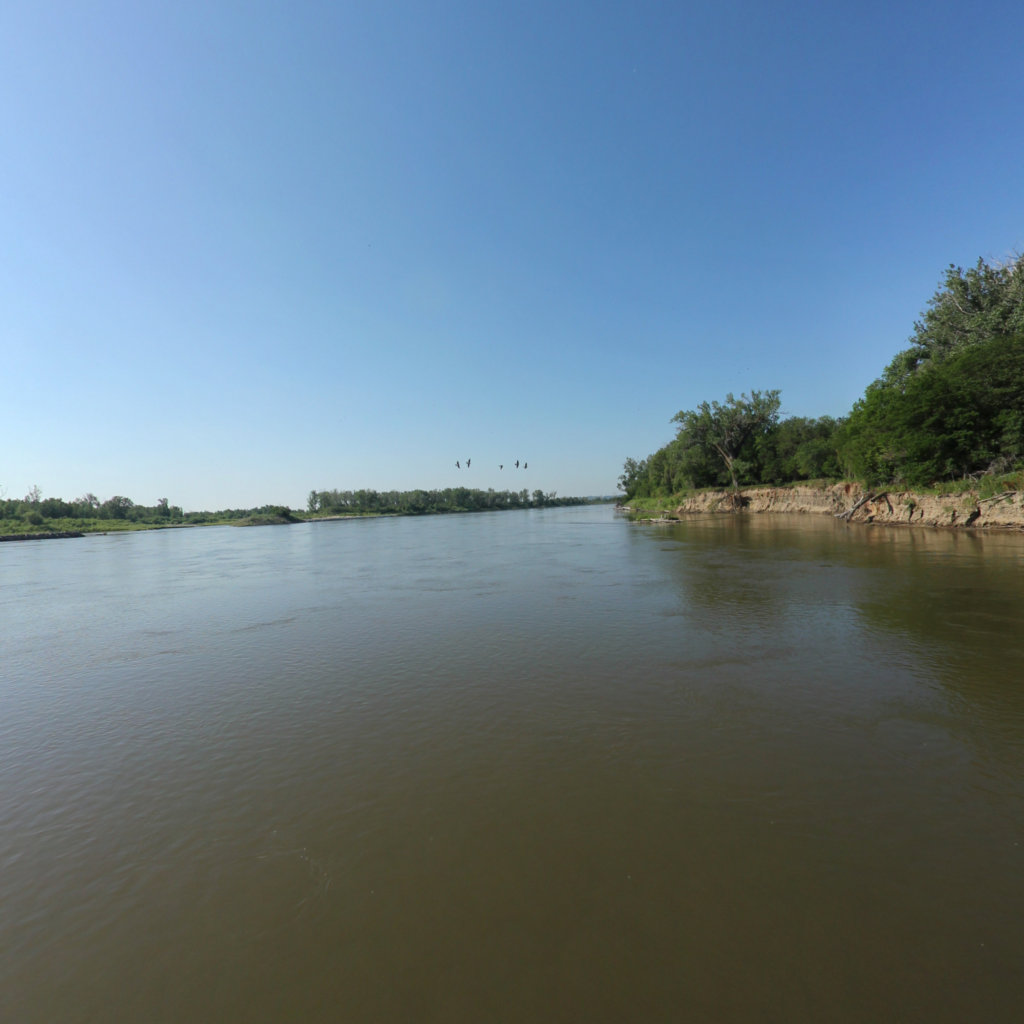
Missouri River near Soldier River
AI Summary

After passing the Sioux (Stone) River, the expedition noticed feathers drifting on the Missouri for about three miles before discovering an enormous flock of pelicans resting on a sandbar of what they named Pelican Island. The birds left behind small fish when flushed. Lewis shot one from a second flock and recorded a detailed description of the American white pelican, including its measurements, pouch capacity of five gallons, plumage, feet, and nesting habits. He also noted the season's first sawyer insect call and prairie grouse sightings.

August 8th 1804 we had seen but a few aquatic fouls of any kind on the
river since we commenced our journey up the Missouri, a few geese
accompanied by their young, the wood duck which is common to every part of
this country & crains of several kinds which will be discribed in
their respective placesthis day after we had passed the river Souix
as called by Mr. MacKay (or as is more properly called the stone river,) I
saw a great number of feathers floating down the river those feathers had
a very extraordinary appearance as they appeared in such quantities as to
cover pretty generally sixty or seventy yards of the breadth of the river.
for three miles after I saw those feathers continuing to run in that
manner, we did not percieve from whence they came, at length we were
surprised by the appearance of a flock of Pillican at rest on a large sand
bar attatched to a small Island the number of which would if estimated
appear almost in credible; they apeared to cover several acres of ground,
and were no doubt engaged in procuring their ordinary food; which is fish,
on our approach they flew and left behind them several small fish of about
eight inches in length, none of which I had seen beforethe Pellican
rested again on a sand bar above the Island which we called after them
from the number we saw on it. we now approached them within about three
hundred yards before they flew; I then fired at random among the flock
with my rifle and brought one down; the discription of this bird is as
follows.

Habits

They are a bird of clime remain on the coast of Floriday and the borders
of the Gulph of mexico & even the lower portion of the Mississippi
during the winter and in the Spring (see for date my thermometrical
observations at the river Dubois.-) visit this country and that farther
north for the purpose of raising their youngthis duty seems now to
have been accomplished from the appearance of a young Pilacon which was
killed by one of our men this morning, and they are now in large flocks on
their return to their winter quarters. they lay usually two eggs only and
chuise for a nest a couple of logs of drift wood near the water’s edge and
with out any other preperation but the thraught formed by the proximity of
those two logs which form a trough they set and hatch their young which
after nurture with fish their common food

Measure

F I

From beak to toe 5 8
Tip to tip of wing 9 4
Beak Length 1 3
Do. Width from 2 to 1 1/2
Neck Length 1 11
1st joint of wing 1 1
2ed Do. 1 4 1/2
3rd Do. – 7
4th do. – 2 3/4
Length of leg including foot 10
Do. of thy 11

Discription of Colour &c

The beak is a whiteish yellow the under part connected to a bladder like
pouch, this pounch is connected to both sides of the lower beak and
extends down on the under side of the neck and terminates in the stomachthis
pouch is uncovered with feathers, and is formed two skins the one on the
inner and the other on the center side a small quantity of flesh and
strings of which the anamal has at pleasure the power of moving or drawing
in such manner as to contract it at pleasure. in the present subject I
measured this pouch and found it’s contents 5 gallons of water

The feet are webbed large and of a yellow colour, it has four toes the
hinder toe is longer than in most aquatic fouls, the nails are black, not
sharp and 1/2 an inch in length

The plumage generally is white, the feathers are thin compared with the
swan goose or most aquatick fouls and has but little or no down on the
body. the upper part of the head is covered with black feathers short, as
far as the back part of the headthe yellow skin unfeathered extends
back from the upper beak and opening of the mouth and comes to a point
just behind the eye

The large feathers of the wings are of a deep black colourthe 1st
& 2nd joint of from the body above the same is covered with a second
layer of white feathers which extend quite half the length of those large
feathers of the wingthe thye is covered with feathers within a
quarter of an inch of the knee.

Inch
1st joint of wing has feathers No. 21 Length 9 Black
2ed Do. No. 17 Length 13 Inch
3rd Do. No. 5 Length 18 Inch
4th Do. No. 3 Length 19 Inch

it has a curious frothy substance which seems to devide its feathers from
the flesh of the body and seems to be composes of globles of air and
perfectly imbraces the part of the feather which extends through the
skin.the wind pipe terminates in the center of the lower part of the upper
and unfeathered part of the pouch and is secured by an elastic valve
commanded at pleasure.

The green insect known in the U States by the name of the sawyer or
chittediddle, was first heard to cry on the 27th of July, we were then in
latitude 41° some minutes.

The prarie hen or grouse, was seen in the praries between the Missouri and
the river platte

Read this entry in modern English AI-translated

August 8th 1804. We had seen only a few aquatic fowl of any kind on the river since we began our journey up the Missouri — a few geese accompanied by their young, the wood duck (which is common to every part of this country), and cranes of several kinds, which will be described in their proper places. This day, after we had passed the river Souix (Sioux) as it is called by Mr. MacKay (McKay) — or, as it is more properly called, the Stone River — I saw a great number of feathers floating down the river. These feathers had a very extraordinary appearance, as they appeared in such quantities as to cover pretty generally sixty or seventy yards of the breadth of the river. For three miles I saw these feathers continuing to run in that manner. We could not perceive from whence they came, until at length we were surprised by the appearance of a flock of pelicans at rest on a large sandbar attached to a small island. Their numbers, if estimated, would appear almost incredible; they appeared to cover several acres of ground, and were no doubt engaged in procuring their ordinary food, which is fish. On our approach they flew and left behind them several small fish of about eight inches in length, none of which I had seen before. The pelicans rested again on a sandbar above the island, which we named after them from the number we saw on it. We now approached them within about three hundred yards before they flew; I then fired at random among the flock with my rifle and brought one down. The description of this bird is as follows.

Habits

They are a bird of climate, remaining on the coast of Florida and the borders of the Gulf of Mexico, and even the lower portion of the Mississippi, during the winter; and in the spring (see my thermometrical observations at the River Dubois for the date) they visit this country and lands farther north for the purpose of raising their young. This duty seems now to have been accomplished, from the appearance of a young pelican which was killed by one of our men this morning, and they are now in large flocks on their return to their winter quarters. They usually lay only two eggs, and choose for a nest a couple of logs of driftwood near the water's edge; without any other preparation than the trough formed by the proximity of those two logs, they sit and hatch their young, which they afterwards nurture with fish, their common food.

Measurements

From beak to toe: 5 ft 8 in
Tip to tip of wing: 9 ft 4 in
Beak length: 1 ft 3 in
Beak width: from 2 to 1 1/2 in
Neck length: 1 ft 11 in
1st joint of wing: 1 ft 1 in
2nd joint: 1 ft 4 1/2 in
3rd joint: 7 in
4th joint: 2 3/4 in
Length of leg including foot: 10 in
Length of thigh: 11 in

Description of Color, etc.

The beak is a whitish yellow. The underpart is connected to a bladder-like pouch; this pouch is connected to both sides of the lower beak and extends down on the underside of the neck, terminating at the stomach. This pouch is uncovered with feathers and is formed of two skins — one on the inner and the other on the outer side — with a small quantity of flesh and strings, by means of which the animal has at pleasure the power of moving or drawing it in such a manner as to contract it at will. In the present subject I measured this pouch and found its contents to be 5 gallons of water.

The feet are webbed, large, and of a yellow color. It has four toes; the hinder toe is longer than in most aquatic fowl. The nails are black, not sharp, and half an inch in length.

The plumage generally is white. The feathers are thin compared with those of the swan, goose, or most aquatic fowl, and there is little or no down on the body. The upper part of the head is covered with short black feathers, as far back as the rear of the head. The yellow unfeathered skin extends back from the upper beak and the opening of the mouth and comes to a point just behind the eye.

The large feathers of the wings are of a deep black color. The 1st and 2nd joints from the body above are covered with a second layer of white feathers, which extend quite half the length of those large wing feathers. The thigh is covered with feathers to within a quarter of an inch of the knee.

1st joint of wing: 21 feathers, length 9 inches, black
2nd joint: 17 feathers, length 13 inches
3rd joint: 5 feathers, length 18 inches
4th joint: 3 feathers, length 19 inches

It has a curious frothy substance which seems to divide its feathers from the flesh of the body, and which appears to be composed of globules of air, perfectly embracing the part of the feather that extends through the skin. The windpipe terminates in the center of the lower part of the upper and unfeathered part of the pouch, and is secured by an elastic valve which the bird commands at pleasure.

The green insect known in the U.S. by the name of the sawyer or katydid (chittediddle) was first heard to cry on the 27th of July; we were then in latitude 41° and some minutes.

The prairie hen, or grouse, was seen in the prairies between the Missouri and the River Platte.

This modernization is AI-generated for accessibility. The original above is the authoritative version.

Our Partners