Journal Entry

Lewis: May 1, 1805

May 1, 1805
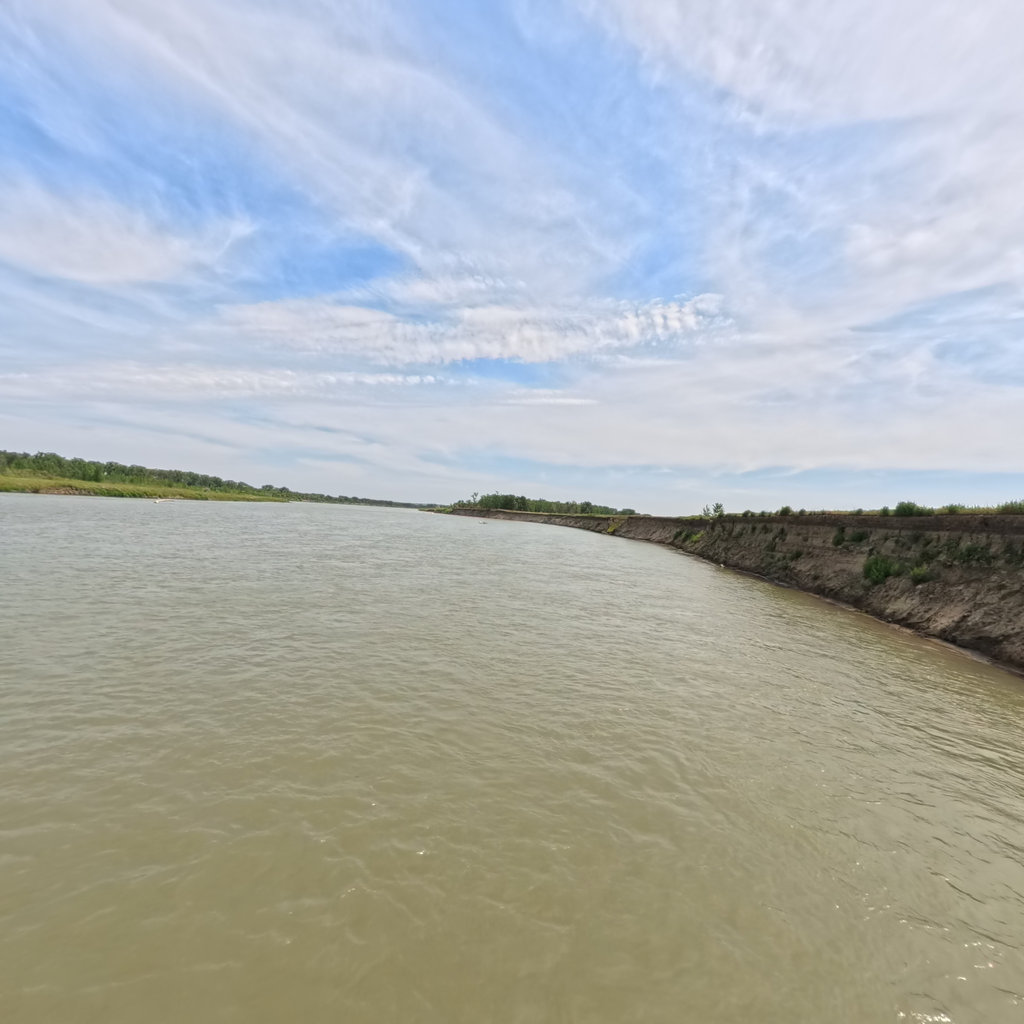
Missouri River near Porcupine River
AI Summary

The expedition set out early under favorable winds and made good progress under sail until midday, when high winds forced them ashore on the Larboard side, stranding one small canoe across the river. They camped in a cottonwood bottom and waited out the wind. Hunters brought in a buffalo, elk, goat, and two beaver, as game had become abundant in the increasingly fertile, pleasant country. John Shields was ill with rheumatism. Shannon killed an unfamiliar shorebird, which Lewis described in extensive detail and named the Missouri plover.

Wednesday May 1st 1805. Set out this morning at an early, the wind being
favourable we used our sales which carried us on at a good pace untill
about 12 OCk. when the wind became so high that the small canoes were
unable to proceed one of them which seperated from us just befor the wind
became so violent, is now lying on the opposite side of the river, being
unable to rejoin us in consequence of the waves, which during those gusts
run several feet high. we came too on the Lard. shore in a handsome bottom
well stocked with cottonwood timber; here the wind compelled us to spend
the ballance of the day. we sent out some hunters who killed a buffaloe,
an Elk, a goat and two beaver. game is now abundant. the country appears
much more pleasant and fertile than that we have passed for several days;
the hills are lower, the bottoms wider, and better stocked with timber,
which consists principally of cottonwood, not however of large size; the
under-growth willow on the verge of the river and sandbars, rose bushes,
red willow and the broad leafed willow in the bottom lands; the high
country on either side of the river is one vast plain, intirely destitute
of timber, but is apparently fertile, consisting of a dark rich mellow
looking lome. John Shields sick today with the rheumatism. Shannon killed
a bird of the plover kind. weight one pound. it measured from the tip of
the toe, to the extremity of the beak, 1 foot 10 Inches; from tip to tip
of wings when extended 2 F. 5 I.; Beak 3 5/8 inches; tale 3 1/8 inches;
leg and toe 10 Ins.the eye black, piercing, prominent and
moderately large. the legs are Hat thin, slightly imbricated and of a pale
sky blue colour, being covered with feathers as far as the mustle extends
down it, which is about half it’s length. it has four toes on each foot,
three of which, are connected by a web, the fourth is small and placed at
the heel about the 1/8 of an inch up the leg. the nails are black and
short, that of the middle toe is extreemly singular, consisting of two
nails the one laping on or overlaying the other, the upper one somewhat
the longest and sharpest. the tale contains eleven feathers of equal
length, & of a bluish white colour. the boddy and underside of the
wings, except the large feathers of the 1st & 2cd joints of the same,
are white; as are also the feathers of the upper part of the 4th joint of
the wing and part of those of the 3rd adjacent thereto, the large feathers
of the 1st or pinion and the 2cd joint are black; a part of the larger
feathers of the 3rd joint on the upper side and all the small feathers
which cover the upper part of the wings are black, as are also the tuft of
long feathers on each side of the body above the joining of the wing,
leaving however a stripe of white betwen them on the back. the head and
neck are shaped much like the grey plover, and are of a light brickdust
brown; the beak is black and flat, largest where it joins the head, and
from thence becoming thiner and tapering to a very sharp point, the upper
chap being 1/8 of an inch the longest turns down at the point and forms a
little hook. the nostrils, which commence near the head are long, narrow,
connected, and parallel with the beak; the beak is much curved, the
curvature being upwards in stead of downwards as is common with most
birds; the substance of the beak precisely resembles whalebone at a little
distance, and is quite as flexable as that substance their note resembles
that of the grey plover, tho is reather louder and more varied, their
habits appear also to be the same, with this difference; that it sometimes
rests on the water and swims which I do not recollect having seen the
plover do. this bird which I shall henceforth stile the Missouri plover,
generally feeds about the shallow bars of the river; to collect it’s food
which consists of ____, it immerces it’s beak in the water and throws it’s
head and beak from side to side at every step it takes.

May 1st 1805. Shannon killed a bird of the plover kind the weight one
pound.eye black percing and prominent

Measure F. Inchs from the tip of the toe to the extremity of the beak 1 10
from tip to tip of wing when extended 2 5 length of beak 3 5/8 length of
tale 3 1/8 length of leg and toe 10

the legs are flat, of pale skye blue colour and but slightly imbricated.
the second joint, as low as the mustle extends is covered with feathers
which is about half it’s length. it has three toes on a foot connected by
a web. there is also a small toe on each foot placed about the eighth of
an inch up the leg behind. the nails are black and short and those of the
middle toes ar singular-there being two nails on each the one above the
other the upper one the longest and sharpest.- the tale contains eleven
feathers of the same length of a bluish white colour. the body and under
side of the wings except the large feathers of the 1 & 2cd joints of
the wings are white, as are also the feathers of the upper part of the 4th
joint of the wing. and some of those of the 3rd adjoining.the large
feathers of the pinion or first (joint) & the second joint are black;
a part of the larger feathers of the third joint on the upper side and all
the smaller feathers which cover the upper part of these joints ar black;
as are also the tuft of long feathers on each side of the body above the
joining of the wing, leaving however a stripe of white between them on the
back. the head and neck are shaped much like the grey plover, and is a
light brickdust brown. the beak is black and flat, largest where it joins
the head and from thence tapering every way gradually to a very sharp
point the upper beak being 1/8 of an inch the longest turning down at the
point. the nostrils are parrallal with the beak and are long narrow and
connected. the beak is curvated and invirted; the Curvature being upwards
in stead of downwards as those of most birds arethe substance of
the beak is as flexable as whalebone and at a little distance precisely
resembles that substance. their note is like that of the common whistling
or grey plover tho reather louder, and more varied, and their habits are
the same with that bird so far as I have been enabled to learn, with this
difference however that this bird sometimes lights in the water and swims.it
generally feads about the shallow bars of the river; to collect it’s food,
it immerces it’s beak in the water, and thows it’s head and beak from side
to side at every step it takes.

Read this entry in modern English AI-translated

Wednesday May 1st 1805. We set out early this morning. The wind was favorable, so we used our sails, which carried us along at a good pace until about 12 o'clock, when the wind became so high that the small canoes were unable to proceed. One of them, which had separated from us just before the wind became so violent, is now lying on the opposite side of the river, unable to rejoin us because of the waves, which during these gusts run several feet high. We came to on the larboard shore in a handsome bottom well stocked with cottonwood timber. Here the wind forced us to spend the rest of the day. We sent out some hunters, who killed a buffalo, an elk, a goat, and two beaver. Game is now abundant.

The country appears much more pleasant and fertile than what we have passed for several days. The hills are lower, the bottoms wider, and better stocked with timber, which consists principally of cottonwood, though not of large size. The undergrowth is willow along the edge of the river and sandbars, with rose bushes, red willow, and broad-leafed willow in the bottom lands. The high country on either side of the river is one vast plain, entirely without timber, but apparently fertile, consisting of a dark, rich, mellow-looking loam.

John Shields is sick today with rheumatism.

Shannon killed a bird of the plover kind. Its weight was one pound. It measured from the tip of the toe to the extremity of the beak, 1 foot 10 inches; from tip to tip of wings when extended, 2 feet 5 inches; beak, 3 5/8 inches; tail, 3 1/8 inches; leg and toe, 10 inches. The eye is black, piercing, prominent, and moderately large. The legs are flat, thin, slightly imbricated, and of a pale sky-blue color, being covered with feathers as far as the muscle extends down them, which is about half their length. It has four toes on each foot, three of which are connected by a web; the fourth is small and placed at the heel about 1/8 of an inch up the leg. The nails are black and short. That of the middle toe is extremely singular, consisting of two nails, the one lapping on or overlaying the other, the upper one somewhat the longest and sharpest. The tail contains eleven feathers of equal length, of a bluish-white color. The body and underside of the wings, except the large feathers of the 1st and 2nd joints of the same, are white, as are also the feathers of the upper part of the 4th joint of the wing and part of those of the 3rd adjacent to it. The large feathers of the 1st (or pinion) and the 2nd joint are black. A part of the larger feathers of the 3rd joint on the upper side, and all the small feathers which cover the upper part of the wings, are black, as are also the tuft of long feathers on each side of the body above the joining of the wing, leaving however a stripe of white between them on the back. The head and neck are shaped much like the grey plover, and are a light brick-dust brown. The beak is black and flat, largest where it joins the head, and from there becoming thinner and tapering to a very sharp point, the upper chap being 1/8 of an inch the longest, turning down at the point and forming a little hook. The nostrils, which begin near the head, are long, narrow, connected, and parallel with the beak. The beak is much curved, the curvature being upwards instead of downwards, as is common with most birds. The substance of the beak precisely resembles whalebone at a little distance, and is quite as flexible as that substance. Their note resembles that of the grey plover, though it is rather louder and more varied. Their habits also appear to be the same, with this difference: that it sometimes rests on the water and swims, which I do not recollect having seen the plover do. This bird, which I shall henceforth call the Missouri plover, generally feeds about the shallow bars of the river. To collect its food, which consists of ____, it immerses its beak in the water and throws its head and beak from side to side at every step it takes.

---

May 1st 1805. Shannon killed a bird of the plover kind, weighing one pound. The eye is black, piercing, and prominent.

Measurements (feet, inches): from the tip of the toe to the extremity of the beak, 1 foot 10 inches; from tip to tip of wing when extended, 2 feet 5 inches; length of beak, 3 5/8 inches; length of tail, 3 1/8 inches; length of leg and toe, 10 inches.

The legs are flat, of pale sky-blue color, and only slightly imbricated. The second joint, as low as the muscle extends, is covered with feathers, which is about half its length. It has three toes on a foot connected by a web. There is also a small toe on each foot placed about an eighth of an inch up the leg behind. The nails are black and short, and those of the middle toes are singular—there being two nails on each, one above the other, the upper one the longest and sharpest. The tail contains eleven feathers of the same length, of a bluish-white color. The body and underside of the wings, except the large feathers of the 1st and 2nd joints of the wings, are white, as are also the feathers of the upper part of the 4th joint of the wing, and some of those of the 3rd adjoining. The large feathers of the pinion (or first joint) and the second joint are black. A part of the larger feathers of the third joint on the upper side, and all the smaller feathers which cover the upper part of these joints, are black, as are also the tuft of long feathers on each side of the body above the joining of the wing, leaving however a stripe of white between them on the back. The head and neck are shaped much like the grey plover, and are a light brick-dust brown. The beak is black and flat, largest where it joins the head, and from there tapering every way gradually to a very sharp point, the upper beak being 1/8 of an inch the longest, turning down at the point. The nostrils are parallel with the beak and are long, narrow, and connected. The beak is curved and inverted, the curvature being upwards instead of downwards, as those of most birds are. The substance of the beak is as flexible as whalebone and at a little distance precisely resembles that substance. Their note is like that of the common whistling or grey plover, though rather louder and more varied, and their habits are the same as that bird so far as I have been able to learn, with this difference however: that this bird sometimes lights on the water and swims. It generally feeds about the shallow bars of the river. To collect its food, it immerses its beak in the water and throws its head and beak from side to side at every step it takes.

This modernization is AI-generated for accessibility. The original above is the authoritative version.

Our Partners