Lewis: May 21, 1806
Wednesday May 21st 1806. It rained a few hours this morning. Sheilds and
Gibson set out to hunt towards the mountains. Collins came to camp at noon
and remained about 2 hours; he has killed nothing since he left us last.
we set five men at work to make a canoe for the purpose of fishing and
passing the river. the Indians have already promised us a horse for this
canoe when we have no longer any uce for her. as our tent was not
sufficient to shelter us from the rain we had a lodge constructed of
willow poles and grass in the form of the orning of a waggon closed at one
end. this we had made sufficiently large to sleep in and to shelter the
most important part of our baggage. it is perfectly secure against the
rain sun and wind and affords us much the most comfortable shelter we have
had since we left Fort Clatsop. today we divided the remnant of our store
of merchandize among our party with a view that each should purchase
therewith a parsel of roots and bread from the natives as his stores for
the rocky mountains for there seems but little probability that we shall
be enabled to make any dryed meat for that purpose and we cannot as yet
form any just idea what resource the fish will furnish us. each man’s
stock in trade amounts to no more than one awl, one Kniting pin, a half an
ounce of vermillion, two nedles, a few scanes of thead and about a yard of
ribbon; a slender stock indeed with which to lay in a store of provision
for that dreary wilderness. we would make the men collect these roots
themselves but there are several speceis of hemlock which are so much like
the cows that it is difficult to discriminate them from the cows and we
are affraid that they might poison themselves. the indians have given us
another horse to kill for provision which we keep as a reserved store. our
dependence for subsistence is on our guns, the fish we may perhaps take,
the roots we can purchase from the natives and as the last alternative our
horses. we eat the last morsel of meat which we had for dinner this
evening, yet nobody seems much conserned about the state of provision.
Willard, Sergt. Ordway and Goodrich were permitted to visit the village
today; the former returned in the evening with some roots and bread, the
two last remaining all night. one of our party brought in a young sandhill
crain it was about the size of a pateridge and of a redish brown colour,
it appeared to be about 5 or six days old; these crains are abundant in
this neighbourhood.
Entities mentioned in this entry
Auto-extracted from the entry text. Hover any entity for context.
Terrain360 · the place today
Camp Chopunnish (Long Camp), waiting for snow to melt in 360°
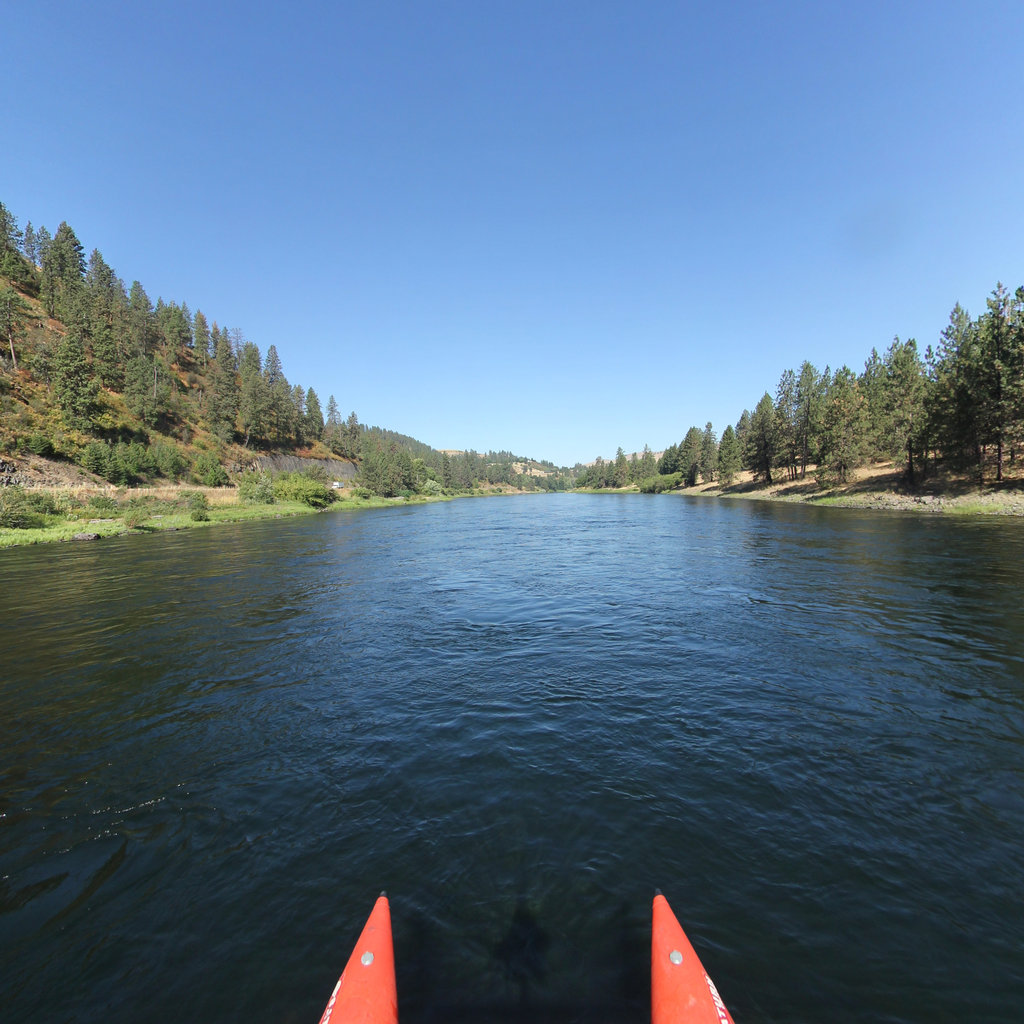
10 frames across 1.6 mi of the route around this location
Analyses
Artwork
Help improve this record
See something that needs correcting, or know a source we are missing? The archive gets better through its readers.


