Lewis: May 3, 1805
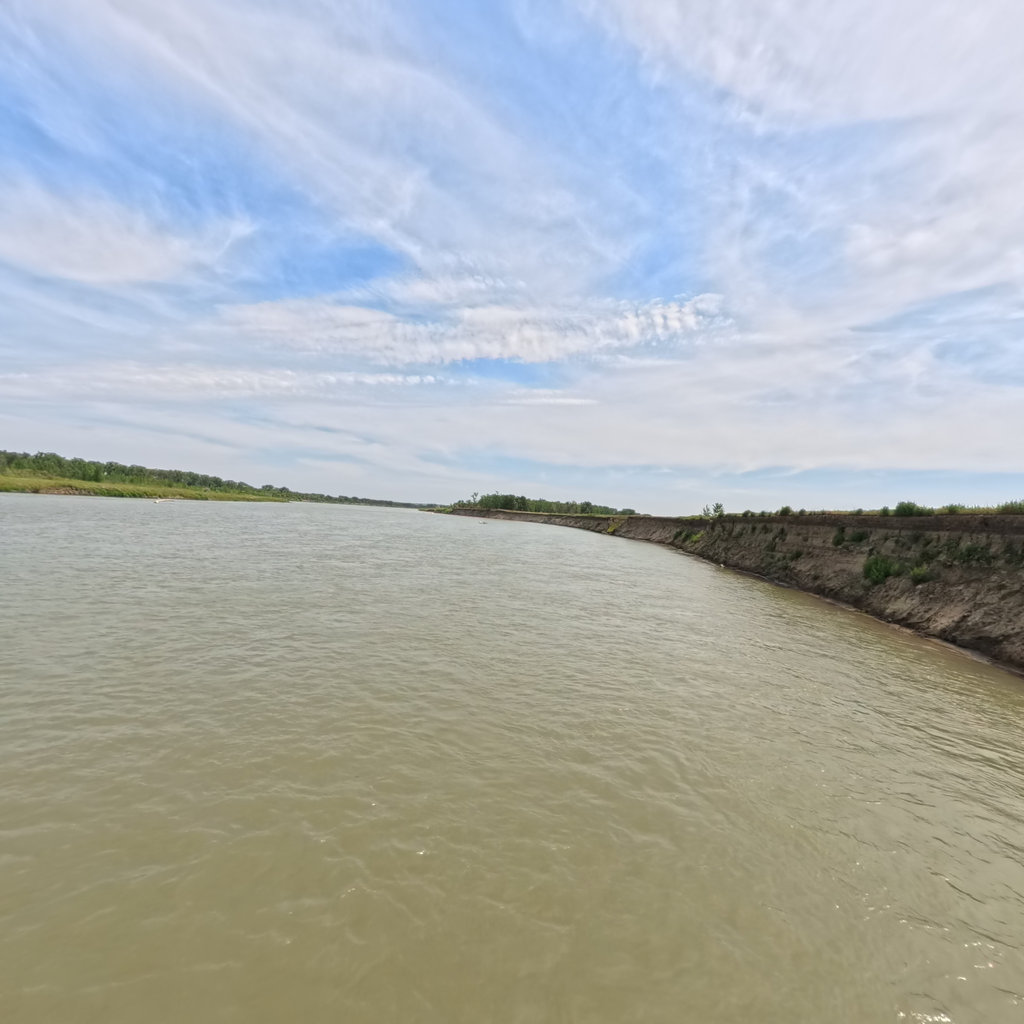
On a frigid morning with ice forming on water and snow still on the hills, the party set out late under strong west winds. They passed a tall bundle of bushes thought to be an Indian offering. Clark killed an elk for dinner, then continued ashore. The expedition named two waterways: Porcupine River, a clear 40-yard-wide stream Lewis speculated might reach near the Saskatchewan, and 2000 Mile Creek. They observed abundant game, lower hills, a wide river valley, and Clark spotted distant mountains to the northwest before camping on the starboard shore.
Friday May 3rd 1805. The morning being very could we did not set out as
early as usual; ice formed on a kettle of water 1/4 of an inch thick. the
snow has melted generally in the bottoms, but the hills still remain
covered. on the lard side at the distance of 2 miles we passed a curious
collection of bushes which had been tyed up in the form of a faciene and
standing on end in the open bottom it appeared to be about 30 feet high
and ten or twelve feet in diameter, this we supposed to have been placed
there by the Indians, as a sacrefice for some purpose. The wind continued
to blow hard from the West but not so strong as to compel us to ly by.
Capt. Clark walked on shore and killed an Elk which he caused to be
butched by the time I arrived with the party, here we halted and dined
being about 12 OCk. our usual time of halting for that purpose. after
dinner Capt. Clark pursued his walk, while I continued with the party, it
being a rule which we had established, never to be absent at the same time
from the party. the plains or high lands are much less elivated than they
were, not being more than from 50 to 60 feet above the river bottom, which
is also wider than usual being from 5 to 9 ms. in width; traces of the
ancient beds of the river are visible in many places through the whole
extent of this valley. since the hills have become lower the appearance of
the stratas of coal burnt hills and pumice stone have in a great measure
ceased; I saw none today. we saw vast quantities of Buffaloe, Elk, deer
principally of the long tale kind, Antelope or goats, beaver, geese,
ducks, brant and some swan. near the entrance of the river mentioned in
the 10th course of this day, we saw an unusual number of Porcupines from
which we determined to call the river after that anamal, and accordingly
denominated it Porcupine river. this stream discharges itself into the
Missouri on the Stard. side 2000 miles above the mouth of the latter, it
is a beatifull bold runing stream, 40 yards wide at it’s entrance; the
water is transparent, it being the first of this discription that I have
yet seen discharge itself into the Missouri; before it enters a large sand
bar through which it discharges itself into the missouri it’s banks and
bottom are formed of a stiff blue and black clay; it appears to be
navigable for canoes and perogues at this time and I have no doubt but it
might be navigated with boats of a considerable size in high water. it’s
banks appear to be from 8 to ten feet high and seldom overflow; from the
quantity of water furnished by this river, the appearance of the country,
the direction it pursues, and the situation of it’s entrance, I have but
little doubt but it takes it’s source not far from the main body of the
Suskashawan river, and that it is probably navigable 150 miles; perhaps
not very distant from that river. should this be the case, it would afford
a very favorable communication to the Athebaskay country, from whence the
British N. W. Company derive so large a portion of their valuable furs.Capt.
Clark who ascended this river several miles and passed it above where it
entered the hills informed me on his return that he found the general
width of the bed of the river about one hundred yards, where he passed the
river the bed was 112 yards wide, the water was knee deep and 38 yard in
width; the river which he could observe from the rising grounds for about
20 miles, bore a little to the East of North. there was a considerable
portion of timber in the bottom lands of this river. Capt Clark also met
with limestone on the surface of the earth in the course of his walk. he
also saw a range of low mountains at a distance to the W of N , their
direction being N. W. the country in the neighborhood of this river, and
as far as the eye can reach, is level, fertile, open and beatifull beyond
discription. 1/4 of a mile above the entrance of this river a large creek
falls in which we called 2000 mile creek. I sent Rubin Fields to examine
it, he reported it to be a bold runing stream, it’s bed 30 yards wide. we
proceeded about 3 miles abov this creek and encamped on the Stard. shore.
I walked out a little distance and met with 2 porcupines which were
feeding on the young willow which grow in great abundance on all the
sandbars; this anamal is exceedingly clumsy and not very watchfull I
approached so near one of them before it percieved me that I touched it
with my espontoon.found the nest of a wild goose among some
driftwood in the river from which we took three eggs. this is the only
nest we have met with on driftwood, the usual position is the top of a
broken tree, sometimes in the forks of a large tree but almost invariably,
from 15 to 20 feet or upwards high.-
Read this entry in modern English AI-translated
Friday, May 3rd, 1805. The morning being very cold, we did not set out as early as usual; ice formed on a kettle of water a quarter of an inch thick. The snow has generally melted in the bottoms, but the hills still remain covered. On the larboard side, at a distance of 2 miles, we passed a curious collection of bushes which had been tied up in the form of a fascine and standing on end in the open bottom. It appeared to be about 30 feet high and ten or twelve feet in diameter. We supposed this to have been placed there by the Indians as a sacrifice for some purpose. The wind continued to blow hard from the west, but not so strong as to compel us to lie by.
Capt. Clark walked on shore and killed an elk, which he had butchered by the time I arrived with the party. Here we halted and dined, being about 12 o'clock, our usual time for halting for that purpose. After dinner, Capt. Clark continued his walk while I stayed with the party, it being a rule we had established never to be absent from the party at the same time.
The plains or highlands are much less elevated than they were, not being more than 50 to 60 feet above the river bottom, which is also wider than usual, being from 5 to 9 miles in width. Traces of the ancient beds of the river are visible in many places throughout the whole extent of this valley. Since the hills have become lower, the appearance of the strata of coal, burnt hills, and pumice stone have largely ceased; I saw none today. We saw vast quantities of buffalo, elk, deer (principally of the long-tailed kind), antelope or goats, beaver, geese, ducks, brant, and some swan.
Near the entrance of the river mentioned in the 10th course of this day, we saw an unusual number of porcupines, from which we decided to name the river after that animal, and accordingly called it Porcupine River. This stream discharges itself into the Missouri on the starboard side, 2000 miles above the mouth of the latter. It is a beautiful, bold-running stream, 40 yards wide at its entrance. The water is transparent, it being the first of this description that I have yet seen discharge itself into the Missouri. Before it enters a large sandbar through which it flows into the Missouri, its banks and bottom are formed of a stiff blue and black clay. It appears to be navigable for canoes and pirogues at this time, and I have no doubt that it might be navigated with boats of a considerable size in high water. Its banks appear to be from 8 to 10 feet high and seldom overflow.
From the quantity of water furnished by this river, the appearance of the country, the direction it pursues, and the situation of its entrance, I have little doubt that it takes its source not far from the main body of the Saskatchewan River, and that it is probably navigable for 150 miles—perhaps not very distant from that river. Should this be the case, it would afford a very favorable means of communication to the Athabasca country, from which the British N. W. Company derives so large a portion of their valuable furs.
Capt. Clark, who ascended this river several miles and passed it above where it entered the hills, informed me on his return that he found the general width of the bed of the river about one hundred yards. Where he crossed the river, the bed was 112 yards wide, the water was knee-deep and 38 yards in width. The river, which he could observe from the rising grounds for about 20 miles, bore a little to the east of north. There was a considerable amount of timber in the bottomlands of this river. Capt. Clark also encountered limestone on the surface of the earth during his walk. He also saw a range of low mountains in the distance to the west of north, their direction being northwest. The country in the neighborhood of this river, as far as the eye can reach, is level, fertile, open, and beautiful beyond description.
A quarter of a mile above the entrance of this river, a large creek falls in, which we called 2000 Mile Creek. I sent Reuben Fields to examine it, and he reported it to be a bold-running stream, its bed 30 yards wide. We proceeded about 3 miles above this creek and camped on the starboard shore. I walked out a little distance and met with 2 porcupines feeding on the young willow which grows in great abundance on all the sandbars. This animal is exceedingly clumsy and not very watchful; I approached so near one of them before it perceived me that I touched it with my espontoon.
Found the nest of a wild goose among some driftwood in the river, from which we took three eggs. This is the only nest we have met with on driftwood; the usual position is the top of a broken tree, sometimes in the forks of a large tree, but almost invariably from 15 to 20 feet or upwards high.
This modernization is AI-generated for accessibility. The original above is the authoritative version.
Entities mentioned in this entry
Auto-extracted from the entry text. Hover any entity for context.