Columbia River tidewater, approaching estuary — Patrick Gass: November 3, 1805
went out and killed a fine buck. At 9 we proceeded on, but
could not see the country we were passing on account of the
fog, which was very thick till noon when it disappeared, and
we had a beautiful day. We at that time came to the mouth
of a river on the south side, a quarter of a mile broad, but
not more than 6 or 8 inches deep, running over a bar of
quicksand. At this place we dined on venison and goose;
and from which we can see the high point of a mountain cov-
ered with snow, in about a southeast direction from us. Our
Commanding Officers are of opinion that it is Mount Hood,
discovered by a lieutenant of Vancoover, who was up this
river 75 miles. The river that falls in here has two mouths,
through which it drives out a considerable quantity of sand
into the Columbia. Opposite the lower mouth there is a
handsome island. At 2 o’clock we proceeded on and passed
another island. The country on both sides appears level and
closely timbered: on the river the timber is cotton wood,
maple and some ash; and back from it mostly spruce pine.
We made 13 miles and encamped on a large island, in which
is a large pond full of swans, geese and ducks. On our way
and here we killed some of each kind. At night Captain
Lewis had a small canoe carried over to the pond in order to
hunt by moon light, but the party did not happen to have
good luck, having killed only a swan and three ducks.
LEWIS AND CLARK EXPEDITION _ 169
CHAP. XV.
ONDAY 4th. A fine morning. We embarked early;
passed two large islands, and a beautiful part of the
river. The tide raised the water last night two feet. We
went about 7 miles and came to a large Indian village, where
they informed us that in two days we would come to two ships
with white people in them. The Indians here have a great
deal of new cloth among them, and other articles which they
got from these ships. We got some dogs and roots from the
natives. The roots are of a superior quality to any I had
before seen: they are called whapto; resemble a potatoe when
cooked, and are about as big as a hen egg. Game is more
plenty here than up the river, and one of the men killed a
deer this morning. At this camp of the natives they have 52
canoes, well calculated for riding waves. We proceeded on,
and passed some handsome islands, and down a beautiful part
of the river. We also passed a number of Indian lodges:
and saw a great many swans, geese, ducks, cranes, and gulls.
We went 28 miles and encamped on the north side. In the
evening we saw Mount Rainy on the same side. It is a hand-
some point of a mountain with little or no timber on it, very
high, and a considerable distance off this place.
Entities mentioned in this entry
Auto-extracted from the entry text. Hover any entity for context.
Terrain360 · the place today
Columbia River tidewater, approaching estuary in 360°
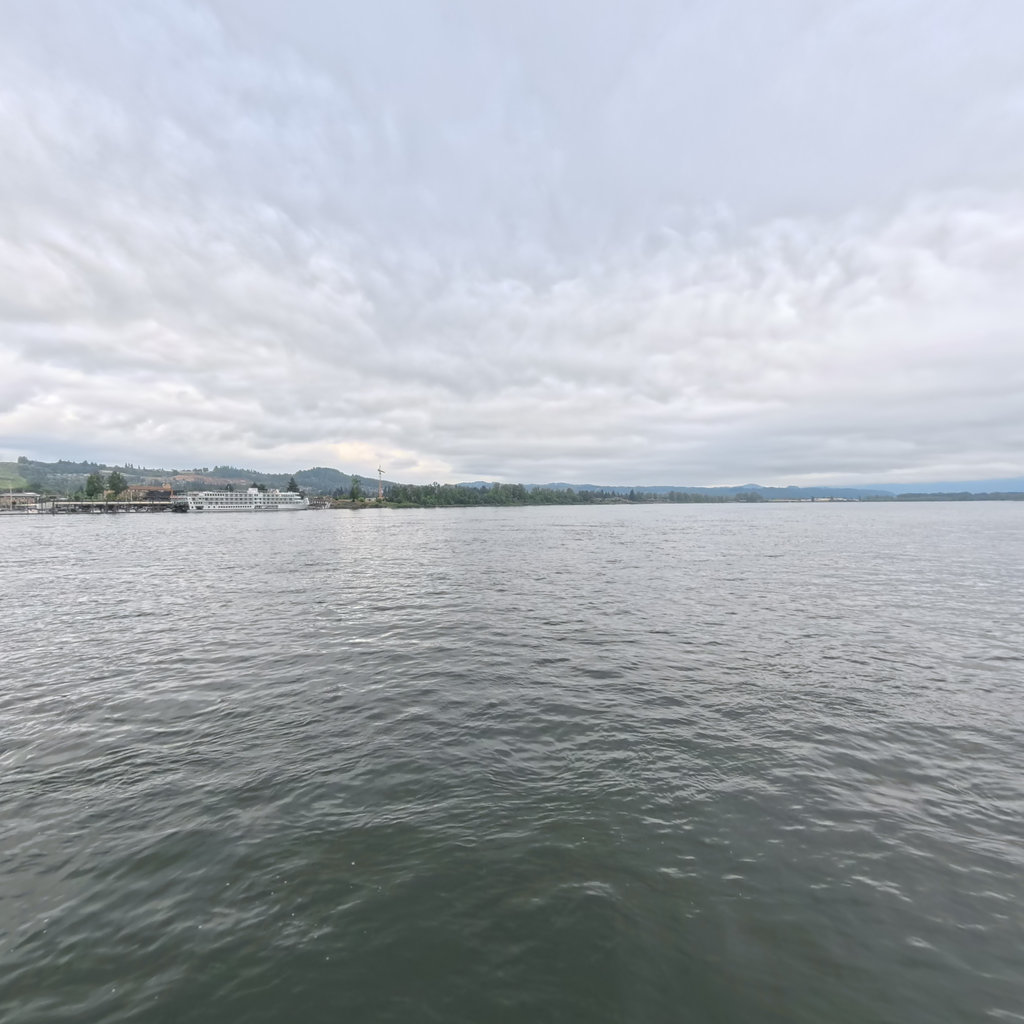
10 frames across 1.5 mi of the route around this location
Help improve this record
See something that needs correcting, or know a source we are missing? The archive gets better through its readers.


