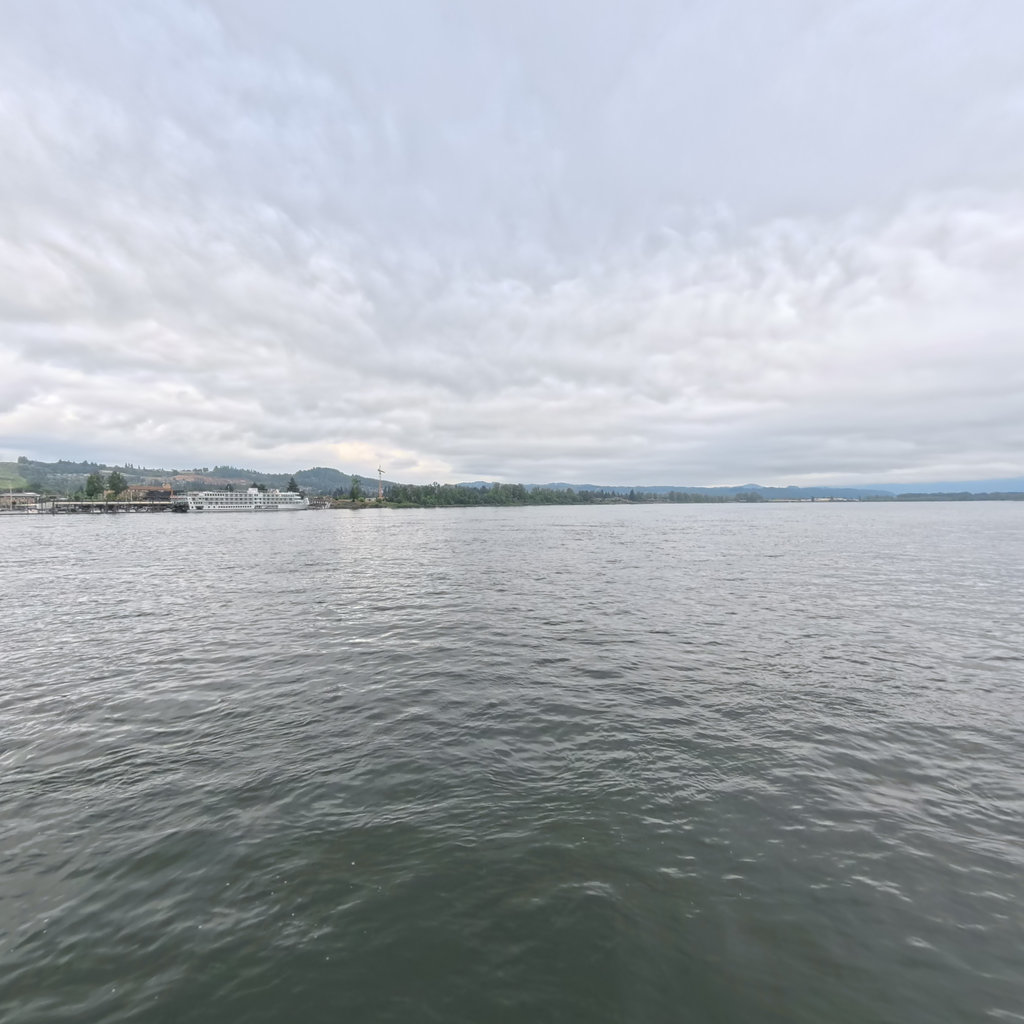
Clark: November 4, 1805
On a cool, cloudy Monday with a west wind, the expedition set out at 8:30 a.m. and stopped at a Skilloot village of 25 houses and roughly 200 people on the Columbia River. The villagers, who practiced head-flattening, shared a roasted root called wapato, which the party purchased about four bushels of. The Indians possessed many European goods, including muskets, sailor jackets, and hats. During dinner, they stole Clark's pipe tomahawk and an interpreter's coat. The party glimpsed snow-covered Mount St. Helens to the northeast, killed a deer and several birds, traveled 29 miles, and camped near troublesome locals.
Novr. 4th Monday 1805 A Cloudy Cool morning, wind West, we Set out at 1/2
past 8 oClock having dispatched 4 men in the Small canoe to hunt
(Those people men & women heads are flat)
We landed at a village 200 men of Flatheads of 25 houses 50 canoes built
of Straw, we were treated verry kindly by them, they gave us round root
near the Size of a hens egg roasted which they call Wap-to to eate
I walked out on the Stard. Side found the country fine, an open Prarie for
1 mile back of which the wood land comence riseing back, the timber on the
edge of the Prarie is white oke, back is Spruce pine & other Species
of Pine mixed Some under groth of a wild crab & a Specis of wood I’m
not acquainted, a Specis of maple & Cotton wood grow near this river,
Some low bushes
Indians continue to be with us, Several Canoes Continue with us, The
Indians at the last village have more Cloth and uriopian trinkets than
above I Saw Some Guns, a Sword, maney Powder flasks, Salers jackets,
overalls, hats & Shirts, Copper and Brass trinkets with few Beeds
only. dureing the time I was at Dinner the Indians Stold my tomahawk which
I made use of to Smoke I Serched but Could not find it, a Pond on the
Stard Side, off from the river. Raspberries and ____ are also in the
bottomsmet a large and Small canoe with 12 men from below the men
were dressed with a variety of articles of European manufactory the large
Canoe had emeges on the bow & Stern handsomly Carved in wood &
painted with the figur of a Bear in front & man in a Stern. Saw white
geese with black wingsSaw a Small Crab-apple with all the taste
& flavor of the CommonThose Indians were all armed with Pistols
or bows and arrows ready Sprung war axes &c.
Mount Hellen bears N. 25° E about 80 miles, this is the mountain we Saw
near the foks of this river. it is emensely high and covered with Snow,
riseing in a kind of Cone perhaps the highest pinecal from the common
leavel in america passed a village of 4 hs. on the Stard Side at 2 mils,
one at 3 mls.
One deer 2 Ducks & Brant killed
—
November 4th Monday 1805 A cloudy cool morning wind from the West we Set
out at 1/2 past 8 oClock, one man Shannon Set out early to walk on the
Island to kill Something, he joined us at the lower point with a Buck.
This Island is 6 miles long and near 3 miles wide thinly timbered (Tide
rose last night 18 inches perpndicular at Camp) near the lower point of
this dimond Island is The head of a large Island Seperated from a Small
one by a narrow chanel, and both Situated nearest the Lard Side, those
Islands as also the bottoms are thickly Covered with Pine &c. river
wide, Country low on both Sides; on the Main Lard Shore a Short distance
below the last Island we landed at a village of 25 Houses; 24 of those
houses were thached with Straw, and covered with bark, the other House is
built of boards in the form of those above, except that it is above ground
and about 50 feet in length and covered with broad Split boards This
village contains about 200 men of the Skil-loot nation I counted 52 canoes
on the bank in front of this village maney of them verry large and raised
in bow. we recognised the man who over took us last night, he invited us
to a lodge in which he had Some part and gave us a roundish roots about
the Size of a Small Irish potato which they roasted in the embers until
they became Soft, This root they call Wap-pa-to which the Bulb of the
Chinese cultivate in great quantities called the Sa-git ti folia or common
arrow head-. it has an agreeable taste and answers verry well in place of
bread. we purchased about 4 bushels of this root and divided it to our
party, at 7 miles below this village passed the upper point of a large
Island nearest the Lard Side, a Small Prarie in which there is a pond
opposit on the Stard. here I landed and walked on Shore, about 3 miles a
fine open Prarie for about 1 mile, back of which the countrey rises
gradually and wood land comencies Such as white oake, pine of different
kinds, wild crabs with the taste and flavour of the common crab and
Several Species of undergroth of which I am not acquainted, a few
Cottonwood trees & the Ash of this countrey grow Scattered on the
river bank, Saw Some Elk and Deer Sign and Joined Capt. Lewis at a place
he had landed with the party for Diner. Soon after Several Canoes of
Indians from the village above came down dressed for the purpose as I
Supposed of Paying us a friendly visit, they had Scarlet & blue
blankets Salors jackets, overalls, Shirts and Hats independant of their
Usial dress; the most of them had either war axes Spears or Bows Sprung
with quivers of arrows, Muskets or pistols, and tin flasks to hold their
powder; Those fellows we found assumeing and disagreeable, however we
Smoked with them and treated them with every attention & friendship.
dureing the time we were at dinner those fellows Stold my pipe Tomahawk
which They were Smoking with, I imediately Serched every man and the
canoes, but Could find nothing of my Tomahawk, while Serching for the
Tomahawk one of those Scoundals Stole a Cappoe of one of our interpreters,
which was found Stufed under the root of a treer, near the place they Sat,
we became much displeased with those fellows, which they discovered and
moved off on their return home to their village, except 2 canoes which had
passed on downwe proceeded on met a large & a Small Canoe from
below, with 12 men the large Canoe was ornimented with Images carved in
wood the figures of a Bear in front & a man in Stern, Painted &
fixed verry netely on the of the Canoe, rising to near the hight of a man
two Indians verry finely Dressed & with hats on was in this canoe
passed the lower point of the Island which is nine miles in length haveing
passed 2 Islands on the Stard Side of this large Island, three Small
Islands at its lower point. the Indians make Signs that a village is
Situated back of those Islands on the Lard. Side and I believe that a
Chanel is Still on the Lrd, Side as a Canoe passed in between the Small
Islands, and made Signs that way, probably to traffick with Some of the
nativs liveing on another Chanel, at 3 miles lower, and 12 Leagues below
quick Sand river passed a village of four large houses on The Lard. Side,
near which we had a full view of Mt. Helien which is perhaps the highest
pinical in America from their base it bears N. 25° E about 90 milesThis
is the mountain I Saw from the Muscle Shell rapid on the 19th of October
last Covered with Snow, it rises Something in the form of a Sugar lofeabout
a mile lower passed a Single house on the Lard. Side, and one on the
Stard. Side, passed a village on each Side and Camped near a house on the
Stard. Side we proceeded on untill one hour after dark with a view to get
clear of the nativs who was constantly about us, and troublesom, finding
that we could not get Shut of those people for one night, we landed and
Encamped on the Stard. Side Soon after 2 canoes Came to us loaded with
Indians, we purchased a fiew roots of them.
This evening we Saw vines much resembling the raspberry which is verry
thick in the bottoms. A range of high hills at about 5 miles on the Lard
Side which runs S. E. & N W. Covered with tall timber the bottoms
below in this range of hills and the river is rich and leavel, Saw White
geese with a part of their wings black. The river here is 11/2 miles wide,
and current jentle. opposit to our camp on a Small Sandy Island the brant
& geese make Such a noise that it will be impossible for me to Sleap.
we made 29 miles to day Killed a Deer and Several brant and ducks. I Saw a
Brarow tamed at the 1st village to day The Indians which we have passd to
day of the Scil-loot nation in their language from those near & about
the long narrows of the Che-luc-it-te-quar or E-chee-lute, their dress
differ but little, except they have more of the articles precured from the
white traders, they all have flatened heads both men and women, live
principally on fish and Wap pa toe roots, they also kill Some fiew Elk and
Deer, dureing the Short time I remained in their village they brought in
three Deer which they had killed with their Bow & arrows. They are
thievishly inclined as we have experienced.
Read this entry in modern English AI-translated
November 4th, Monday 1805. A cloudy, cool morning, wind from the West. We set out at 8:30, having dispatched 4 men in the small canoe to hunt. (These people, men and women, have flat heads.)
We landed at a village of 200 men of Flatheads, with 25 houses and 50 canoes, built of straw. We were treated very kindly by them. They gave us a round root, near the size of a hen's egg, roasted, which they call Wap-to, to eat.
I walked out on the starboard side and found the country fine, an open prairie for 1 mile, behind which the woodland begins, rising back. The timber on the edge of the prairie is white oak; further back is spruce pine and other species of pine mixed, with some undergrowth of a wild crab and a species of wood I am not acquainted with. A species of maple and cottonwood grow near this river, with some low bushes.
Indians continue to be with us; several canoes continue with us. The Indians at the last village have more cloth and European trinkets than those above. I saw some guns, a sword, many powder flasks, sailors' jackets, overalls, hats and shirts, copper and brass trinkets, with only a few beads. During the time I was at dinner, the Indians stole my tomahawk, which I had been using to smoke. I searched but could not find it. There is a pond on the starboard side, off from the river. Raspberries and ____ are also in the bottoms. We met a large and a small canoe with 12 men from below; the men were dressed with a variety of articles of European manufacture. The large canoe had images on the bow and stern handsomely carved in wood and painted, with the figure of a bear in front and a man in the stern. Saw white geese with black wings. Saw a small crab apple with all the taste and flavor of the common one. These Indians were all armed with pistols or bows and arrows ready strung, war axes, etc.
Mount Helen (Mount St. Helens) bears N. 25° E about 80 miles. This is the mountain we saw near the forks of this river. It is immensely high and covered with snow, rising in a kind of cone, perhaps the highest pinnacle from the common level in America. Passed a village of 4 houses on the starboard side at 2 miles, one at 3 miles.
One deer, 2 ducks, and brant killed.
November 4th, Monday 1805. A cloudy, cool morning, wind from the West. We set out at 8:30. One man, Shannon, set out early to walk on the island to kill something; he joined us at the lower point with a buck. This island is 6 miles long and near 3 miles wide, thinly timbered. (The tide rose last night 18 inches perpendicular at camp.) Near the lower point of this Diamond Island is the head of a large island, separated from a small one by a narrow channel, both situated nearest the larboard side. These islands, as well as the bottoms, are thickly covered with pine, etc. The river is wide and the country low on both sides.
On the main larboard shore, a short distance below the last island, we landed at a village of 25 houses. 24 of these houses were thatched with straw and covered with bark; the other house is built of boards in the form of those above, except that it is above ground and about 50 feet in length and covered with broad split boards. This village contains about 200 men of the Skilloot nation. I counted 52 canoes on the bank in front of this village, many of them very large and raised at the bow. We recognized the man who overtook us last night; he invited us to a lodge in which he had some part and gave us roundish roots about the size of a small Irish potato, which they roasted in the embers until they became soft. This root they call Wap-pa-to, which is the bulb the Chinese cultivate in great quantities, called the Sagittifolia or common arrowhead. It has an agreeable taste and serves very well in place of bread. We purchased about 4 bushels of this root and divided it among our party.
At 7 miles below this village we passed the upper point of a large island nearest the larboard side, with a small prairie in which there is a pond opposite on the starboard. Here I landed and walked on shore. For about 3 miles there is a fine open prairie for about 1 mile, behind which the country rises gradually and woodland begins, such as white oak, pine of different kinds, wild crabs with the taste and flavor of the common crab, and several species of undergrowth I am not acquainted with. A few cottonwood trees and the ash of this country grow scattered on the river bank. I saw some elk and deer sign and joined Capt. Lewis (Capt. Lewis) at a place he had landed with the party for dinner.
Soon after, several canoes of Indians from the village above came down, dressed for the purpose, as I supposed, of paying us a friendly visit. They had scarlet and blue blankets, sailors' jackets, overalls, shirts and hats, in addition to their usual dress. Most of them had either war axes, spears, or bows strung with quivers of arrows, muskets or pistols, and tin flasks to hold their powder. These fellows we found presumptuous and disagreeable; however, we smoked with them and treated them with every attention and friendship.
During the time we were at dinner, those fellows stole my pipe tomahawk, which they had been smoking with. I immediately searched every man and the canoes but could find nothing of my tomahawk. While searching for the tomahawk, one of those scoundrels stole a capote (coat) from one of our interpreters, which was found stuffed under the root of a tree near the place where they sat. We became much displeased with these fellows, which they noticed, and they moved off to return home to their village, except 2 canoes which had passed on down.
We proceeded on and met a large and a small canoe from below, with 12 men. The large canoe was ornamented with images carved in wood, the figures of a bear in front and a man in the stern, painted and fixed very neatly on the canoe, rising to near the height of a man. Two Indians very finely dressed and with hats on were in this canoe. Passed the lower point of the island, which is nine miles in length, having passed 2 islands on the starboard side of this large island, and three small islands at its lower point. The Indians make signs that a village is situated back of these islands on the larboard side, and I believe that a channel is still on the larboard side, as a canoe passed in between the small islands and made signs that way, probably to trade with some of the natives living on another channel.
At 3 miles lower, and 12 leagues below Quicksand River, we passed a village of four large houses on the larboard side, near which we had a full view of Mt. Helien (Mount St. Helens), which is perhaps the highest pinnacle in America from its base. It bears N. 25° E about 90 miles. This is the mountain I saw from the Muscle Shell Rapid on the 19th of October last, covered with snow. It rises something in the form of a sugar loaf. About a mile lower we passed a single house on the larboard side and one on the starboard side, passed a village on each side, and camped near a house on the starboard side. We proceeded on until one hour after dark with a view to get clear of the natives, who were constantly about us and troublesome. Finding that we could not get rid of those people for one night, we landed and encamped on the starboard side. Soon after, 2 canoes came to us loaded with Indians; we purchased a few roots from them.
This evening we saw vines much resembling the raspberry, which are very thick in the bottoms. A range of high hills lies about 5 miles on the larboard side, running S.E. and N.W., covered with tall timber. The bottoms below this range of hills and the river are rich and level. Saw white geese with part of their wings black. The river here is 1 1/2 miles wide, with a gentle current. Opposite our camp, on a small sandy island, the brant and geese make such a noise that it will be impossible for me to sleep. We made 29 miles today, killed a deer and several brant and ducks. I saw a tamed badger at the first village today.
The Indians we passed today are of the Scilloot nation, in their language from those near and about the Long Narrows, called the Cheluciteequar or Echeelute. Their dress differs but little, except they have more of the articles procured from the white traders. They all have flattened heads, both men and women. They live principally on fish and Wappato roots; they also kill some few elk and deer. During the short time I remained in their village, they brought in three deer which they had killed with their bows and arrows. They are inclined to thievery, as we have experienced.
This modernization is AI-generated for accessibility. The original above is the authoritative version.
Entities mentioned in this entry
Auto-extracted from the entry text. Hover any entity for context.