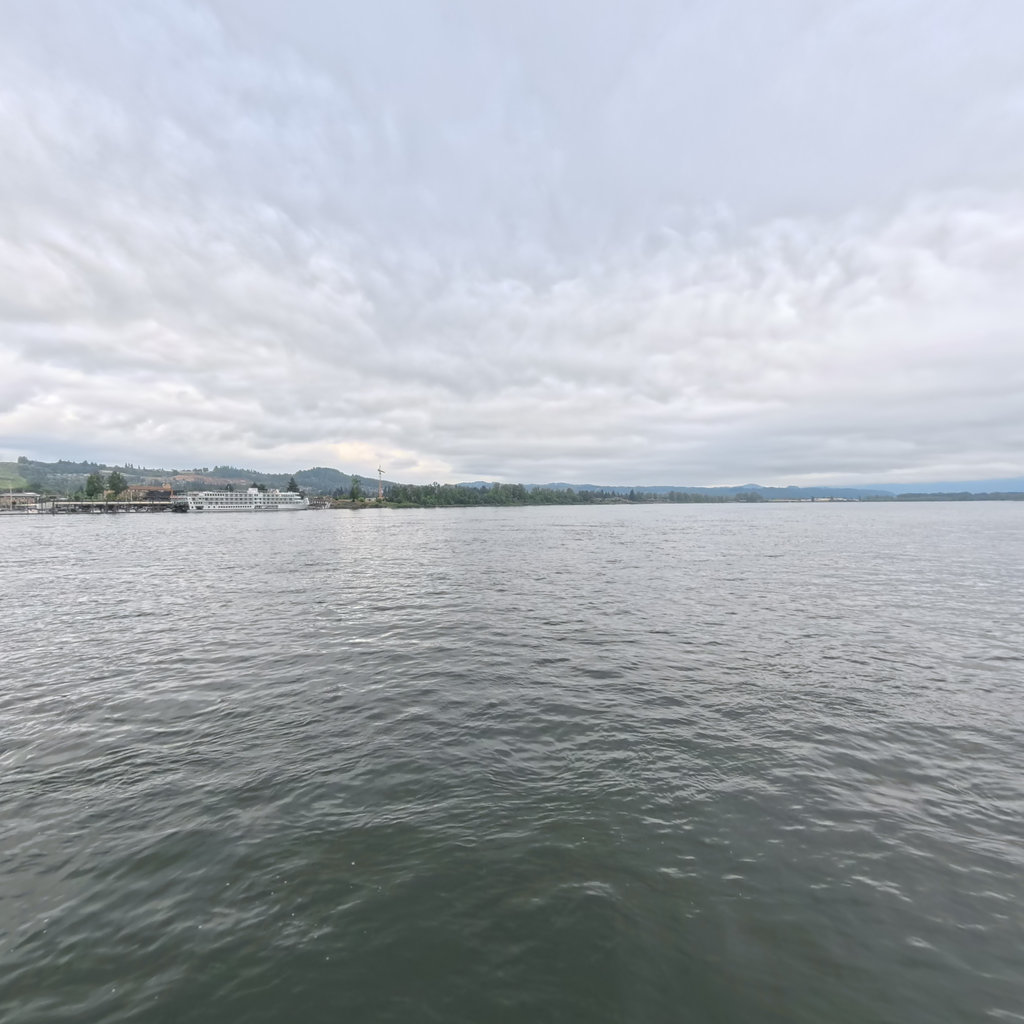
Clark: November 5, 1805
On a cloudy, rainy day along the Columbia River, the expedition set out at sunrise after a sleepless night caused by the deafening noise of swans, geese, brant, ducks, and sandhill cranes on a nearby sand island. They passed Indian houses and a large village of 14 connected houses, where seven canoes of friendly natives came out to trade. Hunters killed brant, ducks, a swan, a pheasant, and a grouse. Clark observed 17 striped snakes and noted the fertile valley, which he named Wappaloo. They camped wet and cold on the larboard side after about 32 miles.
Novr. 5th Tuesday 1805 a Cloudy morning Som rain the after part of last
night & this morning. I could not Sleep for the noise kept by the
Swans, Geese, white & black brant, Ducks &c. on a opposit base,
& Sand hill Crane, they were emensely numerous and their noise horrid.
We Set out at Sun rise & our hunters killed 10 Brant 4 of which were
white with black wings 2 Ducks, and a Swan which were divided, we Came too
and Encamped on the Lard. Side under a high ridgey land, the high land
come to the river on each Side. the river about 11/2 mile wide. those high
lands rise gradually from the river & bottomswe are all wet
Cold and disagreeable, rain Continues & encreases. I killed a Pheasent
which is very fatmy feet and legs cold. I saw 17 Snakes to day on a
Island, but little appearance of Frost at this place.
—
November 5th Tuesday 1805 Rained all the after part of last night, rain
continues this morning, I slept but verry little last night for the noise
Kept dureing the whole of the night by the Swans, Geese, white & Grey
Brant Ducks &c. on a Small Sand Island close under the Lard. Side;
they were emensely noumerous, and their noise horidwe Set out early
here the river is not more than 3/4 of a mile in width, passed a Small
Prarie on the Stard. Side passed 2 houses about 1/2 a mile from each other
on the Lard. Side a Canoe came from the upper house, with 3 men in it
mearly to view us, passed an Isld. Covered with tall trees & green
briers Seperated from the Stard. Shore by a narrow Chanel at 9 miles I
observed on the Chanel which passes on the Stard Side of this Island a
Short distance above its lower point is Situated a large village, the
front of which occupies nearly 1/4 of a mile fronting the Chanel, and
closely Connected, I counted 14 houses in front here the river widens to
about 11/2 miles. Seven canoes of Indians came out from this large village
to view and trade with us, they appeared orderly and well disposed, they
accompanied us a fiew miles and returned back. about 111/2 miles below
this village on the Lard Side behind a rockey Sharp point, we passed a
Chanel 1/4 of a mile wide, which I take to be the one the Indian Canoe
entered yesterday from the lower point of Immage Canoe Island a Some low
clifts of rocks below this Chanel, a large Island Close under the Stard
Side opposit, and 2 Small Islands, below, here we met 2 canoes from below,below
those Islands a range of high hills form the Stard. Bank of the river, the
Shore bold and rockey, Covered with a thick groth of Pine an extensive low
Island, Seperated from the Lard side by a narrow Chanel, on this Island we
Stoped to Dine I walked out found it open & covered with grass
interspersed with Small ponds, in which was great numbr. of foul, the
remains of an old village on the lower part of this Island, I saw Several
deer our hunters killed on this Island a Swan, 4 white 6 Grey brant &
2 Ducks all of them were divided, below the lower point of this Island a
range of high hills) which runs S. E. forms the Lard. bank of the river
the Shores bold and rockey & hills Covered with pine, The high hills
leave the river on the Stard. Side a high bottom between the hill &
river. We met 4 Canoes of Indians from below, in which there is 26
Indians, one of those Canoes is large, and ornimented with Images on the
bow & Stern. That in the Bow the likeness of a Bear, and in Stern the
picture of a manwe landed on the Lard. Side & camped a little
below the mouth of a creek on the Stard. Side a little below the mouth of
which is an Old Village which is now abandaned-; here the river is about
one and a half miles wide, and deep, The high Hills which run in a N W.
& S E. derection form both banks of the river the Shore boald and
rockey, the hills rise gradually & are Covered with a thick groth of
pine &c. The valley which is from above the mouth of Quick Sand River
to this place may be computed at 60 miles wide on a Derect line, &
extends a great Distanc to the right & left rich thickly Covered with
tall timber, with a fiew Small Praries bordering on the river and on the
Islands; Some fiew Standing Ponds & Several Small Streams of running
water on either Side of the river; This is certainly a fertill and a
handsom valley, at this time Crouded with Indians. The day proved Cloudy
with rain the greater part of it, we are all wet cold and disagreeableI
Saw but little appearance of frost in this valley which we call Wap-pa-loo
Columbia from that root or plants growing Spontaneously in this valley
only In my walk of to Day I saw 17 Striped Snakes I killed a grouse which
was verry fat, and larger than Common. This is the first night which we
have been entirely clear of Indians Since our arrival on the waters of the
Columbia River. We made 32 miles to day by estimation-
Read this entry in modern English AI-translated
November 5th, Tuesday 1805. A cloudy morning, with some rain in the latter part of last night and this morning. I could not sleep because of the noise made by the swans, geese, white and black brant, ducks, etc. on an opposite base, and sandhill cranes; they were immensely numerous, and their noise was horrid. We set out at sunrise, and our hunters killed 10 brant, 4 of which were white with black wings, 2 ducks, and a swan, which were divided. We came to and camped on the larboard side under a high ridgey land. The high land comes to the river on each side. The river is about 1 1/2 miles wide. Those high lands rise gradually from the river and bottoms. We are all wet, cold, and uncomfortable; the rain continues and increases. I killed a pheasant which is very fat. My feet and legs are cold. I saw 17 snakes today on an island, but little appearance of frost at this place.
November 5th, Tuesday 1805. It rained all the latter part of last night, and the rain continues this morning. I slept but very little last night because of the noise kept up the whole night by the swans, geese, white and gray brant, ducks, etc., on a small sand island close under the larboard side. They were immensely numerous, and their noise horrid. We set out early. Here the river is not more than 3/4 of a mile in width. We passed a small prairie on the starboard side, and passed 2 houses about 1/2 a mile from each other on the larboard side. A canoe came from the upper house with 3 men in it, merely to view us. We passed an island covered with tall trees and green briers, separated from the starboard shore by a narrow channel. At 9 miles, I observed on the channel which passes on the starboard side of this island, a short distance above its lower point, a large village. The front of the village occupies nearly 1/4 of a mile fronting the channel, and is closely connected. I counted 14 houses in front. Here the river widens to about 1 1/2 miles. Seven canoes of Indians came out from this large village to view and trade with us. They appeared orderly and well disposed; they accompanied us a few miles and then returned back.
About 11 1/2 miles below this village, on the larboard side behind a rocky sharp point, we passed a channel 1/4 of a mile wide, which I take to be the one the Indian canoe entered yesterday from the lower point of Image Canoe Island. There are some low cliffs of rocks below this channel, a large island close under the starboard side opposite, and 2 small islands below. Here we met 2 canoes from below. Below those islands, a range of high hills forms the starboard bank of the river, the shore bold and rocky, covered with a thick growth of pine. An extensive low island is separated from the larboard side by a narrow channel. On this island we stopped to dine. I walked out and found it open and covered with grass, interspersed with small ponds, in which were a great number of fowl. There are the remains of an old village on the lower part of this island. I saw several deer. Our hunters killed on this island a swan, 4 white and 6 gray brant, and 2 ducks; all of them were divided.
Below the lower point of this island, a range of high hills, which runs SE, forms the larboard bank of the river. The shores are bold and rocky, and the hills covered with pine. The high hills leave the river on the starboard side, with a high bottom between the hills and the river. We met 4 canoes of Indians from below, in which there were 26 Indians. One of those canoes is large, and ornamented with images on the bow and stern. That in the bow is the likeness of a bear, and in the stern the picture of a man. We landed on the larboard side and camped a little below the mouth of a creek on the starboard side, a little below the mouth of which is an old village which is now abandoned. Here the river is about one and a half miles wide, and deep. The high hills, which run in a NW and SE direction, form both banks of the river. The shore is bold and rocky; the hills rise gradually and are covered with a thick growth of pine, etc.
The valley, which is from above the mouth of Quick Sand River to this place, may be computed at 60 miles wide on a direct line, and extends a great distance to the right and left, rich and thickly covered with tall timber, with a few small prairies bordering on the river and on the islands. There are some few standing ponds and several small streams of running water on either side of the river. This is certainly a fertile and handsome valley, at this time crowded with Indians. The day proved cloudy with rain the greater part of it. We are all wet, cold, and uncomfortable. I saw but little appearance of frost in this valley, which we call Wap-pa-loo Columbia, from that root or plant growing spontaneously in this valley only. In my walk today I saw 17 striped snakes. I killed a grouse which was very fat, and larger than common. This is the first night that we have been entirely clear of Indians since our arrival on the waters of the Columbia River. We made 32 miles today by estimation.
This modernization is AI-generated for accessibility. The original above is the authoritative version.
Entities mentioned in this entry
Auto-extracted from the entry text. Hover any entity for context.