
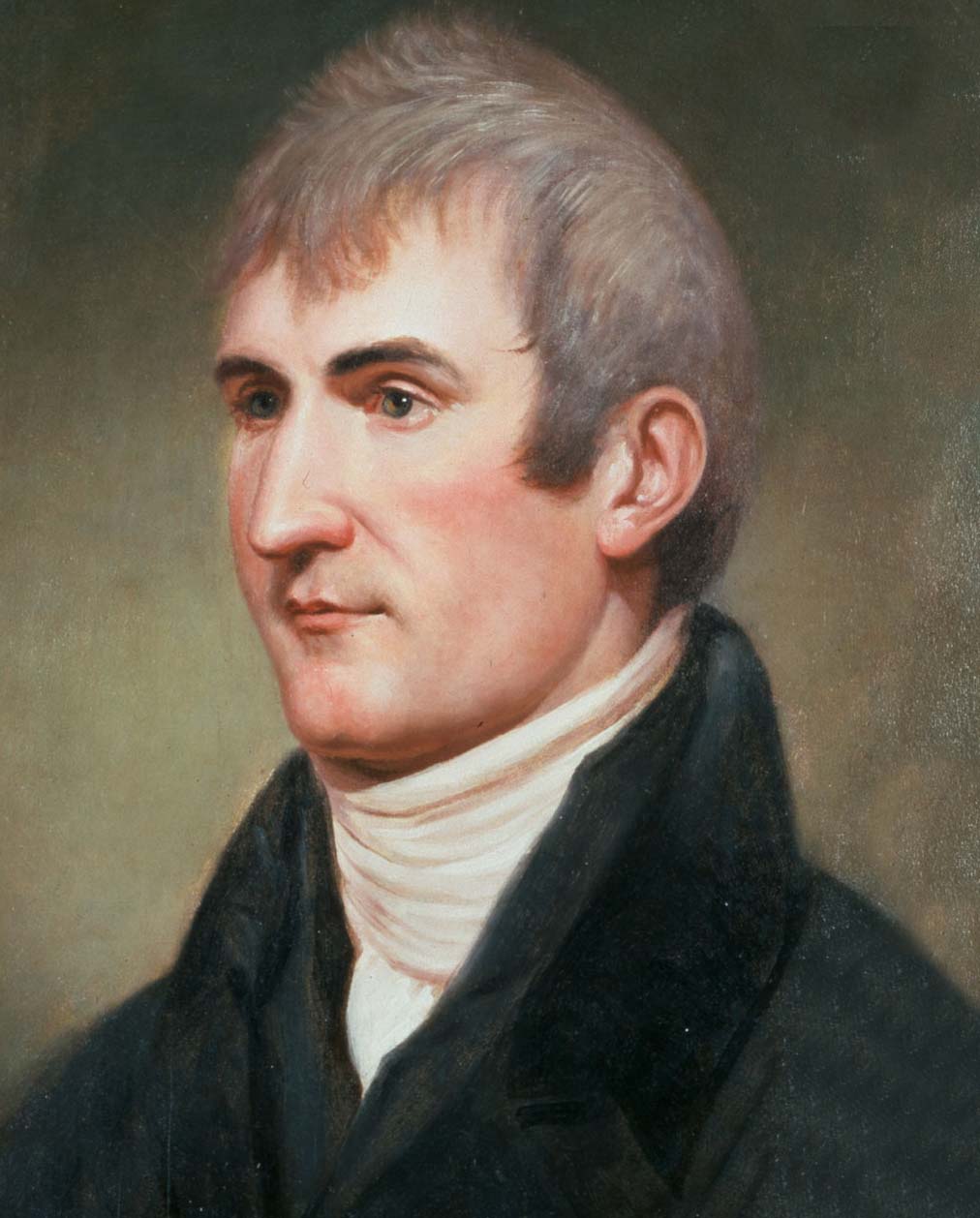

The Corps spent September 10, 1805 in camp at Travelers’ Rest, near present-day Lolo, Montana, while hunters fanned out and the captains took latitude observations. The day’s significance lies less in distance covered than in a single chance encounter — John Colter’s meeting with three Flathead riders — which every narrator records with revealing differences of emphasis and detail.
The Reasons for the Halt
Clark frames the delay practically: the guide reports “that no game is to be found on our rout for a long ways,” so meat must be procured, and the captains use the daylight to take “equal altitudes & Some Inner observations,” fixing latitude at 46° 48′ 28″. Whitehouse echoes the same logic — staying “to take observations, and for the hunters to kill meat to last us across the mountain and for our horses to rest” — and adds the ecological texture none of the others bother with: cottonwood along the creek, choke cherries gathered “in amence quantities” by the natives, elder, willow, serviceberry, and pitch pine on slopes where the snow still “makes them look like the middle of winter.” Gass, briefer, notes the southern peaks “covered with snow and timber” against “prairie hills” to the north, and unlike the others reports the party actually moved roughly twenty miles down the creek — a discrepancy with the captains’ clear statement of a layover that may reflect Gass conflating this entry with the previous day’s travel, or a separate hunting excursion.
The Flathead Encounter, Five Ways
The hunter’s tally illustrates how quickly numbers drifted between journals. Gass records two deer; Ordway and Whitehouse say four deer, a fawn, ducks, and geese; Clark says “4 deer a Beaver & 3 Grouse.” The stolen-horse count varies similarly: Ordway writes 2, Whitehouse 22 (likely a transcription of 2), Lewis 23, Clark 21. The thieves are “Snake” to Ordway, Whitehouse, and Lewis; the pursuers are “flat heads” to the enlisted men and Lewis but “Tushapaw” to Clark — preserving an alternate ethnonym the others drop.
The encounter itself is told most vividly by Lewis:
on first meeting him the Indians were allarmed and prepared for battle with their bows and arrows, but he soon relieved their fears by laying down his gun and advancing towards them.
Ordway and Whitehouse record the same gesture in nearly identical phrasing — “signed to him to lay down his gun he layed it down they then came to him in a friendly manner” (Ordway); “untill he lay down his gun they then came up to him in a friendly manner” (Whitehouse) — a textbook instance of the documented Whitehouse-from-Ordway copying pattern, with Whitehouse expanding rather than altering. Clark alone names the hunter: Colter.
What Only Lewis Preserves
Lewis’s entry is the day’s intelligence document. He alone records the captains’ working geographic hypothesis — that the Bitterroot (which they propose to name “Valley plain river”) runs north along the Rockies and eventually empties into the “Tacootchetessee,” corroborating Hidatsa testimony from the previous winter. He alone notes that Flathead wealth in horses runs “from 20 to a hundred head” per man, and he alone preserves the detail the remaining guide offered about his relations on the Columbia:
some of his relation were at the sea last fall and saw an old whiteman who resided there by himself and who had given them some handkerchiefs such as he saw in our possession.
Whitehouse, by contrast, captures something Lewis does not — the guide’s own admission of the limits of his knowledge: “our guide tells us that these waters runs in to Mackinzees River as near as they can give an account, but he is not acquainted that way. So we go the road he knows.” That single sentence quietly registers how thin the geographic thread had become.
Small Diplomacy
Clark records the gift exchange most fully — “a ring fish hook & tied a pece of ribin in the hare of each” plus Lewis’s gift of “a Steel & a little Powder to make fire” — while Lewis simply notes “a few small articles.” Two Flatheads rode on through the night after their stolen horses; the third stayed on as guide, and with him the Corps acquired both a route through the mountains and the first secondhand report of European contact on the Pacific coast.


