
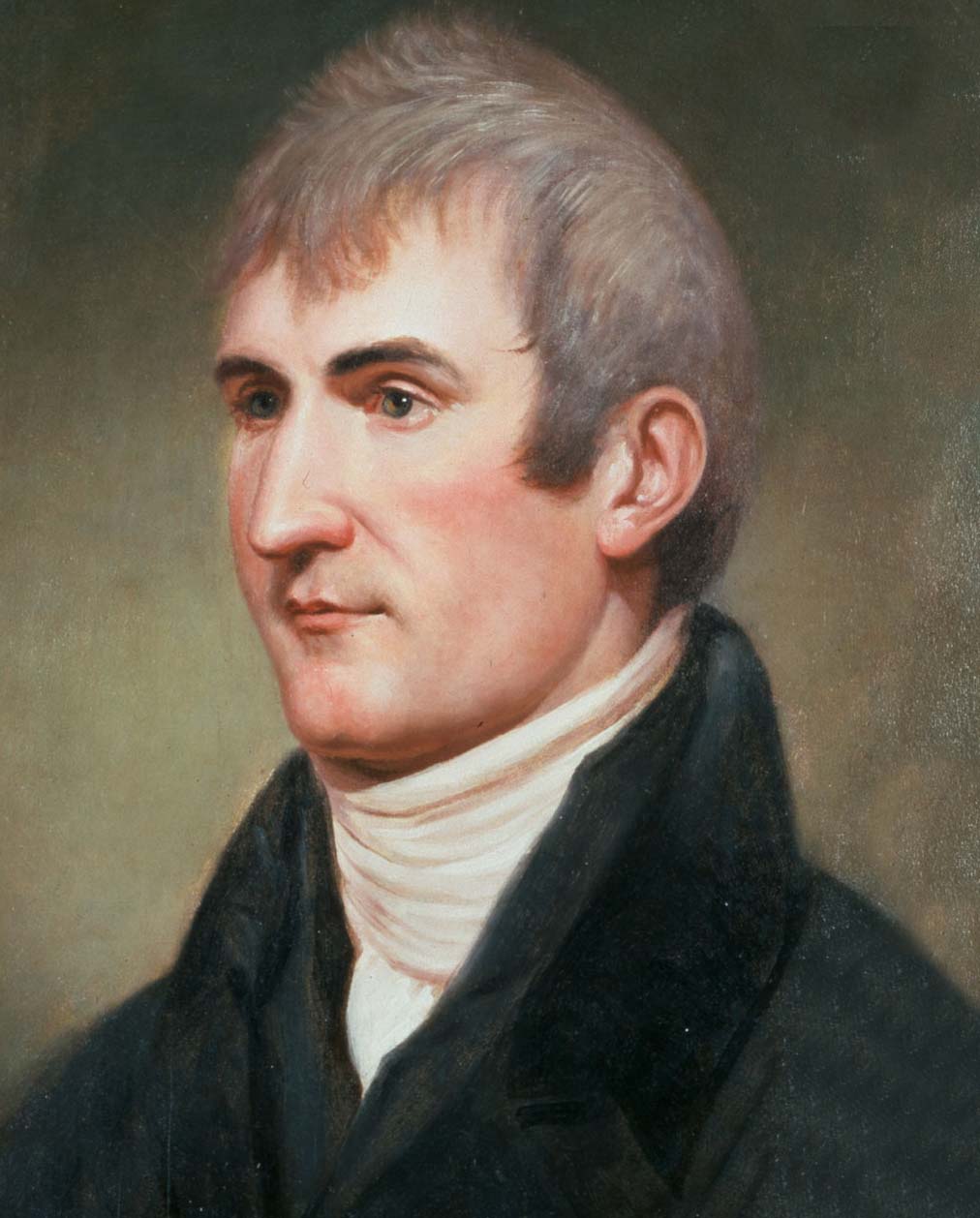


The five entries from June 9, 1805 capture a single camp at the Marias confluence performing two simultaneous operations: a cartographic argument carried on almost entirely inside Meriwether Lewis’s head, and a physical reorganization of the expedition’s load that everyone else describes from the outside. The split between officer reasoning and enlisted observation is unusually sharp on this date.
The Cache and the Cook-Pit
Lewis alone records the decision-making logic and the personnel choice that made the cache possible. He notes that Pierre Cruzatte, the half-Omaha boatman, was the technical authority:
on enquiry I found that Cruzatte was well acquainted this business and therefore left the management of it intirely to him. these holes in the ground or deposits are called by the engages cashes
Ordway, Whitehouse, and Gass all describe the operation but none name Cruzatte. Ordway and Whitehouse use the word “cash” — the engagé term Lewis glosses — suggesting the vocabulary had already passed from the French boatmen into the sergeants’ working speech. Gass alone calls it a “cave,” preserving an Anglophone alternative. Clark splits the difference, writing “cache or Seller.”
The labor accounting is consistent across the enlisted journals: Ordway and Whitehouse both report seven men digging and eight men required to carry in a single buffalo. Whitehouse’s entry tracks Ordway’s so closely — same phrasing, same sequence, same detail of “a light Shower of rain” — that this date adds another instance to the well-documented pattern of Whitehouse drafting from Ordway. Whitehouse’s only independent addition is the terse closing note, “rope works made,” a detail nowhere else in the day’s record.
Lewis Argues, Clark Summarizes
The most striking divergence is between the two captains. Clark gives the decision in two clean sentences of compass bearings:
the Genl. Course of the South fork for 35 miles is S. 29° W. that of the N. fork is N. 69° W. for 59 miles, and as we are North of Fort mandan it is probable the most Southerley fork is the best for us.
Lewis, on the same question, produces a sustained piece of geographical reasoning that runs nearly the full length of his entry. He works through Peter Fidler’s map information, latitude 47°, the transparency of the water at the falls, and the Indians’ report that the falls lay “a little to the South of sunset.” He arrives at Clark’s conclusion by a much longer road. The two entries together show the working division of the captaincy on a major decision day: Clark records the result; Lewis records the argument. Neither could substitute for the other.
Lewis also discloses, almost in passing, what Clark mentions only as a medical aside — “Capt. Lewis a little unwell to day & take Salts.” Lewis himself does not mention his illness. The cross-reference is the only reason a reader knows the man writing the long latitude argument was dosing himself with salts while he wrote.
What Each Narrator Preserves Alone
Gass is the only narrator to record that “The water of the Missouri changed this morning to its former colour” — a botanical and hydrological observation that bears directly on the south-fork argument Lewis is making, since Lewis cites water clarity as evidence. Gass also lists the vegetation on the point: gooseberry, chokecherry, and rabbit berries (buffaloberry). None of the others note plants.
Ordway is the only narrator to specify that the captains “revived the party with a dram” before the dancing began, framing the evening as an officer-issued reward rather than a spontaneous frolic. Whitehouse copies the dram but loses the framing. Clark records the music — “danceing and Singing Songes in the most Social manner” — but omits the liquor. Gass omits the evening entirely.
Clark alone preserves the astronomical work: a meridian altitude of 47° 24′ 29″ and lunar observations for longitude, with a magnetic variation of 15½° east. The latitude figure is the same one Lewis cites rhetorically in his prose argument. Read together, the entries show Lewis using a number Clark had just measured to settle a question Cruzatte was simultaneously digging a hole to commit them to.


