
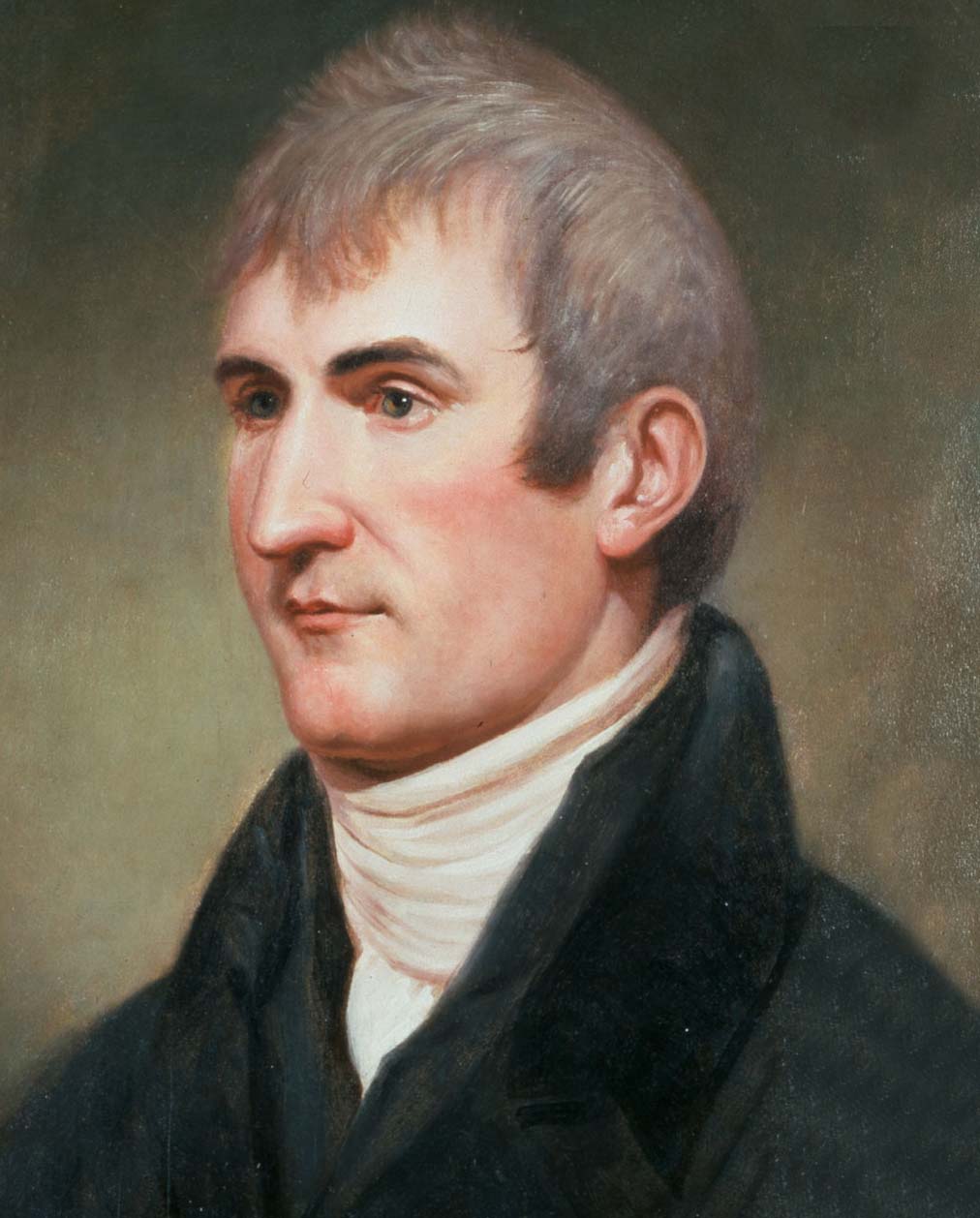


July 27, 1804 marks the Corps of Discovery’s departure from White Catfish Camp, ten miles above the mouth of the Platte, after a multi-day layover spent repairing equipment and preparing for an anticipated council with the Oto. All six narrators log the day, producing one of the richer cross-sectional records of the early Missouri ascent. The bare facts agree: a morning shower, the loading of boat and pirogue, two horses swum across to the southwest bank so hunters could range overland, a 1:00 or 1:30 departure under sail, and a camp in a bend on the larboard (south) side. Beyond that skeleton, each narrator preserves something the others omit.
Distance, Direction, and the Problem of the Mileage
The mileage estimates diverge sharply. Gass records twelve miles; Floyd, ten; Ordway and Whitehouse, fifteen. Clark, in his entry, gives no figure at all, though the editorial footnote attached to Ordway notes Clark elsewhere logged ten. The spread — five miles between the lowest and highest estimate for a half-day’s sail — is typical of the expedition’s enlisted journalists, who rarely had access to Clark’s compass-and-log reckoning and instead estimated by eye. Floyd’s and Gass’s lower figures are likely closer to Clark’s official tally; Ordway and Whitehouse appear to have shared a higher estimate, consistent with the well-documented pattern of Whitehouse copying or paraphrasing Ordway. The two entries here are nearly identical in phrasing:
Shannon killed one Deer today… we passed many Sand bars, the River verry crooked, we came about 15 miles (Ordway)
G. Shannon killed one Deer to day we passed a prarie on the S.S. we pass’ many sand bars, the River very crooked; came about 15 miles (Whitehouse)
Whitehouse compresses but preserves Ordway’s sequence and his specific identification of Shannon as the hunter — a detail neither captain bothers to record.
What Each Captain Saw That the Others Did Not
Lewis and Clark wrote parallel entries that overlap heavily — both describe the spring-fed pond forming a wooded island just above camp, the sand island in the second bend, and the agreeable northwest breeze at evening. But each captain reserves a distinctive observation. Lewis closes with the day’s most quoted line, on the mosquitoes:
thy were rageing all night, Some about the Sise of house flais
Clark, by contrast, uses his entry to record an archaeological reconnaissance the enlisted men do not mention at all:
I took one man R. Fields and walked on Shore with a View of examoning Som mounds on the L. S. of the river… covered about 200 acres of land, in a circular form… The Otteaus formerly lived here
This is a substantive observation — a description of an abandoned Oto village site with earthworks of varying composition — and it survives only in Clark’s hand. Lewis, walking the same shore with Reuben Fields and killing a deer, says nothing of the mounds. The division of labor is striking: Lewis the naturalist-complainer, Clark the surveyor-antiquarian, walking the same ground and bringing back different inventories.
Floyd’s Calendar Slip and the Missing Horse Party
Floyd’s entry is the shortest and, characteristically, the most phonetic (“Jentell Brees from the South Este”). His July 27 fragment runs directly into a July 28 continuation, suggesting the manuscript was written up retrospectively in a single sitting. More notable is what Ordway and Whitehouse both flag and the captains do not: the two men sent overland with the horses failed to rejoin camp.
the 2 men which were with the Horses did not join us to night (Ordway)
Lewis and Clark, who organized the horse crossing in the first place, omit the failure to rendezvous. Whether this is oversight or confidence that the hunters would catch up the next day, the operational concern registers more clearly in the sergeants’ journals than in the captains’. Floyd’s July 28 continuation resolves it — “ouer flanken partey Came with one Indian thay found on the South Side” — foreshadowing the diplomatic encounters that would shape the coming week’s council preparations near the Platte.
Read together, the six entries demonstrate how the expedition’s documentary record functioned as a distributed system: no single narrator captured the day’s full content, and details essential to later historians — the mound site, the named hunter, the missing flankers, the mosquito plague — survive only because the writing was redundant and uncoordinated.


