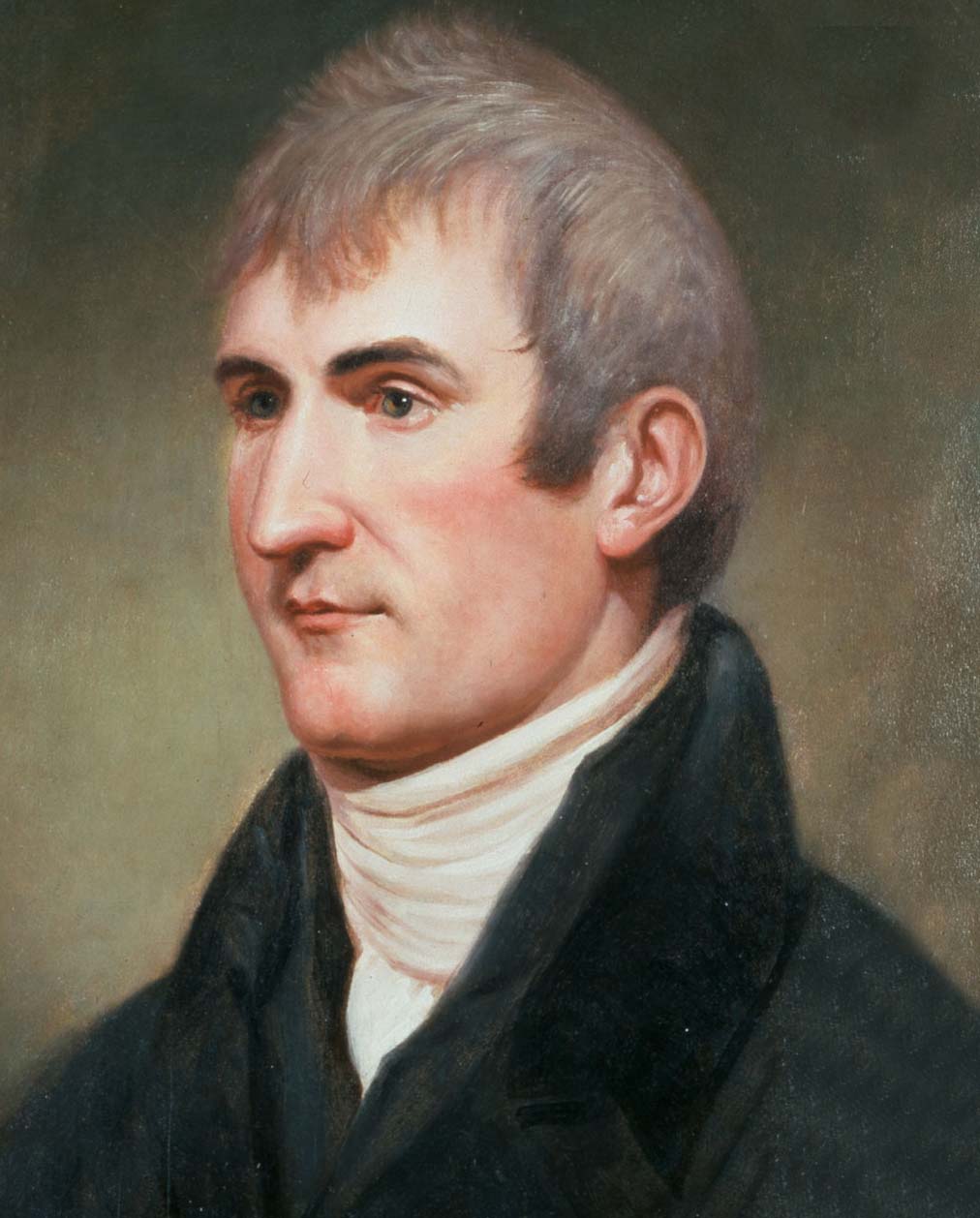


The first of July 1806 found the Corps of Discovery encamped at Travelers’ Rest on the western flank of the Bitterroots, preparing to execute the most ambitious maneuver of the return journey: a deliberate division of the party into multiple reconnaissance detachments. Four narrators — Meriwether Lewis, William Clark, Patrick Gass, and John Ordway — committed the day’s proceedings to paper. Read side by side, the entries form a revealing study in how rank, literacy, and personal interest shaped the documentary record of a single pivotal day.
The Captains’ Parallel Architectures
Lewis and Clark, as was their habit, produced lengthy and substantively overlapping accounts of the planned division. Both captains lay out the full branching structure of the operation: Lewis with six volunteers to push north up Maria’s River to test whether any tributary reached latitude 50°; Clark to descend to the head of Jefferson’s River, then strike overland to the Yellowstone; Sergeant Ordway to bring the canoes down; Sergeant Pryor to drive the horses east to the Mandans and thence to the Assiniboine to recruit the trader Hugh Heney as an intermediary with the Sioux.
Lewis writes in the active voice of a planner:
Capt. Clark & my self consurted the following plan viz. from this place I determined to go with a small party by the most direct rout to the falls of the Missouri… and myself and six volunteers to ascend Maria’s river with a view to explore the country and ascertain whether any branch of that river lies as far north as Latd. 50.
Clark covers identical operational ground but with characteristic differences of emphasis. Where Lewis names the volunteers as a roster of selection (“I scelected Drewyer the two Feildses, Werner, Frazier and Sergt Gass”), Clark presents the assignment as already settled administrative fact: “the party who will accompany Capt L. is G. Drewyer, Sergt. Gass, Jo. & R. Fields, Frazier & Werner.” Clark also preserves a detail Lewis omits — the precise tally of Lewis’s mounts: “Capt L. only takes 17 horses with him, 8 only of which he intends to take up the Maria.”
What Each Captain Alone Records
The captains diverge most interestingly on the day’s diplomatic and natural-history observations. Clark uniquely preserves the scout’s report from one of the Nez Perce guides who swam the river: he had discovered “where a Band of the Tushepaws had encamped this Spring passed of 64 Lodges.” Clark also documents the gift exchange in greater ceremonial detail, noting that a small medal was given to “the young man Son to the late Great Chief of the Chopunnish Nation” while “to all the others we tied a bunch of blue ribon about the hair, which pleased them very much.”
Lewis, by contrast, fills his entry with the naturalist’s catalogue that Clark routinely leaves alone — the dove, the black woodpecker, the lark woodpecker, the logcock, the prairie lark, sandhill crane, and “a speceis of brown plover” — and ethnographic intelligence about “white buffaloe or mountain sheep” inhabiting the snowy heights, which the Indians reportedly killed with ease using arrows. Lewis also notes a small but telling domestic act: “we had our venison fleeced and exposed in the sun on pole to dry.”
The Sergeants’ Compressions
Sergeant Gass, writing for eventual publication, compresses several days into a forward-looking summary. His entry for July 1 is brief — the hunters returned with twelve deer, “most of them in good order” — but he uses the occasion to explain to his future reader the logic of the upcoming separation: “some of us are to go straight across to the falls of the Missouri and some to the head waters of Jefferson river.” Gass also offers an ethnographic gloss the captains do not: the north branch of Clark’s River, he tells us, “is called by the natives Isquet-co-qual-la, which means the road to the buffaloe.” His account of the actual division falls under July 3rd, where he notes the river crossing on rafts and the mosquitoes “worse here than I have known them at any place, since we left the old Maha-village on the Missouri.”
Ordway’s entry is the briefest of the four and the most narrowly focused. He skips the strategic plan entirely — perhaps because his role in it (descending with the canoes) had not yet been formally announced to the men — and concentrates on the council with the Nez Perce guides:
our officers had a talk with the guides that came over the mountains with us. they told our officers that they wished to live in peace and bury their war Stripes in the ground, one of them gave Capt Lewis a good horse.
The horse-gift episode appears in three of the four journals but with revealing variations. Ordway notes only the gift itself. Clark attributes it to “the Indian man who overtook us in the Mountain” and records the giver’s hope that Lewis “would see the Crovanters of Fort De Prarie and make a good peace.” Lewis, the recipient, alone preserves the date the warrior had joined them (“the 26th Ult.”) and frames the gift as recognition of “the good council we had given himself and nation.” Together the four entries demonstrate how a single transaction acquires different meanings depending on whether one stands at the center of the diplomatic exchange or at its periphery.


